

From EVs and batteries to autonomous vehicles and urban transport, we cover what actually matters. Delivered to your inbox weekly.
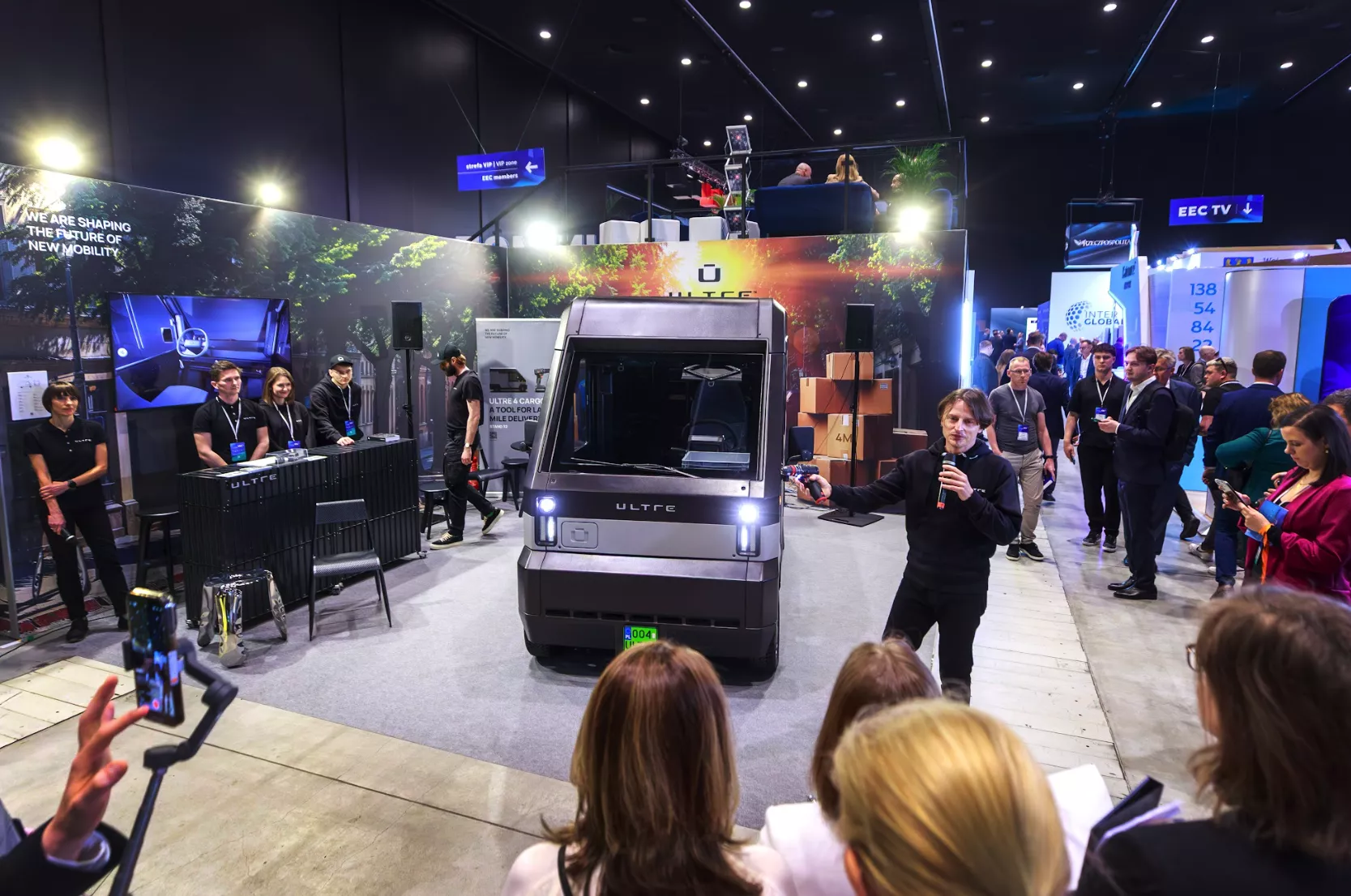
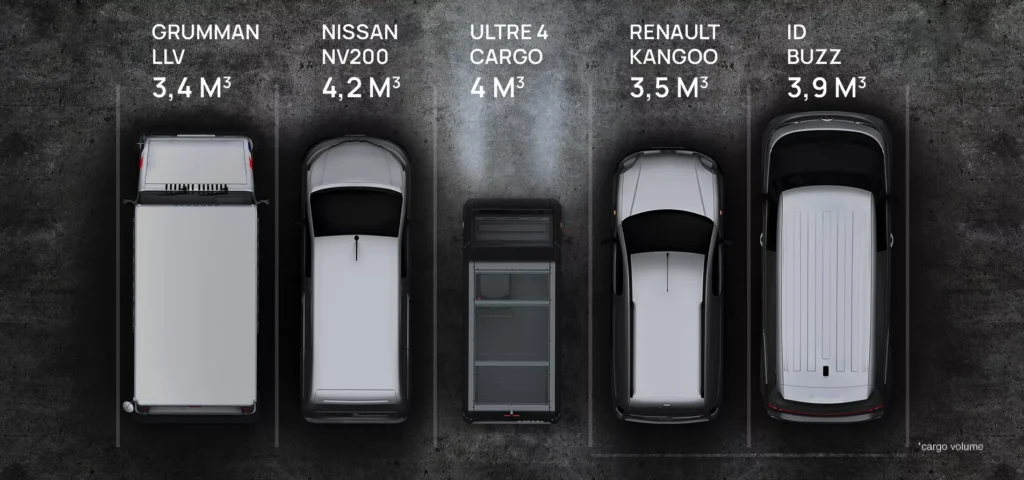
Four cubic metres is a lot of cargo space for a vehicle only 3.4 metres long.
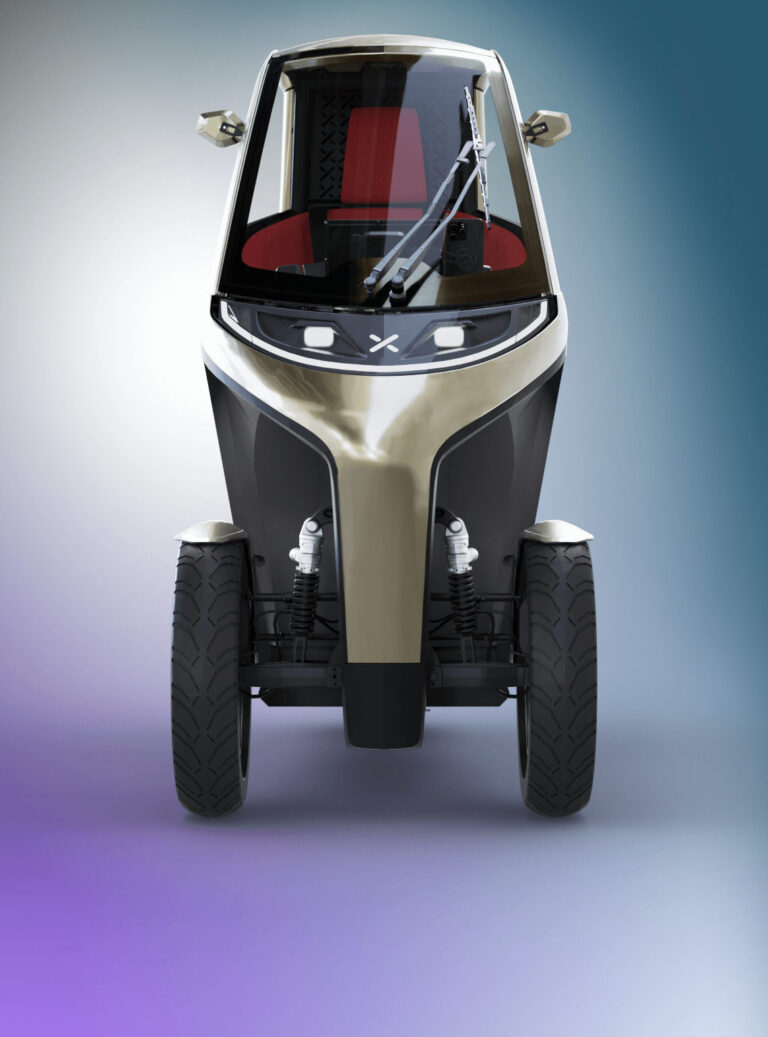
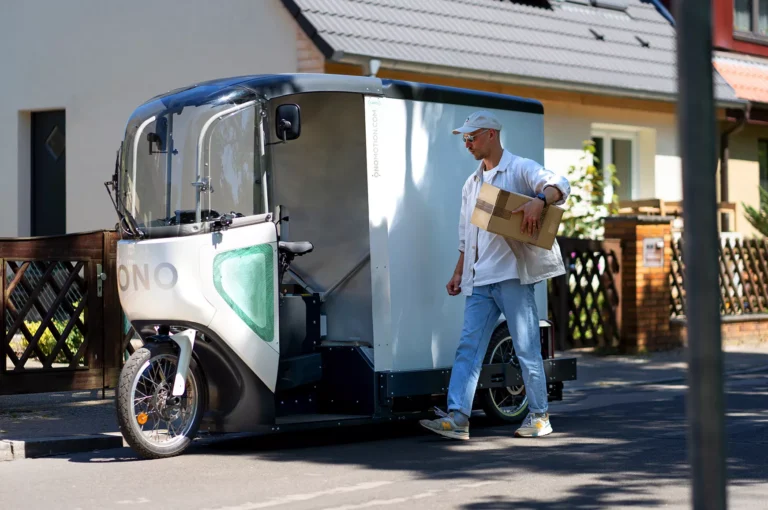
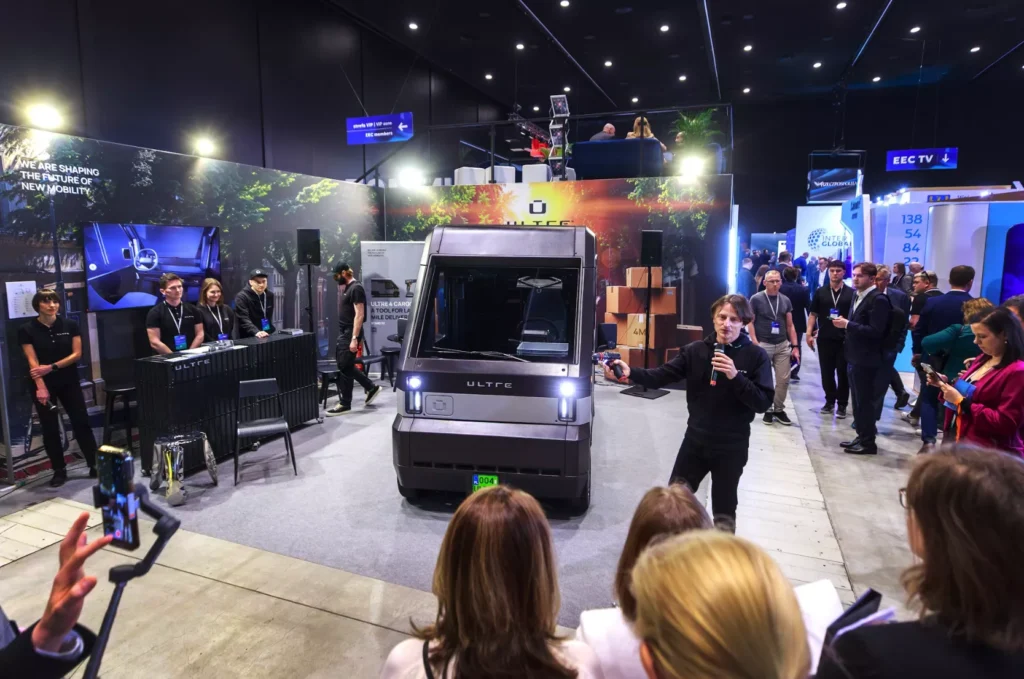
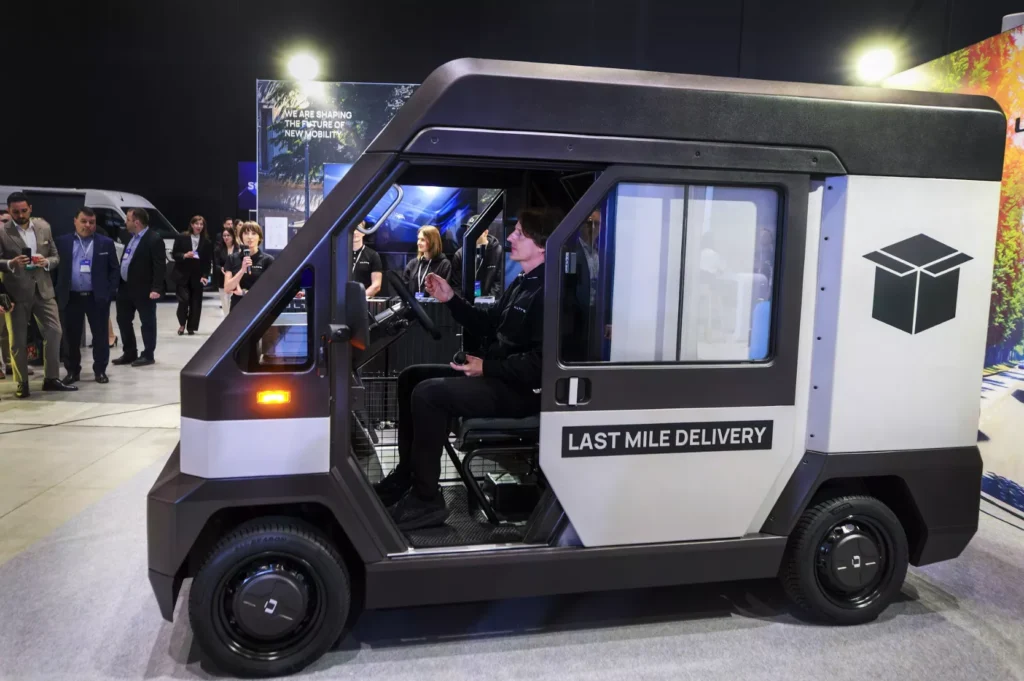
Ultre has packed that much into the 4 Cargo, a small electric delivery vehicle developed in Poland for city parcel routes. It is around 1.5 metres wide, can carry a reported 500 kg and has room for items up to 2.8 metres long. Sliding doors on both sides give the driver access to the load.
Its size puts it between a cargo bike and a delivery van. It is aimed at routes where a bike runs out of space, but a full-size van is larger than the job requires. The narrow body should also make it easier to use on tight streets and at busy loading areas.
The 4 Cargo is unusual underneath as well. Its steel frame uses FiDU, a process developed by Oskar Zięta that turns welded sheets of metal into hollow shapes using internal pressure. Ultre has adapted the process for vehicle production, with the aim of reducing the expensive tooling normally needed to make a vehicle structure.
By September 2025, the 4 Cargo was a working prototype going through homologation. Series production has not started.
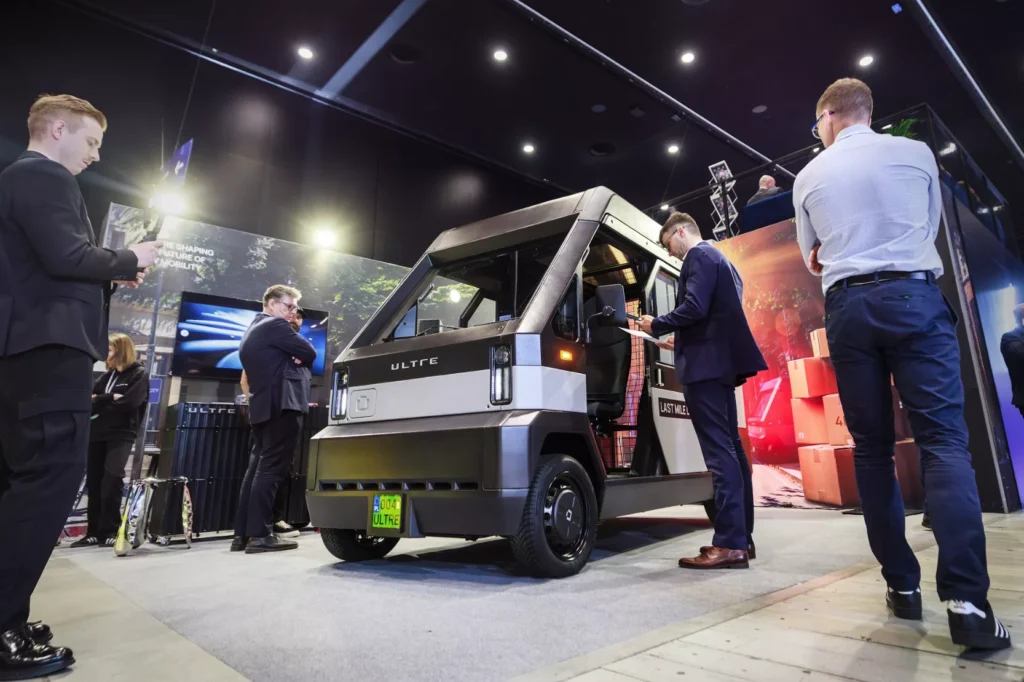
The cargo area is 1.8 metres high, according to Auto Świat, giving most drivers enough room to stand inside while sorting parcels. Sliding doors on both sides mean they can unload from either side of the vehicle, rather than walk around it or open a rear door into traffic. Ultre also shows the interior with shelving, although the final fit-out may vary.
The small footprint should help between stops. The 4 Cargo is 1.5 metres wide and has a turning radius of around 4.2 metres. Combined with its 3.4-metre length, that should make it easier to manoeuvre through tight streets and loading areas than a conventional delivery van.
Ultre puts the payload at around 500 kg. That matters because cargo volume alone is not much use if the vehicle reaches its weight limit before the space is full.
For context, Ultre compares the 4 Cargo’s 4 m³ load space with 4.2 m³ in the Nissan NV200, 3.5 m³ in the Renault Kangoo and 3.9 m³ in the ID. Buzz. It is an impressive packaging comparison, although these are otherwise very different vehicles with different payloads, performance and regulatory requirements.
Under the 4 Cargo is a steel frame made using a process called FiDU. Flat sheets of metal are cut and welded together, then expanded with internal pressure to form hollow three-dimensional shapes.
FiDU predates Ultre. Oskar Zięta has spent more than two decades developing the process for furniture, sculptures and other metal objects. Using it for a road vehicle required much tighter control over how each part forms and behaves. Zieta Prozessdesign also filed a Polish patent application in 2020 covering a hollow metal vehicle frame and its manufacturing method.
For Ultre, the appeal is largely about production. Conventional vehicle bodies rely on large forming tools that are expensive to design and manufacture. Those costs are easier to spread across hundreds of thousands of vehicles than a small run of commercial vehicles.
Zięta told the German Design Council that a conventional approach could require 50 to 70 tools. The 4 Cargo’s FiDU frame is instead made from around 30 welded elements, with computer simulation used to predict how the metal will deform during production.
This could make smaller production runs more practical. Ultre could also change parts of the structure without replacing a large set of forming tools, which may help as the vehicle develops or new versions are introduced.
FiDU only covers part of the vehicle, however. The drivetrain, battery, suspension, brakes and other systems still have to come together around the frame using more conventional components and suppliers.
Auto Świat traces development of Ultre’s vehicles back to 2017 and reports that around PLN 50 million had been invested by September 2025. More than 40 prototypes had been built by then. The German Design Council says they have been tested and driven, with some also used for crash testing.
Ultre has worked with engineers from the Łukasiewicz Research Network, including the Upper Silesian Institute of Technology and PIMOT. Łukasiewicz says its engineers were involved in developing the electric drivetrain.
By 2025, the 4 Cargo was a working vehicle. Auto Świat drove a prototype in September and reported that homologation was under way.
There is some tension in the public timeline. Łukasiewicz said in May 2025 that the vehicle was ready to enter series production. Four months later, homologation was still in progress. By March 2026, Ultre was still looking for a manufacturing partner.
Recent sources do not agree on several parts of the 4 Cargo specification.
Auto Świat reported a 22 kWh battery, up to 200 km of range and a 20 hp motor in September 2025. The German Design Council gave similar figures in March 2026, with a 22 kWh battery, 15 kW of power and a top speed of 80 km/h. eMove360°, however, listed a 15 kWh battery and a top speed of 90 km/h.
The weight figures vary too. Auto Świat put the vehicle at around 600 kg without its traction battery and reported a 135 kg load-bearing frame. The German Design Council later put the FiDU frame at 88 kg and described the vehicle as weighing 750 kg with its battery.
These differences may come from different prototypes, components or ways of measuring weight. The available sources do not explain them.
Ultre does not currently publish a full technical sheet for the 4 Cargo. Its website covers the main dimensions and cargo area, but leaves out details such as battery chemistry, energy consumption and final production weight.
Until the production configuration is settled, the published numbers are best treated as development specifications.
Target homologation category
L7e-CU
*Public specifications are not yet consistent. Recent sources list both 15 and 22 kWh batteries, 80 and 90 km/h top speeds, and different frame weights. The 200 km range figure relates to reporting on the 22 kWh development specification. Around 600 kg has been reported without the traction battery; L7e mass rules exclude the traction battery for a battery-electric vehicle. Figures should be treated as development specifications until Ultre publishes a final production configuration.
Some of the 4 Cargo’s specifications make more sense once you look at the category Ultre is designing it for.
The target is L7e-CU, the EU category for heavy quadricycles built to carry goods. L7e-C vehicles are limited to 15 kW of continuous power, a maximum design speed of 90 km/h, a length of 3.7 metres and a width of 1.5 metres.
The 4 Cargo sits close to those limits. It is 1.5 metres wide, its motor has been listed at 15 kW, and its reported top speed is either 80 or 90 km/h. At 3.4 metres long, it has around 30 cm to spare.
Weight is also important. L7e goods vehicles have a maximum mass in running order of 600 kg. For a battery-electric vehicle, the traction battery is excluded from that calculation. This helps explain reports describing the 4 Cargo as weighing around 600 kg without its battery.
The CU classification is specifically for goods vehicles. It requires a cargo area separated from the occupants and allows no more than two seats, including the driver. That fits a vehicle designed around one driver and as much cargo space as possible.
Ultre said in July 2025 that the 4 Cargo was being prepared for pre-homologation and type-approval testing as an L7e-CU vehicle. We have not found a public EU type-approval certificate or approval number, so L7e-CU remains its intended category rather than a completed approval.
Whichever battery reaches production, it will be small by commercial-EV standards. Auto Świat reported up to 200 km of range from the 22 kWh version. Ultre’s reasoning is straightforward: keep the vehicle light enough that it does not need to carry a large battery.
That could suit a city delivery route. A 4 Cargo can leave a depot in the morning, spend the day making short trips and return to the same place to charge overnight. Carrying extra battery capacity would add weight and cost if the route rarely needs it.
Longer routes, hills, winter weather and a full load could change the calculation. Ultre does not publish energy consumption from an identified test cycle, loaded range or winter performance, so the 200 km figure is difficult to put into context.
Charging details are also limited. Ultre’s website does not give the connector, AC charging power or full charge time. Fast charging may be less important for a depot vehicle that can plug in overnight, but operators still need enough time to recover the energy used during the previous shift.
A loaded route test would give the range figure much more meaning.
Ultre does not plan to build the 4 Cargo in its own factory.
Auto Świat reported in September 2025 that suppliers had been secured for the vehicle’s parts and systems. All were said to be in the European Union, with most in Poland. Ultre was still looking for a partner to assemble them into complete vehicles.
Oskar Zięta confirmed in March 2026 that Ultre wanted to remain focused on vehicle development and leave series production to an outside company. He also said the 4 Cargo contains no more than 800 parts, which could make it suitable for smaller-scale production.
That partner has not been publicly named. We also could not find a confirmed factory, production start date or planned annual volume. Ultre’s website accepts reservations for the 4 Cargo but does not give a delivery date.
For now, the supply chain appears to be taking shape, but the company that will turn those parts into series vehicles is still missing. That will also affect whether Ultre can reach one of its earlier targets: a price of around €20,000.
Ultre has designed the 4 Cargo around a target price of €20,000. Oskar Zięta told the German Design Council that the figure was set early in development, with fleet return on investment in mind.
It is not a current retail price. Ultre does not publish a price list, and we could not find details on VAT, equipment levels, financing or leasing.
For delivery fleets, the purchase price is only part of the calculation. Energy, maintenance, insurance, downtime and driver time all affect the cost of running a vehicle. The comparison will also depend on the route: a 4 Cargo could replace a cargo bike in one fleet and a much larger van in another.
The €20,000 figure is therefore best treated as a design target until Ultre publishes a final production price.
The 4 Cargo is becoming part of a wider Ultre family.
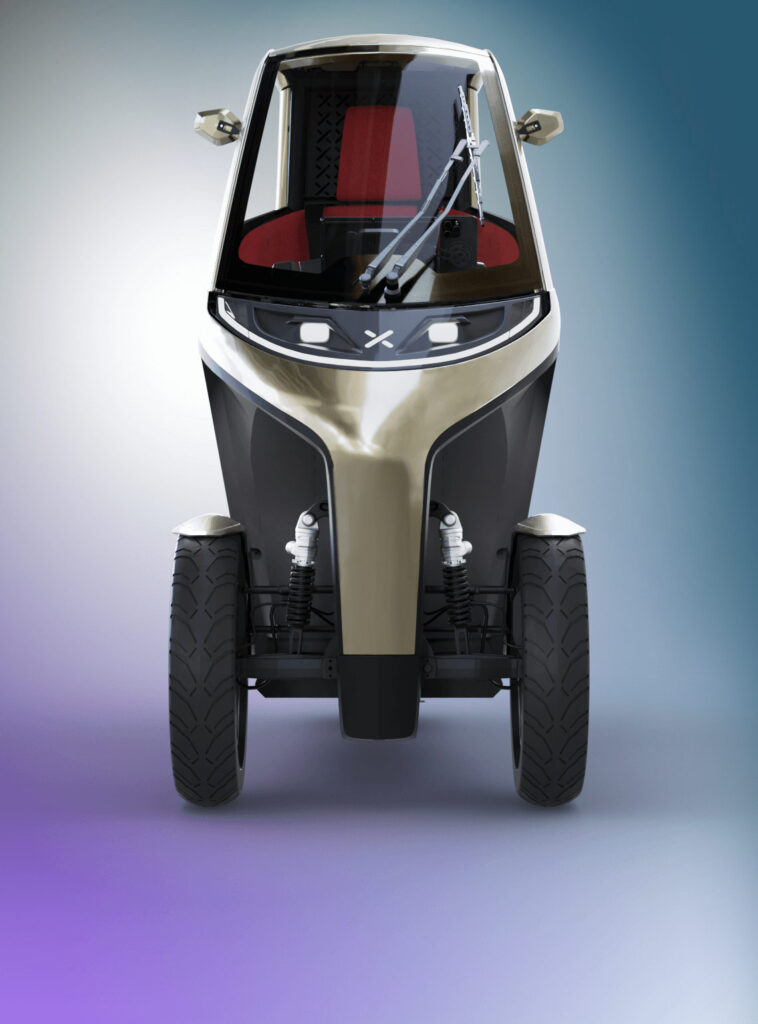
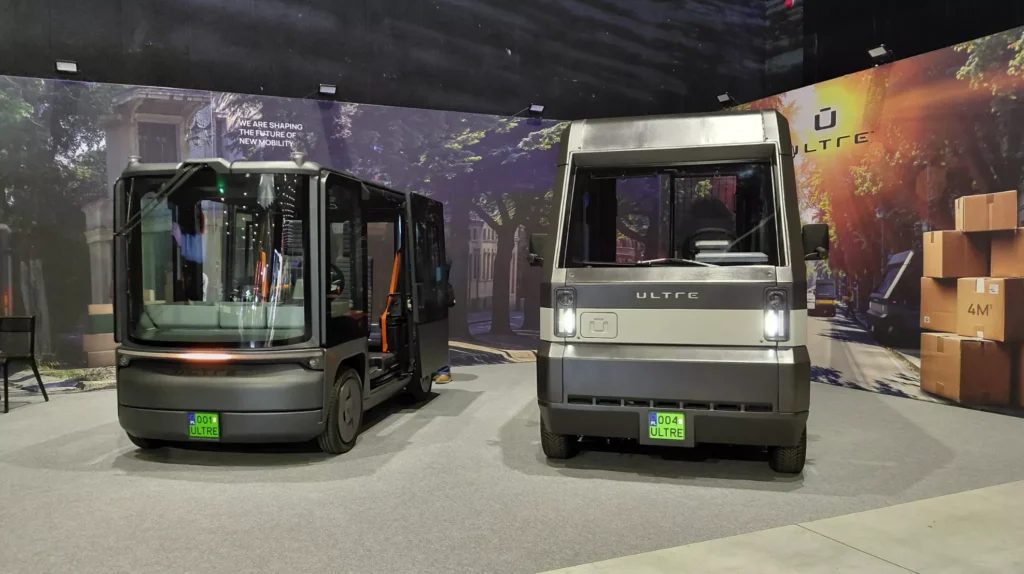
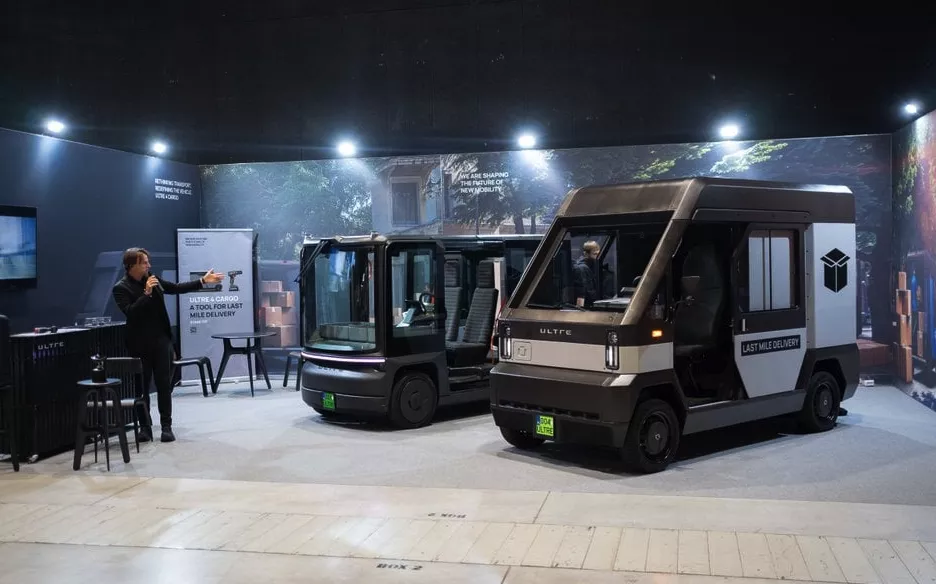
In April 2026, Zieta Studio showed the Ultre 3 Sharing alongside the 4 Cargo at the European Economic Congress in Katowice. It is designed as a modular vehicle for car-sharing and cargo use, with different interior layouts depending on the job.
The Ultre 2 City followed in September 2026 at the New Mobility Congress. All three vehicles use the same FiDU Frame, allowing Ultre to adapt the underlying structure for different uses rather than develop a new platform each time.
The development status is not the same across the range. Public information on the 2 City and 3 Sharing remains limited, while the 4 Cargo has gone through years of prototypes, testing and homologation work.
For now, the newer models mainly show how Ultre plans to use the FiDU Frame beyond delivery vehicles.
What we have not yet seen is a customer fleet using production 4 Cargos on normal delivery routes.
A fleet deployment would show how much energy the vehicle uses with a real parcel load and how much of its cargo space gets used during a shift. It would also show whether the narrow body and side doors actually save drivers time at each stop.
Routine use would test the less visible parts too. Doors and latches get opened hundreds of times. Body panels get scraped. Vehicles spend days in rain and cold weather, while tyres, charging and small repairs become part of the operating cost.
The useful numbers are fairly ordinary: kilometres driven, parcels carried, energy used, charging time and days lost to repairs.
A few months of that data would make the 4 Cargo much easier to compare with the vans and cargo bikes already doing the same work.