


From EVs and batteries to autonomous vehicles and urban transport, we cover what actually matters. Delivered to your inbox weekly.
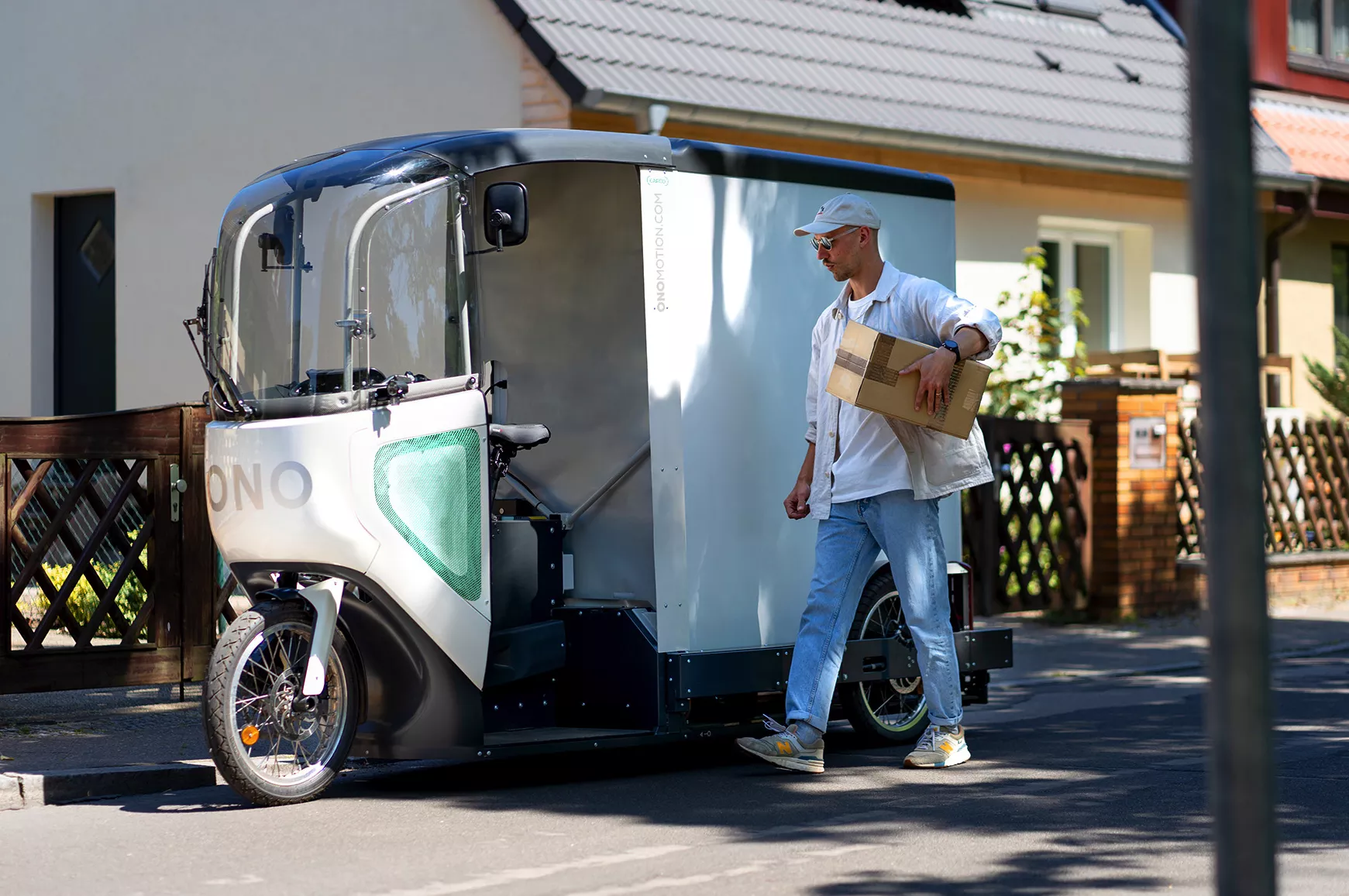
ONO is built for the part of urban work where a van can be too much vehicle and a conventional cargo bike not enough.
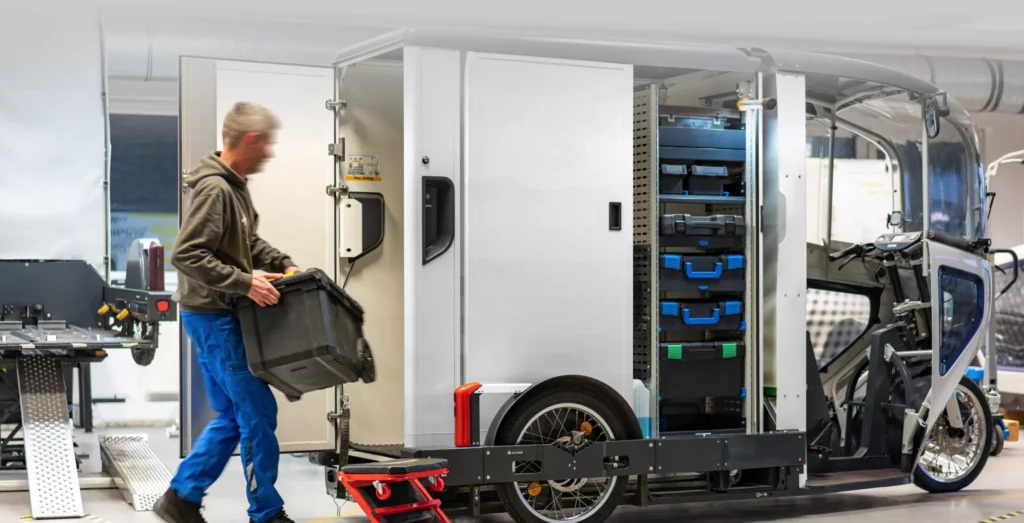
At 3.4 metres long and 1.125 metres wide, it is closer to a small commercial vehicle than the cargo bikes most people picture. It has four wheels, two hub motors, a covered rider position, removable batteries and a low floor. More importantly, the same chassis can carry either a closed cargo module or an open loading platform.
That gives ONO a wider brief than parcel delivery. One vehicle can move packages through a dense city route, then be configured for tools, equipment or materials in facility and service work.
Chief Growth Officer Inga Töller described that role in our conversation with ONO as part of a mixed fleet. The aim is not to replace every van. It is to use a smaller vehicle on the routes and jobs where parking, access and repeated stops make the van the inefficient option.
That is the part of ONO worth looking at closely. Not whether it can carry cargo, but where this type of vehicle can take enough friction out of a working day to justify its place in the fleet.
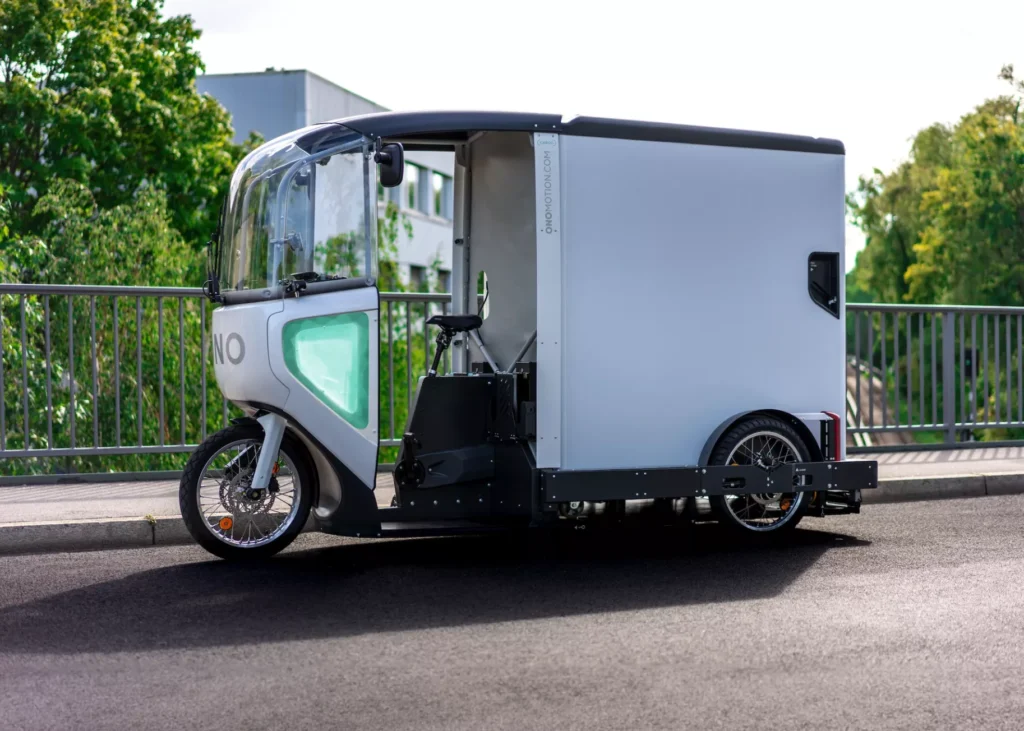
ONO sells two versions of the same 220 kg chassis. The Cargo uses a closed, exchangeable module with more than 2 m³ of volume and a stated load capacity of up to 200 kg. The Allround replaces it with an open 170 × 82 cm loading platform, rated for up to 280 kg including the load carrier.
They are aimed at quite different work. Cargo gives parcel and goods operators a protected, lockable space. Allround leaves the top of the vehicle open for tools, equipment, materials or a carrier built around a specific job.
For a fleet operator, that opens up more options than simply choosing between two models. The chassis, rider position, drivetrain and battery system stay the same while the working area changes. A parcel fleet and a facility-management team could therefore use the same base vehicle very differently.
Both versions use two 125 W nominal wheel-hub motors, with 113 Nm of stated torque and pedal assistance up to 25 km/h. Power comes from a removable 1.4 kWh battery. Those specifications point quite clearly to the kind of routes ONO is built around: dense urban areas, campuses, parking facilities, restricted sites and shorter jobs with regular access to a base.
ONO has already spent years in commercial fleets. The company currently names Germany and the UK as operating markets, while Inga Töller also pointed to France and Austria in our conversation. ONO has not published a current breakdown of how many vehicles are active in each country.
Its customer history gives a better sense of the kind of work the vehicle has seen. Earlier ONOMOTION announcements covered deployments or planned rollouts with DPD, UPS Germany and APCOA. ONO’s current customer page also includes Hermes, GLS, SIXT and Boehringer Ingelheim.
Some of those references are historical, so they should not be read as a list of current deployments. Taken together, though, they show that ONO has been used across parcel delivery, parking, facility operations and other service work.
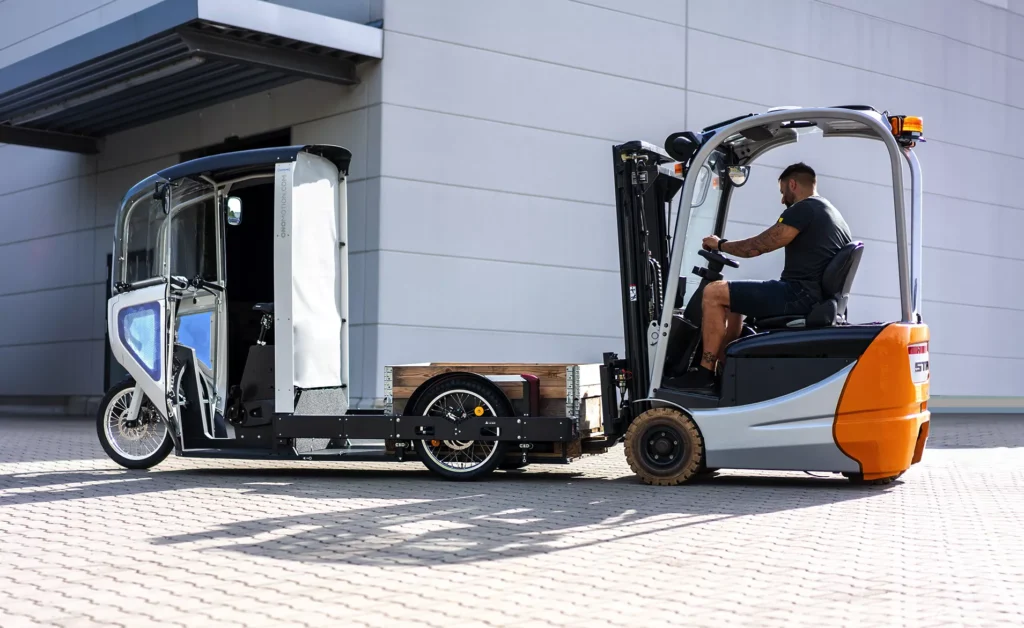
Inga Töller says ONO works best on routes with frequent stops, difficult parking and a lot of movement through dense areas. Parcel delivery fits that description, but so do maintenance, service and facility teams carrying tools or equipment between closely spaced jobs.
The useful comparison starts with the route itself. How much is being carried? How far apart are the stops? How much time disappears into parking, unloading and walking from the vehicle to the actual job? A van can still be the obvious choice for heavier loads or longer distances, but in dense areas it may spend a surprising amount of the working day doing everything except moving the load.
That is where a smaller vehicle can make sense. ONO takes up less space, is easier to position close to the stop and can access places where a van becomes awkward. The advantage is less about outright carrying capacity and more about what happens between one stop and the next.
There are costs on the other side too. The vehicle still needs a base, maintenance, trained riders, battery handling and enough regular work to justify keeping it in the fleet. For some routes, those costs will make sense. For others, a van will remain the better tool.
This is also why ONO fits more naturally into a mixed fleet than as a direct van replacement. A larger vehicle can handle bulk movement and longer distances, while ONO takes the shorter, denser part of the operation where access and stop time matter more.
For a fleet buyer, the most useful proof would be route-level data. Which routes are running? How many stops do they cover? How often are the vehicles unavailable? What happens in poor weather or when repairs are needed?
ONO has not published much of that publicly. Customer names and cumulative delivery figures help show that the vehicle has been used, but they say less about whether it improves a route day after day.
ONO still presents courier, express and parcel work as a core part of its customer base. Inga Töller says facility management is currently its fastest-growing segment, although ONO has not published figures showing what that growth looks like in revenue, orders or active vehicles.
The use case is different enough to be interesting. A parcel operator is usually looking at route productivity, cost per delivery and how many stops a vehicle can complete. A facility team may be moving tools, cleaning equipment, replacement parts or other gear between buildings, parking areas and restricted sites.
ONO’s facility-management page points to exactly that kind of work. A 2022 company announcement also described APCOA using ONO vehicles for materials handling at parking and trade-fair locations in Berlin, Munich and Stuttgart.
That deployment is historical, so it does not say much about ONO’s current scale in the segment. It does show why the vehicle can fit outside parcel delivery. In a large facility or campus, the value may come from getting workers and equipment closer to the job without relying on a van for every movement.
That gives buyers a different set of questions to answer. How much time is lost parking or walking equipment across a site? How often do workers need to enter areas where larger vehicles are inconvenient? How much useful work can be carried on one trip?
For ONO, that may be a harder case to prove than parcel delivery because the benefit is less likely to sit in one familiar metric. The evidence has to show that the vehicle saves enough time or effort during the working day to justify adding it to the fleet.
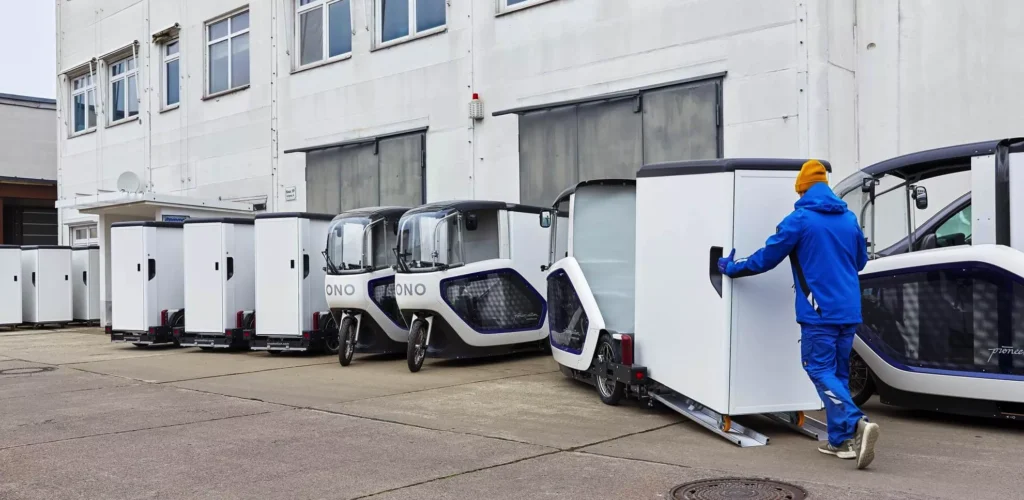
Putting a new vehicle into a fleet affects more than routing and cost. It changes who can use it, how staff are trained, where it can be parked and how the working day feels for the person driving it.
ONO uses test rides as part of the sales process, giving operators and riders a chance to try the vehicle before making a decision. That matters because the rider experiences things that do not show up in a specification sheet: visibility, braking, weather protection, loading, manoeuvring and how easy the vehicle is to live with over a full shift.
ONO classifies the vehicle as a pedelec and combines that with a covered rider area. In Germany, the stated motor output and 25 km/h assistance limit fit the legal framework for qualifying pedal-assisted cycles. That can make the vehicle accessible to a wider group of employees than a vehicle requiring a different licence category, although training, employer safety responsibilities and local operating rules still apply.
There is very little public data on how riders respond once the vehicles are in regular use. ONO has not published rider-satisfaction results, training times, incident figures or retention data. Those numbers would be especially useful as the company expands further into facility management, where employees may be moving between buildings and sites throughout the day.
For a fleet buyer, rider acceptance matters because a vehicle can save time on paper and still create friction in daily use. If ONO wants to make the facility-management case stronger, evidence from the people actually using the vehicles would help.
The exchangeable Cargo module is one of the more unusual parts of ONO’s design. The company says the closed box uses automatic fixing and electronic plug-and-play coupling, allowing it to be removed and replaced without changing the rest of the vehicle.
The original idea is easy to understand. A box can be prepared at the depot, loaded onto the vehicle and replaced while another one is being filled. Inga Töller says many logistics customers do not actually work that way. They often load the route directly into the vehicle and keep the same module in place for the shift.
That does not make the exchangeable body irrelevant. It changes where the flexibility is useful.
In parcel work, one enclosed module may stay on the vehicle most of the day. In facility or trade work, a fleet may use a closed body for tools and equipment, an open Allround platform for materials, or a carrier designed around a specific task. The chassis stays the same while the working setup changes.
There is not much public data showing how often operators make use of that flexibility. ONO has not published figures on module-change frequency, real-world swap times, spare-module costs or which customer groups use multiple configurations most often.
Those details would make it easier to judge how important modularity is in daily operation. Based on ONO’s current use cases, the bigger benefit may be giving operators several ways to set up the same vehicle rather than swapping cargo boxes repeatedly during a shift.
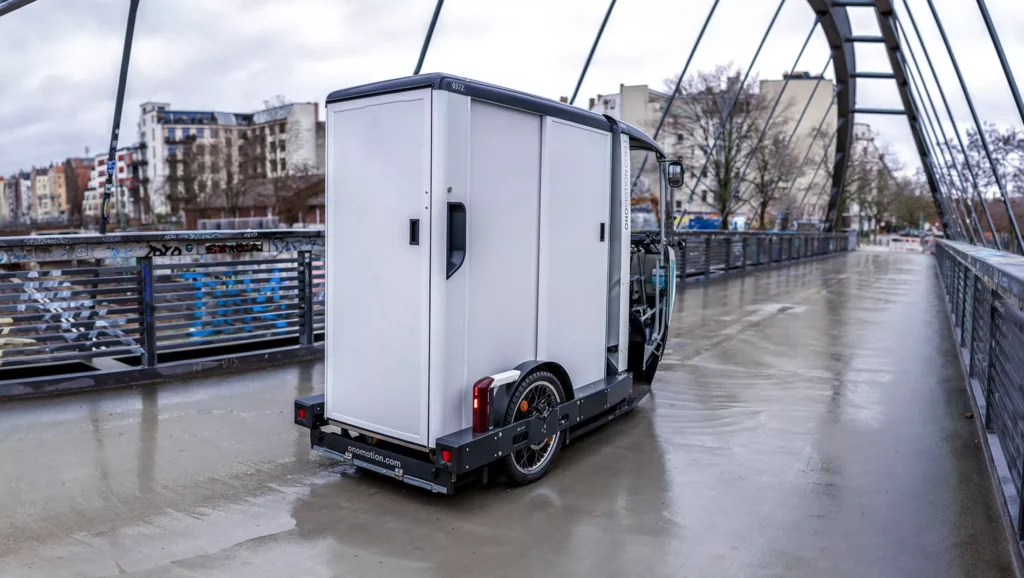
ONO uses a removable 1.4 kWh battery that can be charged from a standard household outlet, with space for an optional second pack. For routes that regularly return to a depot or base, that gives operators the option to swap batteries instead of parking the whole vehicle while it charges.
That can reduce charging downtime, but it does not remove the other operational constraints around the vehicle. Fleets still need enough batteries, suitable storage, charging capacity and safe handling procedures, along with the service support needed to keep the vehicles themselves available.
The range figures published by ONO are currently inconsistent. The product page and linked 2023 data sheets state up to 25 km per battery and 50 km with two, while the FAQ lists 30 km and 60 km. Without clarification on vehicle generation or test conditions, it is difficult to use one range figure with confidence.
For the kinds of routes ONO is targeting, battery handling may matter more than the headline range. Shorter commercial routes with a dependable return point are easier to plan around removable packs, especially when charging can happen away from the vehicle.
Charging from a standard outlet also keeps the infrastructure relatively simple on the vehicle side. A fleet operation still needs enough electrical capacity, safe battery storage and a site that can support several vehicles charging or exchanging packs during the day.
ONO offers maintenance and repairs, while its FAQ lists preventive maintenance and fleet management as part of the rental model. Inga Töller also talks about what the company has learned from vehicles already in daily use, including wear items, maintenance routines, spare parts and repair turnaround.
There is still very little public detail on how that support works in practice. ONO does not publish current maintenance intervals, service response times, parts availability, typical repair times or replacement-vehicle terms. There is also no current uptime figure following the transfer of the business.
Those numbers matter to a fleet operator. Brakes wear, components fail and vehicles occasionally need to be recovered. In parcel delivery, a vehicle waiting for repair can mean missed stops or another vehicle taking over the route. In facility work, it can leave staff without the equipment they expected to use that day.
That makes service performance an important part of the buying decision. Fleet managers need to know how quickly a vehicle can get back to work, how easy it is to source parts and what support is available when something goes wrong.
ONO explains what the vehicle can carry and where it is meant to operate in reasonable detail. More information on maintenance and repair performance would make it much easier to judge how dependable it is once it becomes part of a working fleet.
Inga Töller points to micro-depots as one of the less obvious constraints in urban logistics. The vehicle may work well on narrow streets and dense, high-stop routes, but the operation still needs somewhere nearby to load vehicles, store modules, charge batteries and start the day.
Finding that space can be difficult. A depot that is too far from the route adds dead mileage before the first delivery or service call. A well-located site can be expensive, especially in the same dense urban areas where vehicles like ONO make the most sense.
That means depot location can affect whether a route works at all. The vehicle may save time once it reaches the operating area, but some of that advantage disappears if the fleet has to travel too far just to get there.
ONOMOTION previously used a micro-depot model in work with UPS in Germany. That deployment is historical, but it shows that depot planning has already been part of the operating model around the vehicle.
The regulatory side adds another variable. ONO presents the vehicle as a pedelec, with a stated 25 km/h assistance limit and 250 W nominal continuous motor output. Those figures align with the EU type-approval exclusion for qualifying pedal-assisted cycles under Regulation (EU) No 168/2013.
That classification does not answer every operating question. Access to cycling infrastructure, insurance requirements, licensing and local operating rules can still vary by country and city, so operators have to check the rules in each market where the vehicle is used.
ONO has enough public evidence to show that the vehicle is already being used in several kinds of commercial work. What is harder to find is the data that would help a fleet operator judge how well those deployments perform.
A current active-fleet count would help, along with a clear list of operating markets and service coverage. ONO could also resolve the conflicting range figures and publish more detail on maintenance, repair turnaround and parts availability. Separating current customer deployments from older rollouts would make the customer list easier to interpret as well.
Facility management needs the same kind of clarity. Inga Töller describes it as ONO’s fastest-growing segment, but there are no public figures showing whether that growth comes from new customers, active vehicles, orders, revenue or pipeline.
The most useful evidence would come from individual routes and sites. How many stops does the vehicle cover? How much time does it save compared with the previous setup? How often is it unavailable for service? What does the depot add to the operating cost? Those numbers would make it much easier to see where ONO works well and where another vehicle still makes more sense.
ONO already has the vehicle, the customer history and a broader set of use cases than parcel delivery alone. The next step is putting more operating data behind them.