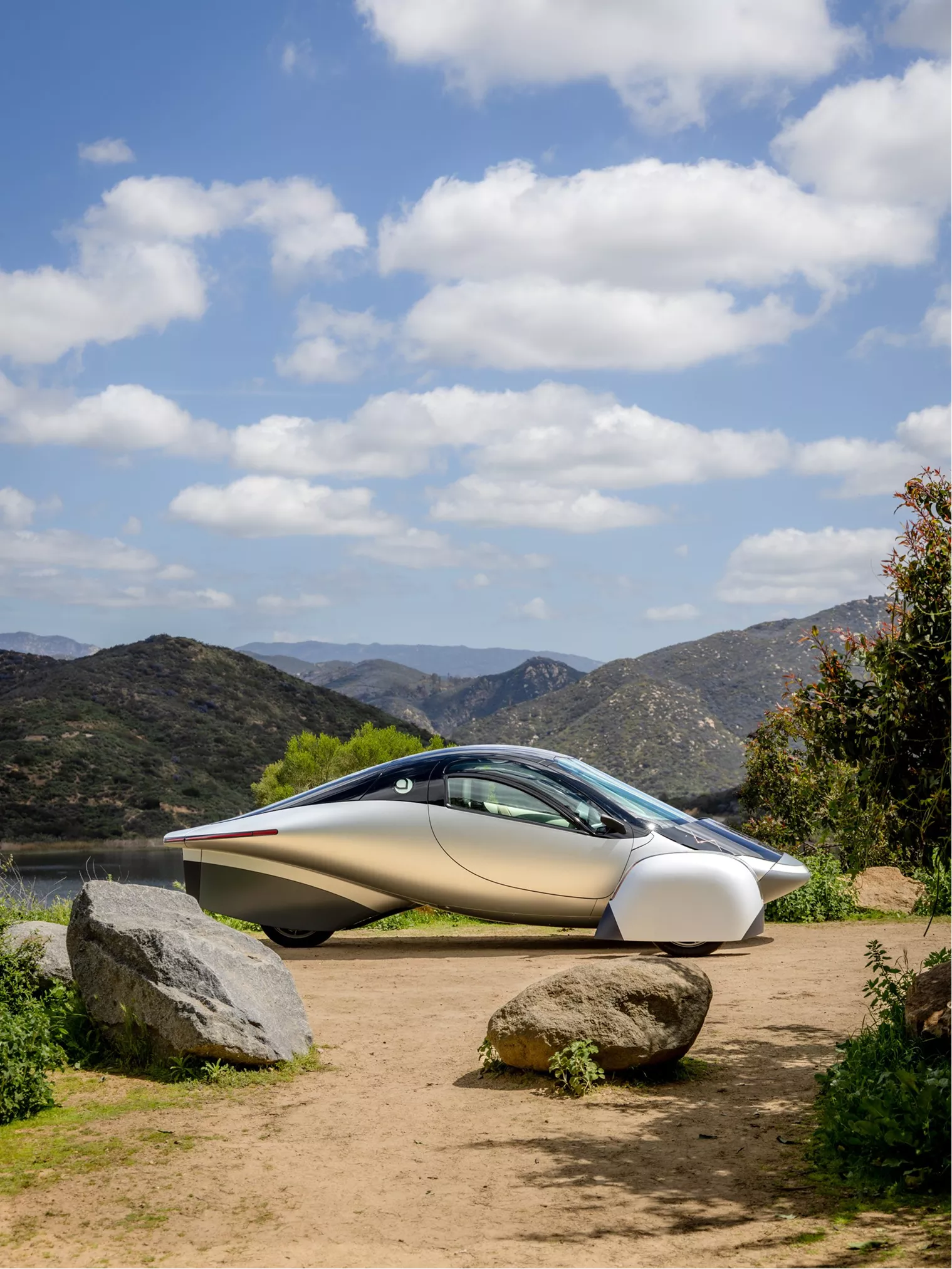
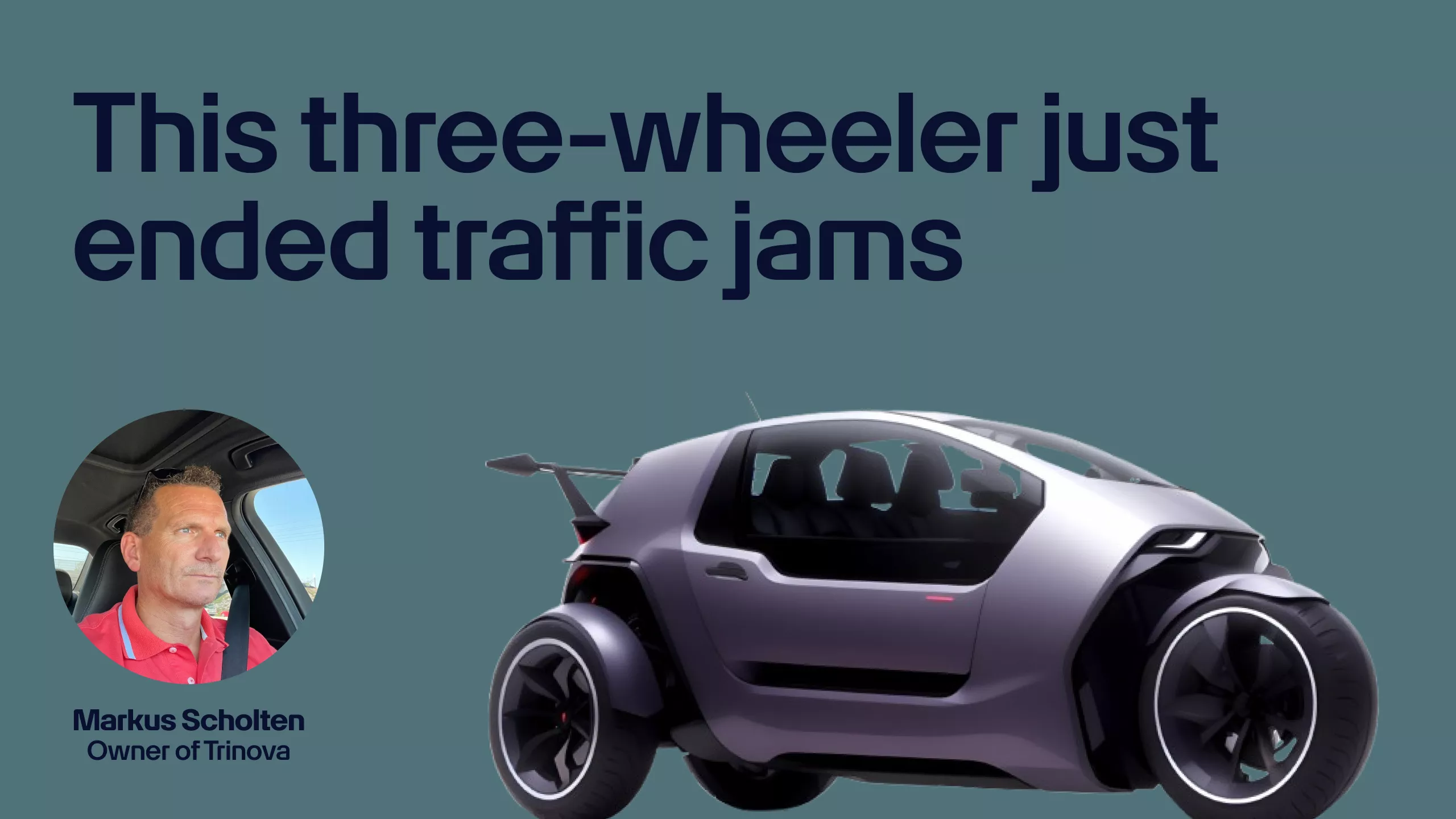
In this Charging Stack podcast episode, we talk with Markus Scholten, Founder & CEO of Trinova EV, a startup building a fully enclosed electric three-wheeler that leans like a motorcycle and aims to make traffic jams a lot less painful.
After a career spanning BMW, Karmann, and Fisker, Markus started Trinova off a simple frustration: a brutal Los Angeles commute that turned a normal drive into a multi-hour crawl. His answer is a compact, high-performance commuter built for real-world congestion. Narrow enough to target lane-splitting where legal, stable enough to feel like a “safer motorcycle,” and ambitious enough to aim at 0–60 mph in ~3.5s (and potentially faster) with the next electric drivetrain.
This episode is for you if:
You care about small-format EVs, three-wheelers, and “in-between” vehicle categories
You live in a traffic-heavy city and want alternatives that save time without killing fun
You’re building (or investing in) a hardware startup and want the real story behind it
You want to understand why tilting vehicles keep showing up, and why most fail to scale
In this episode, you’ll learn:
⚡ How a California traffic jam sparked Trinova ⚡ Why Markus chose three wheels (and why it matters for regulation and market entry) ⚡ What a tilting system changes for stability, confidence, and cornering feel ⚡ How Trinova targets ex-motorcyclists who still want the thrill, with less risk ⚡ What Trinova needs to reach production, and the funding + testing plan behind it ⚡ The go-to-market approach: direct sales, motorsport dealerships, and long-term licensing
Topics covered include
From GM’s “Lean Machine” inspiration to an RC model built to prove the tilting concept
The moment LA congestion turned the idea from “interesting” into “necessary”
Why the market wasn’t ready earlier, and what changed once EV acceptance grew
A fully enclosed three-wheeler designed to deliver motorcycle-like leaning with a more stable feel
Markus’s own elevator pitch struggle, and the real framing: comfort + agility + performance
Why he avoids “tricycle” as a label, and why category language matters for adoption
Three wheels as a regulatory shortcut (often treated as “motorcycle” vs “car” requirements)
The 850–900 mm width target and how it supports lane splitting where legal
Why Markus benchmarks things like police motorcycle width when setting constraints
The stated headline: 0–60 mph in ~3.5 seconds, with ambitions to go faster
The planned electric drivetrain direction (dual motors, high output)
Why Markus refuses to build something capped at low speeds, even for “urban mobility”
How Trinova’s balance system reacts to external forces (like side winds)
Why older tilting three-wheelers struggled on crowned roads and changing surfaces
The idea that the vehicle should feel intuitive and “natural,” not like you’re fighting it
What the initial funding enables: certification, homologation, durability testing, climate testing
Who Markus thinks buys first: ex-motorcyclists who miss riding but won’t accept the risk anymore
Pricing targets discussed: entry around $18k–$22k, higher-spec version higher
Go-to-market: direct sales early, then motorsport dealership networks
Long-term strategy: keep a premium flagship product, license the balance tech globally
Markus’s dream launch: show the real advantage by riding to a major auto show through peak traffic, arriving in a fraction of the time
Subscribe to Charging Stack for more podcast episodes, deep dives, and case studies with the people keeping the future of mobility running. ⚡
Share your love
Filip Bubalo
Researcher & writer for Charging Stack. Marketing manager at PROTOTYP where I help mobility companies tell better stories. Writing about the shift to electric vehicles, micromobility, and how cities are changing — with a mix of data, storytelling, and curiosity. My goal? Cut through the hype, make things clearer, and spotlight what actually works.