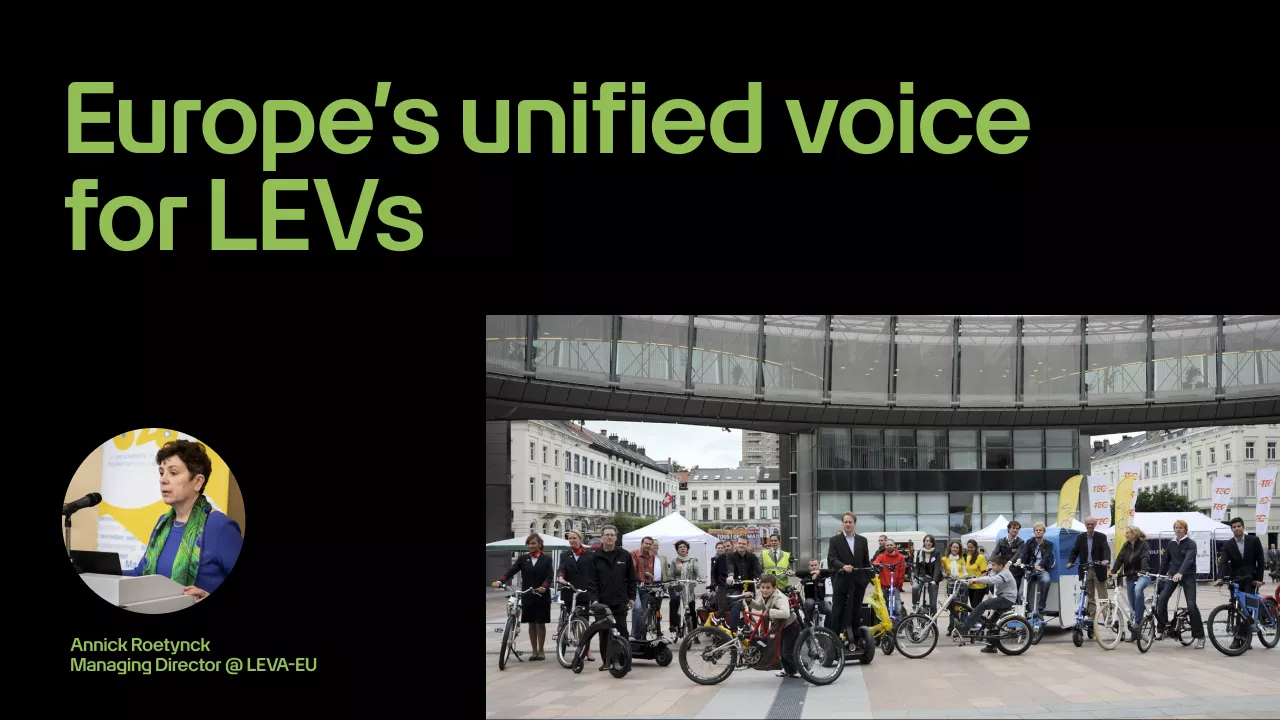
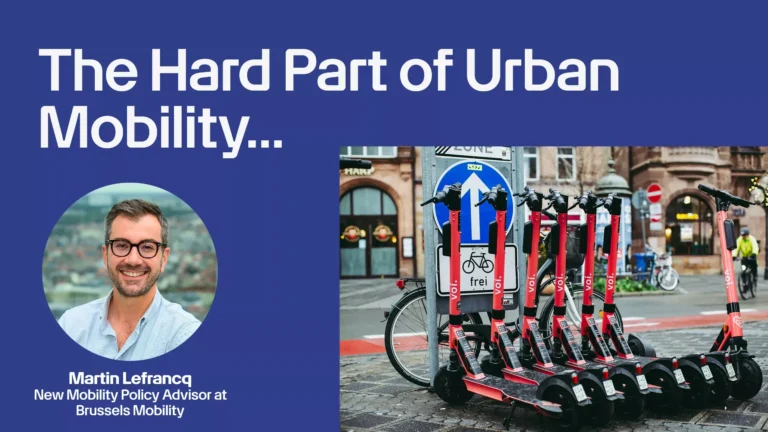
Europe’s light electric vehicle industry finally has a proper voice in Brussels.
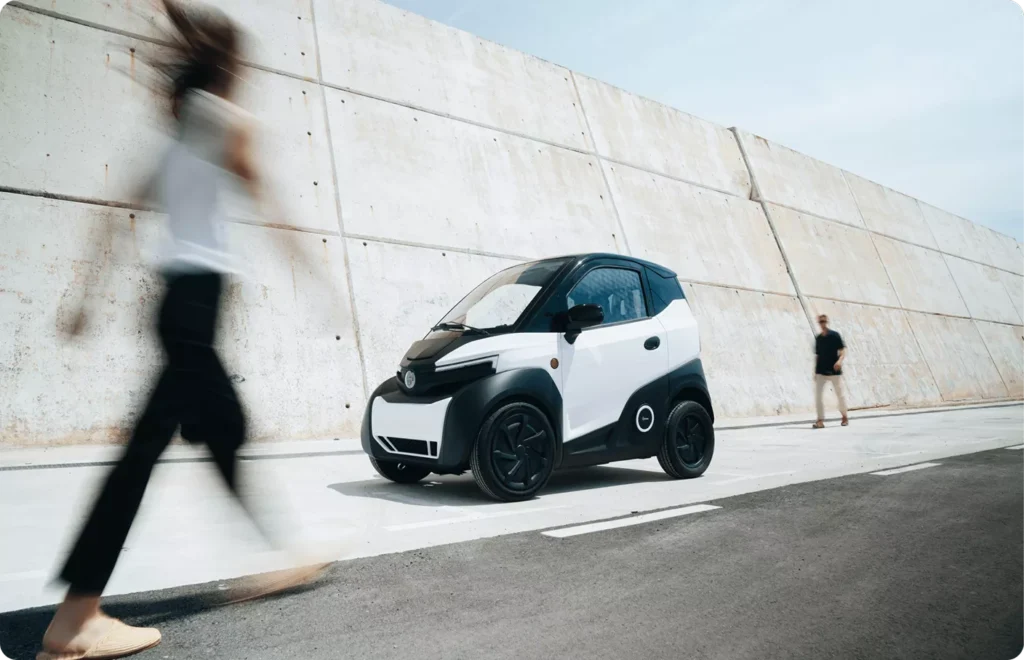
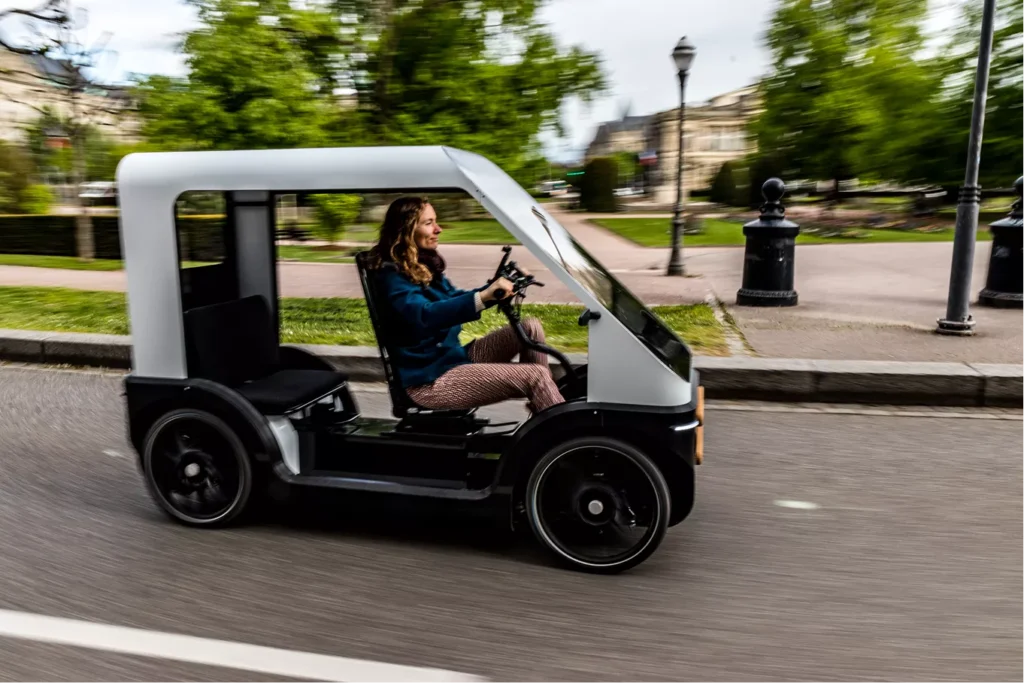
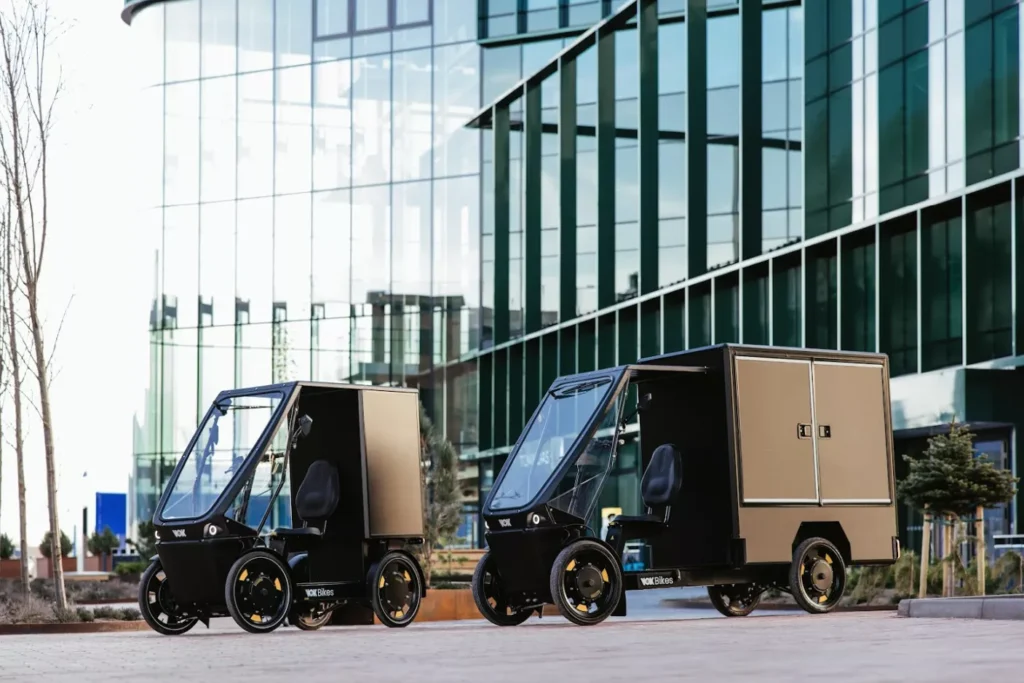
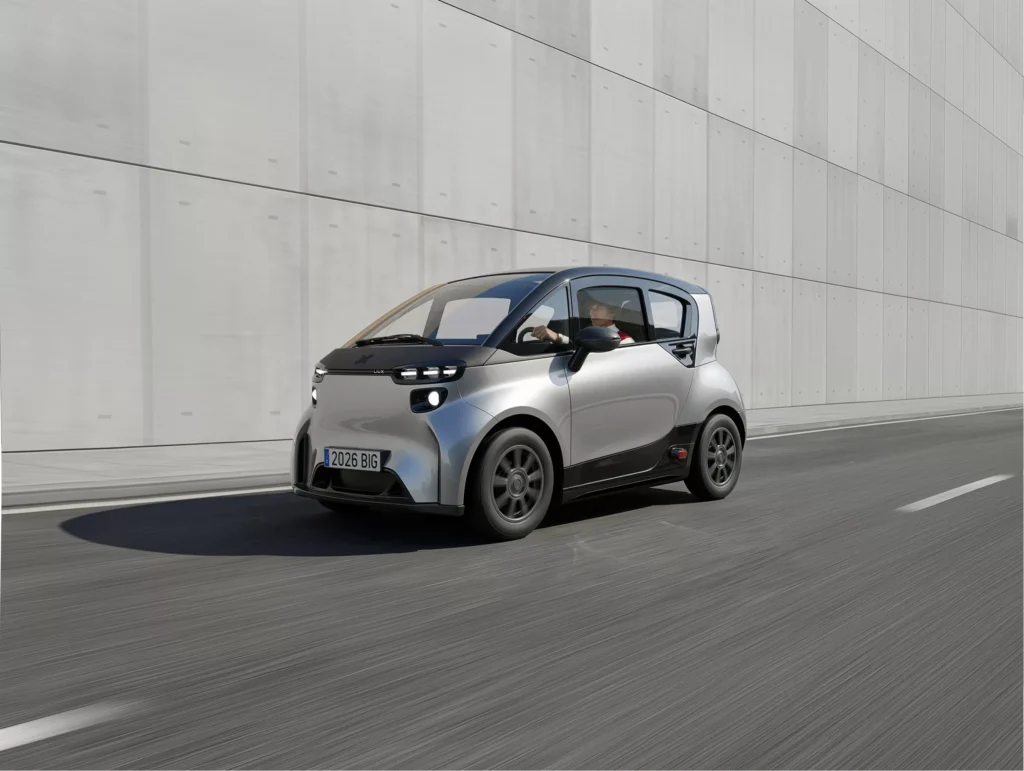
In this episode of Charging Stack, Marin talks with Annick Roetynck, Managing Director of LEVA-EU, the only trade association that represents the full spectrum of light electric vehicles (LEVs) across Europe – from e-bikes and cargo bikes to speed pedelecs, light scooters, and adapted vehicles.
Annick has spent decades at the crossroads of cycling, EU policy, and sustainable transport. She explains why today’s rules were written for motorcycles and machines, not LEVs, and what has to change if Europe wants cleaner, fairer mobility beyond cars.
This episode is for you if:
LEV and micromobility founders trying to launch or scale in Europe
Product and compliance teams wrestling with type approval, machinery rules, and standards
City officials and transport planners who want more bikes, cargo bikes, and light vehicles on their streets
Policy people, NGOs, and lobby groups working on climate, road safety, or urban mobility
Anyone curious why it is so hard to build legal, innovative light electric vehicles in the EU
In this episode, you’ll learn:
⚡ Why LEVA-EU was created and how Annick moved from cycling advocacy to building a dedicated voice for all light electric vehicles in Europe ⚡ How today’s EU rules (Regulation 168/2013 + the Machinery Directive) misclassify LEVs and block anything that isn’t a 250 W / 25 km/h pedelec ⚡ How tiny legal thresholds (250 W vs 300 W) can decide whether a product is treated like a bicycle or pushed into full type approval ⚡ How much car travel LEVs could realistically replace, and what a DLR study says about potential cuts in mileage and emissions ⚡ What needs to change in Brussels next: a dedicated LEV regulation, a formal LEV expert group, and tougher action on non-compliant imports
Topics covered include
How LEVA-EU grew out of bicycle trade advocacy into a dedicated association for all light electric vehicles.
Why “light electric vehicles” is the term they use instead of vague labels like micromobility or personal mobility devices.
How Regulation 168/2013 and the Machinery Directive fail LEVs and were never designed for these kinds of vehicles.
The 250 W / 25 km/h limit for pedelecs and why a nearly identical 300 W or throttle-assisted bike gets pushed into full type approval.
How current rules block useful formats for seniors, disabled riders, and anyone who needs throttle or non-standard vehicles.
The growing compliance burden on SMEs from EMC, RoHS, WEEE, battery rules, cybersecurity, and critical raw materials legislation.
How non-compliant cheap imports distort the market and end up triggering crackdowns that hit responsible EU brands.
What a DLR study shows about the potential of LEVs to replace car trips and cut emissions across Europe.
Examples from cities like Paris and Helsinki and what they tell us about infrastructure, safety, and political courage.
LEVA-EU’s push for a dedicated LEV regulation, an official LEV expert group in Brussels, and clearer, fairer categories based on kinetic energy.
Subscribe to Charging Stack for more podcast episodes, deep dives, and case studies with the people keeping the future of mobility running. ⚡
Share your love
Filip Bubalo
Researcher & writer for Charging Stack. Marketing manager at PROTOTYP where I help mobility companies tell better stories. Writing about the shift to electric vehicles, micromobility, and how cities are changing — with a mix of data, storytelling, and curiosity. My goal? Cut through the hype, make things clearer, and spotlight what actually works.