

Karbikes Built a Four-Wheel Cargo Bike That Feels Like a Tiny Car
Share your love
Karbikes starts from a simple observation. A lot of short-trip transport fails for boring reasons. You get soaked, arrive sweaty, and waste time hunting for parking. You try to carry one thing too many and the whole trip turns into a hassle. Half the friction isn’t even the distance, but everything around the distance.
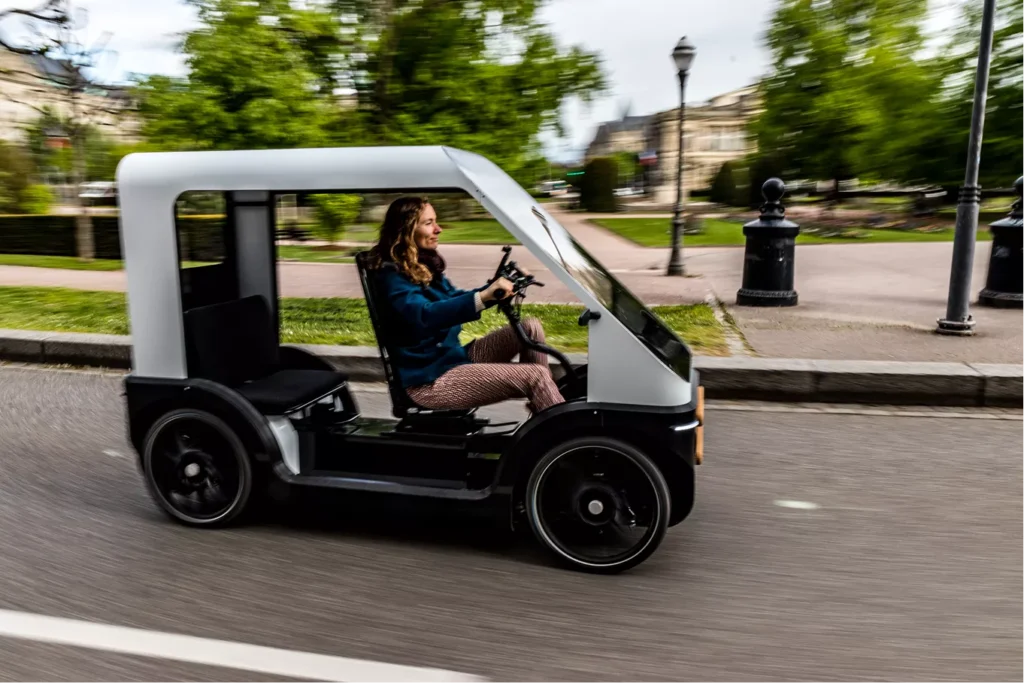
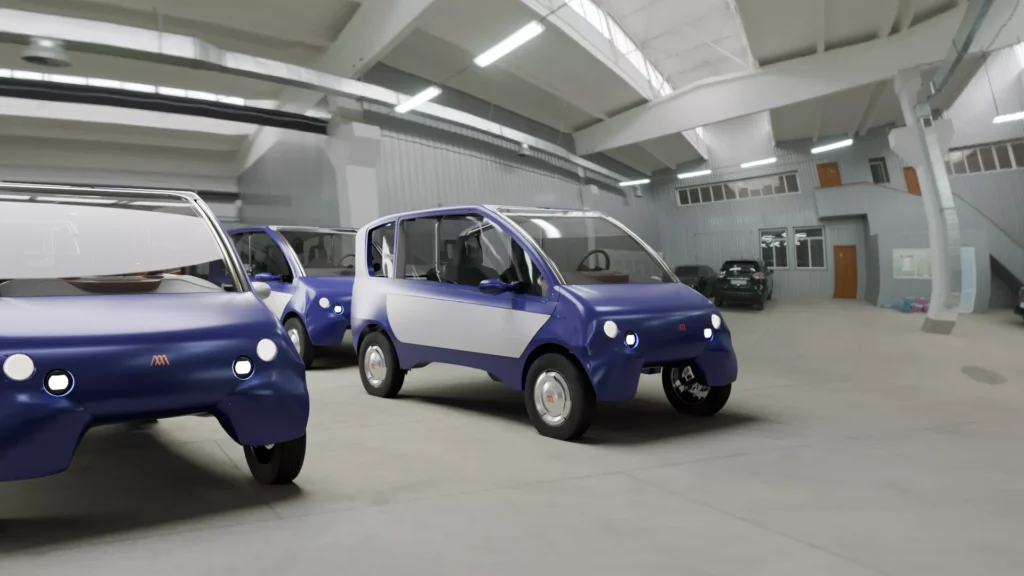
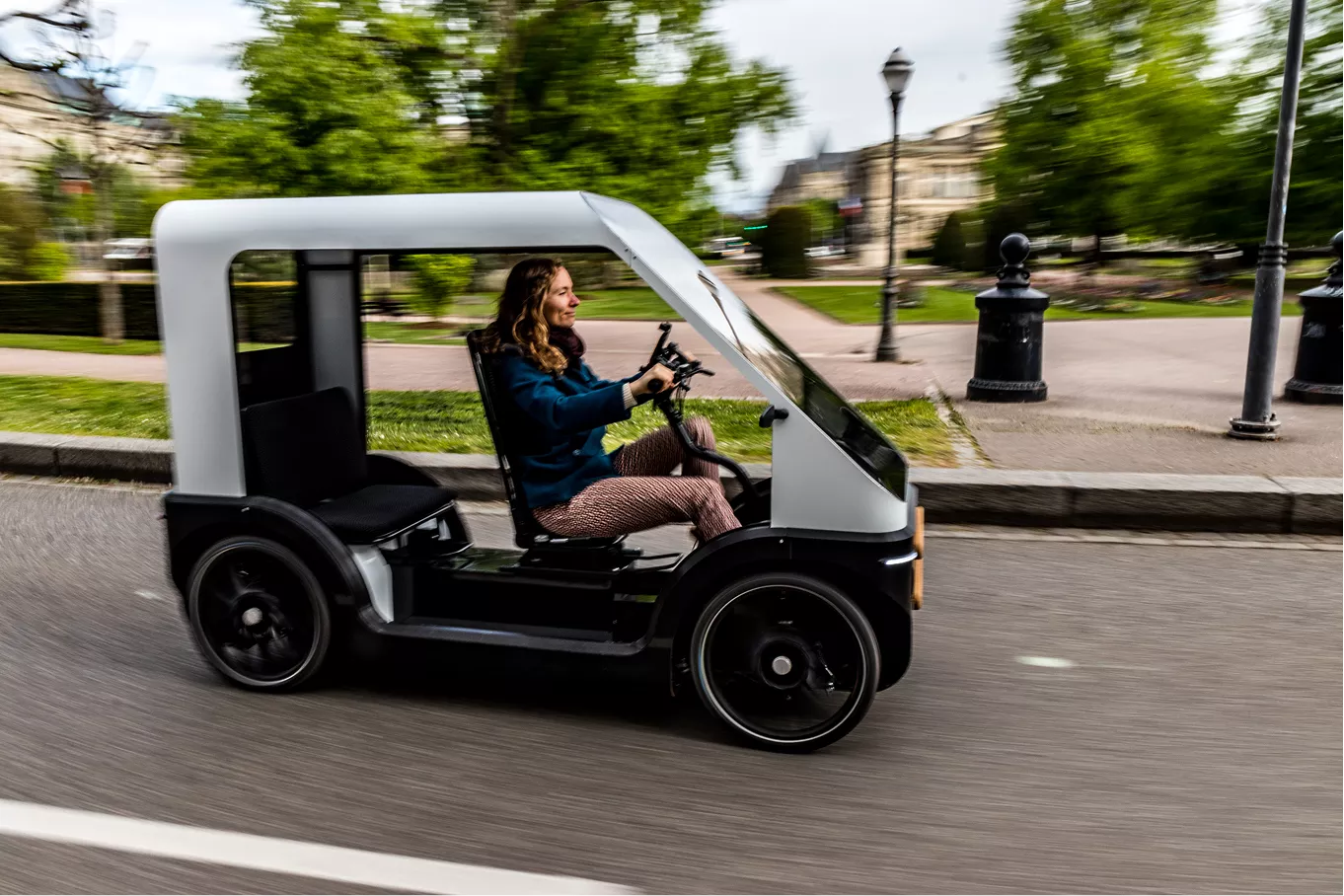
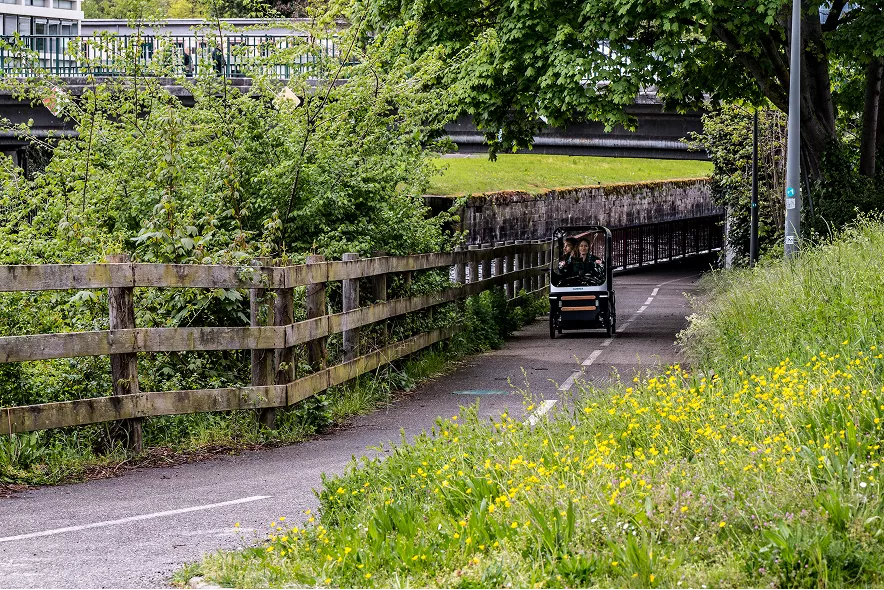
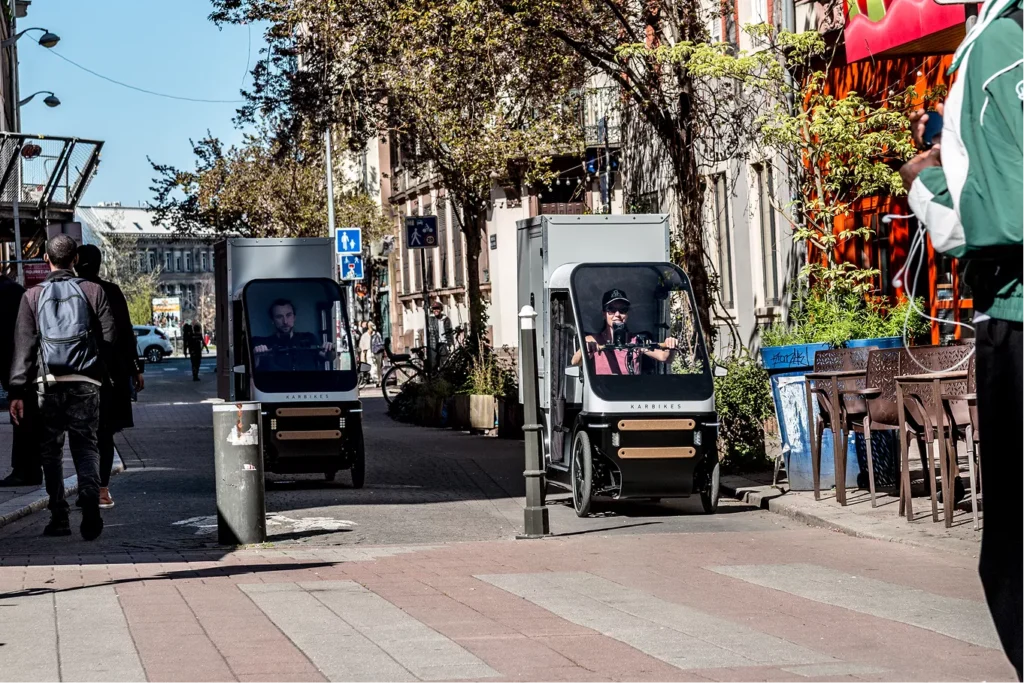
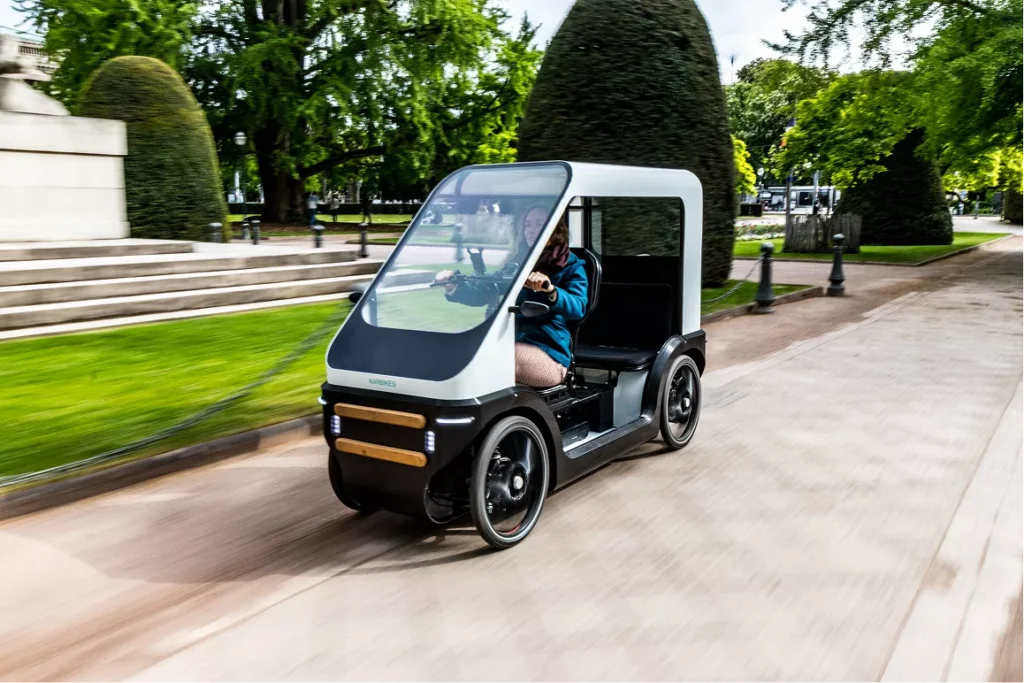
So they built a four-wheeled pedal-assist vehicle with a proper cabin. It’s 80 cm wide, meant to move through the city with bike-like ease, but feel closer to a small vehicle when the weather turns and the load gets real.
Under the skin, the decision that matters most is the drivetrain. Valeo Cyclee brings automatic shifting and reverse into a pedal-assist setup. In practice, this is the difference between wrestling the vehicle in tight spots and treating it like a tool you can use every day.
Then there’s the rollout. Karbikes is assembling near Strasbourg, leaning on French suppliers and public support signals, and selling to two groups at once. Families who want a clean replacement for the daily loop, and operators who need compact delivery volume without stepping into full car rules and costs. If the production ramp stays disciplined and the service model holds up, this could be one of the more practical bets in the in-between category.
Let’s see what’s really going on.
The problem Karbikes is solving
Cargo bikes are great when life cooperates, but the problem is that life rarely cooperates.
Most people don’t quit because the bike can’t do the job, but because the job comes with friction you feel every single day.
- Weather turns a quick trip into a commitment. Ten minutes in rain is manageable once. But when it happens daily, it’s a valid reason to stop.
- Loads change the ride. Add weight or bulk and the bike stops feeling casual. Braking changes, handling changes, and routes that felt fine start feeling exposed.
- Stop-and-go wears you down. Deliveries and errands are constant starts, locks, tight turns, quick parking moves. The vehicle stays efficient, but the human effort stays high.
- Security becomes a routine. For individuals it’s stress and for fleets it’s a process with real cost behind it.
- The usable audience is smaller than the hype. Cargo bikes reward confident riders, but when you throw in hills, fast traffic, cold, or wind and the crowd thins out fast.
That’s why cities keep seeing the same pattern. Cargo bikes look unbeatable in pilots and promo shots, then adoption hits a ceiling. The idea is right. The day-to-day is what breaks it.
Karbikes is built for the moment the trip stays short, but the ride stops feeling forgiving.
Small cars still feel like too much for short trips
Cars fix weather and cargo in one move. They also bring a lot of vehicle to a small problem.
- Size mismatch. Most short trips are one person and a small load. The car still takes up street space, curb space, and parking space that the trip never earned.
- Parking becomes the real trip. In dense areas, you don’t lose time driving. You lose time finishing the drive.
- You inherit car economics. Insurance, servicing, tires, brakes, and repairs stay in the car category even when the route is basically a loop around the neighborhood.
- Cities treat cars like cars. Access rules, delivery constraints, and curb management don’t care that your trip is only five minutes.
- Energy gets overbuilt. Short routes don’t need big batteries and heavy platforms, but something light that’s easy to use every day.
So you end up stuck between two imperfect options. Bikes are efficient, but you feel every downside of exposure. Cars are comfortable, but they’re too much for the job. Karbikes is trying to own the space in between, where the trip stays small but the experience stops feeling fragile.
What Karbikes is (and why the EPAC angle matters)
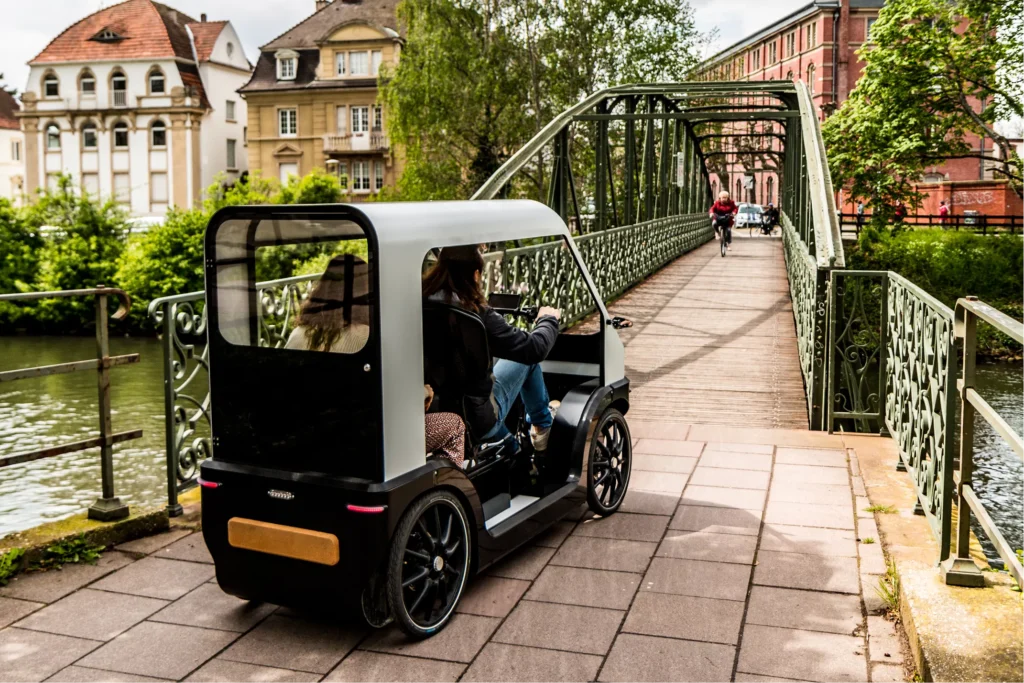
Karbikes builds an enclosed, four-wheeled pedal-assist vehicle that tries to behave like an e-bike in the city, while removing the parts that make cargo bikes hard to live with long term.
It’s 80 cm wide, it gives you a proper cabin, and it’s built for the short-trip grind. Errands, school runs, service calls, local deliveries. The trips that pile up and quietly decide what people actually use.
You still pedal. The difference is how little you have to fight the vehicle when the load gets heavy and the route turns into stop-start traffic. The drivetrain is there to keep the experience steady.
What you gain by staying in the e-bike category and what you don’t
The EPAC choice is the move that makes the whole idea viable. If the vehicle stays inside assisted e-bike rules, you avoid turning a short trip into a paperwork trip. You keep the daily overhead lower. In many places, you also keep access closer to bike norms than car norms, which matters because the whole point of these trips is speed and convenience, rather than horsepower.
That advantage comes with a ceiling. Assist stops at 25 km/h, which limits what the vehicle can replace outside dense cores. And the “bike” label doesn’t erase real-world interpretation. Four wheels plus bike infrastructure will be treated differently depending on the city. Some places will accept it cleanly. Others will push it into grey areas around where it can ride and where it can park.
The expectation gap matters too. You get a cabin and stability, but you’re not buying a small car. It isn’t built or regulated to behave like one at higher speeds, and it shouldn’t be framed that way.
That’s the trade Karbikes is betting on. Keep the rules and the operating reality closer to a bike, then make the 0–25 km/h experience good enough that people stop reaching for a car key on trips this short.
The vehicle lineup
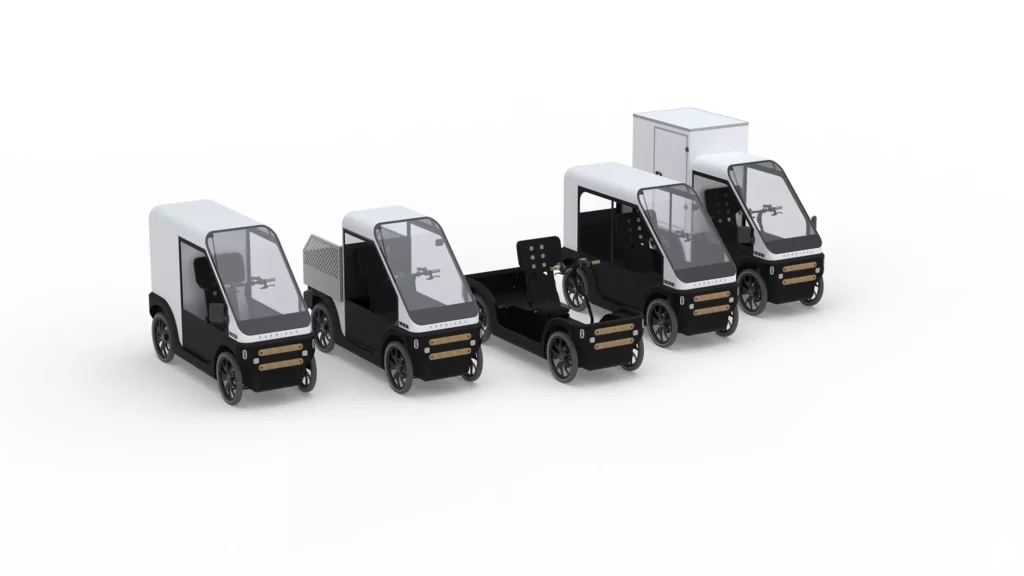
Karbikes keeps the lineup intentionally tight. You get one core format, an enclosed four-wheel EPAC built around the 25 km/h assist limit, and then you choose what the rear is for.
The footprint stays compact, only the job changes.
Kozi for families
Kozi is the everyday version built around people first. The rear bench is modular and fits one adult or two kids, and you still get a trunk up to 400 L for groceries, school bags, and the small errands that multiply across a week. The promise is you can use it year-round without having to “plan around” the weather or the load the way you often do on a cargo bike.
The family pitch is less about fancy extras and more about removing the reasons people quit. The cabin is designed to be used in real seasons, and Karbikes even calls out that the doors can be opened when the sun is out.
Up front it’s built around fit and comfort, with a sliding seat, adjustable backrest, and adjustable handlebars, plus rider height support from 150 to 195 cm. Then you get the basics that make traffic feel less stressful, including turn signals, mirrors, strong lighting, plus a horn and bell.
Here are the hard numbers Karbikes published for Kozi.
- Dimensions: 80 cm wide, 229 cm long, 150 cm high
- Unladen weight: ~100 kg without battery
- Motor and assist: 250 W rated, 130 Nm, assist up to 25 km/h, downhill speed cited at 35 km/h
- Battery options and range: 630 Wh or 1240 Wh, stated range 40 km / 80 km, removable or charge on-vehicle
- Drivetrain and control details: 7-speed automatic gearbox (450%), reverse via trigger without pedaling
- Chassis and braking: 4 hydraulic disc brakes, parking brake on all 4 wheels, McPherson front + rigid axle rear, 3 m turning radius
- Daily-use extras: USB-C, smartphone app, Bluetooth locking
On Karbikes’ site, Kozi starts around €10.9k with a €500 reservation, with deliveries indicated from March 2026. The number matters because it’s not “bike money,” but it’s also not “microcar money,” and that’s the entire bet.
Kubi and Koli for delivery and utility work
If Kozi is built around people, Kubi and Koli are built around jobs. Same core vehicle, same compact footprint, but everything behind the driver becomes work space.
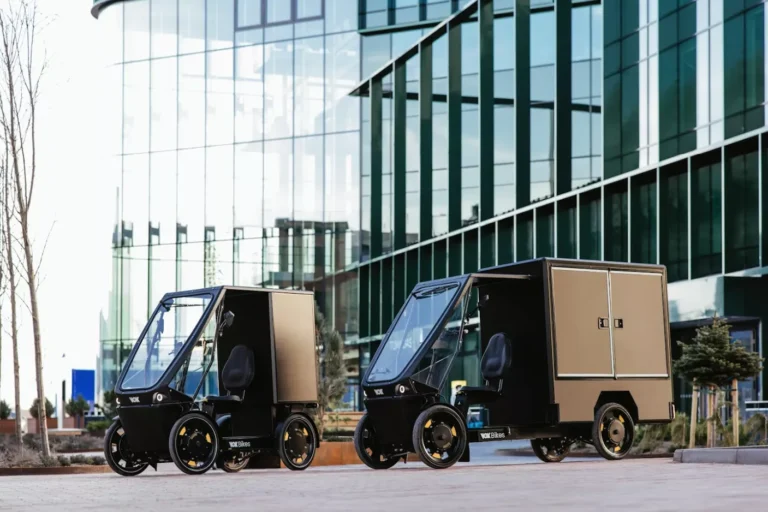
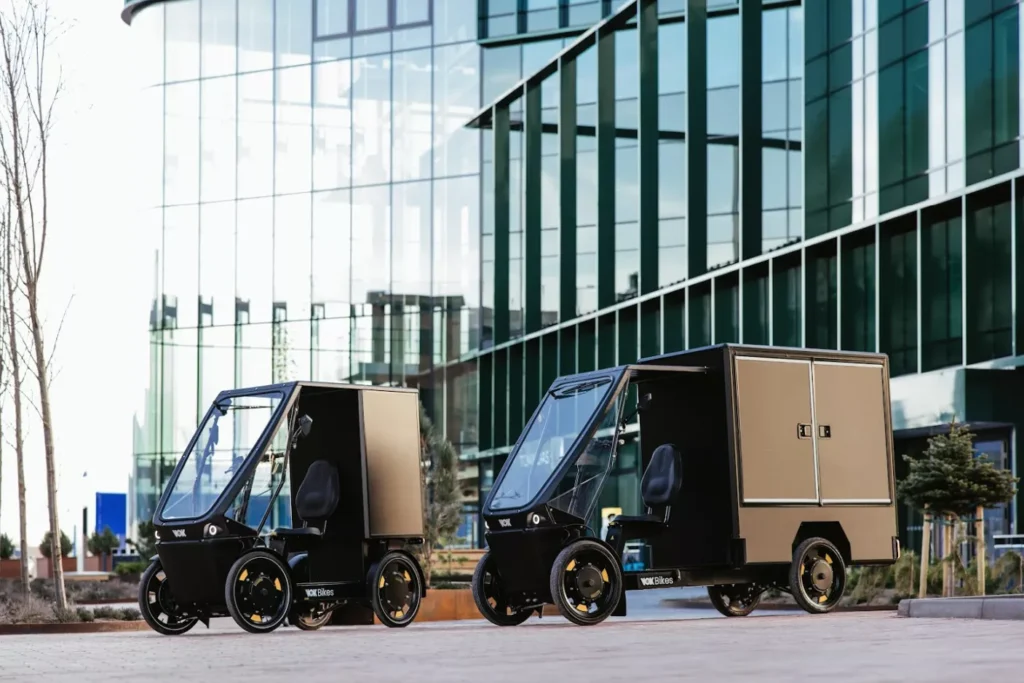
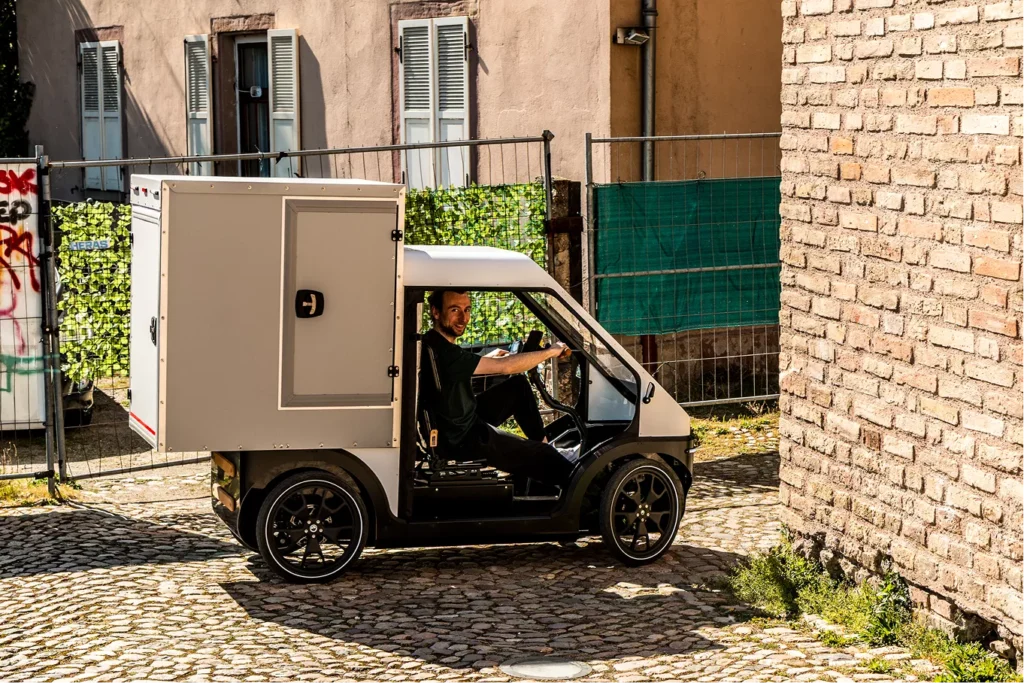
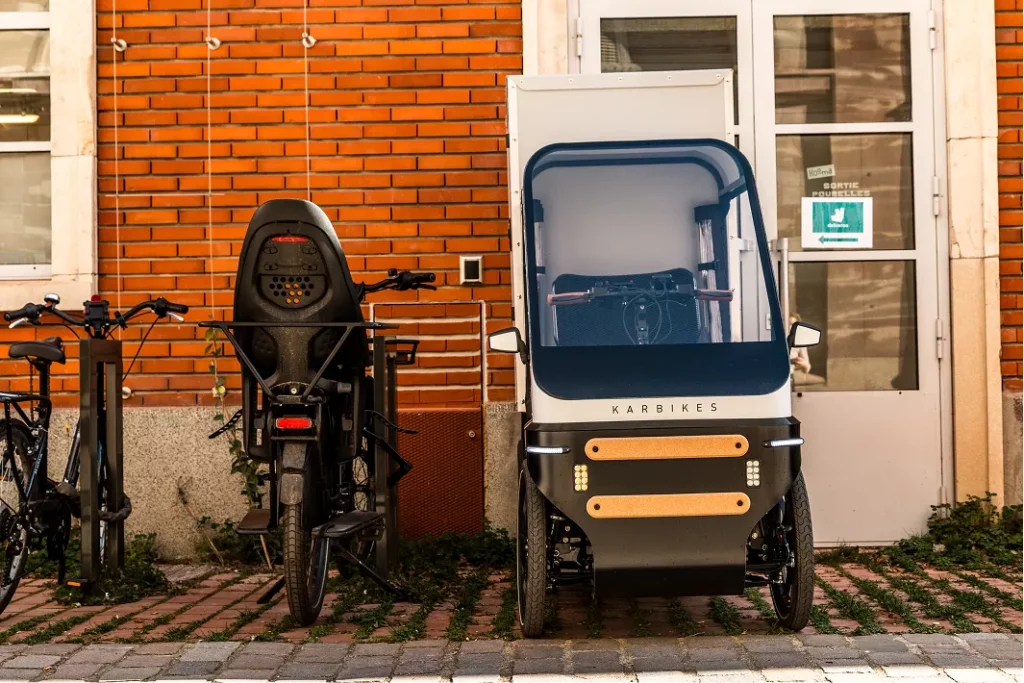
Kubi is the smaller service setup. It keeps Kozi’s body size and swaps the rear bench for a closed 500 L box. That puts it right in the sweet spot for urban ops. Tools, maintenance gear, site-to-site errands, local deliveries where you want to stop close, lock up fast, and keep everything dry.
Karbikes lists Kubi at 80 cm wide, 229 cm long, 150 cm high, and around 100 kg without the battery. Battery options stay the same as Kozi, with 630 Wh or 1240 Wh and stated ranges of 40 km / 80 km, charged either by removing the battery or plugging the vehicle in. The day-to-day usability details carry over too, including the 7-speed automatic gearbox, a reverse trigger, plus road basics like turn signals and a Bluetooth lock.
Karbikes is offering Kubi from €10,900 with a €500 reservation, with delivery slated for March 2026.
Koli is the step up when you want the volume to feel more like a mini-van. The rear becomes a taller, larger enclosure with 1000 L of box capacity, and Karbikes also calls out up to 150 kg cargo for the box use case. It’s aimed at trades, parcels, municipal work, and anyone running short routes where the limiting factor is usually volume, not speed.
The larger body changes the proportions. Karbikes lists Koli at 80 cm wide, 269 cm long, 180 cm high, and about 130 kg without the battery. Range expectations drop accordingly, with stated ranges of 30 km on the 630 Wh pack and 60 km on the 1240 Wh pack.
Everything else stays consistent with the platform, including 250 W rated power, 130 Nm, assist to 25 km/h, a downhill speed cited at 35 km/h, the 7-speed automatic gearbox, reverse, and the same vehicle hardware package like hydraulic disc brakes, parking brake on all four wheels, a 3 m turning circle, and USB-C.
What’s actually different under the skin
From the outside, Karbikes looks almost too simple. Four wheels, a bicycle speed limit, and a cabin that keeps you dry. The real work is in how they make that package behave like a proper vehicle without tipping into moped or microcar territory.
They’re trying to win the “in-between” category with three choices.
- A high-torque pedal-assist drivetrain that stays usable when the vehicle is loaded, paired with an integrated gearbox and reverse so low-speed maneuvers don’t turn into wrestling matches.
- A battery setup sized for short, repeat trips and frequent top-ups, not for range bragging.
- A chassis and control package that borrows the right ideas from cars, stability, braking, parking control, while still living inside e-bike constraints.
You can see that intent in the details Karbikes keeps repeating across its own materials. The automatic gearbox and reverse trigger, a parking brake on all four wheels, and an anti-theft flow built around phone or code access.
Even the way they talk about gradients, loaded weight, and downhill behavior, including their own stated expectation that real-world downhill speed tops out around 35 km/h. These are the small decisions that decide whether a vehicle gets used daily or becomes a weekend experiment.
Valeo Cyclee, auto shifting, and reverse
Karbikes is building around Valeo Cyclee, a 48V mid-drive system that pairs electric assist with an adaptive automatic gearbox. Valeo sells it on torque and smoothness, and Karbikes leans into the same point. The numbers they publish are clear enough. 130 Nm, a 7-speed automatic gearbox with a 450% range, 250 W rated power, and assist capped at 25 km/h.
Those specs matter because this is a heavy, enclosed quad that’s meant to be used like a tool. If the drivetrain feels fussy, people stop using it.
Auto shifting here is less focused on comfort and more on keeping the ride predictable.
Cargo setups get annoying when conditions change mid-trip. Two kids in the back, groceries, a headwind, a stop-start route, then a small climb you didn’t plan for. With automatic shifting, the system does the boring part for you. It tries to keep pedaling effort in a steady band so the vehicle doesn’t suddenly feel twice as heavy just because the route got messy.
Reverse is what makes tight maneuvers feel normal.
Karbikes lists reverse as “via trigger, without pedaling,” and its materials communicate a concrete figure of up to 6 km/h, driven by the start-assist trigger. That sounds minor until you picture daily use. You nose into a curb spot, you’re loaded, you need to back out cleanly without doing awkward foot-powered shuffles. Reverse turns that into one simple move.
There’s also a bigger drivetrain change on the horizon. Karbikes says a chainless “generator pedal” setup is planned from 2026, where pedaling generates electricity that feeds a rear motor directly. If that arrives as described, it’s so much more than an upgrade.
It’s a different architecture, and it will be judged the same way everything else in this category gets judged. Not by how clever it sounds, but by how easy it is to live with every day.
Batteries, range, and realistic usage expectations
Karbikes is unusually clear about what the battery is meant to do. This is not built for long-range days. It’s built for short urban loops that repeat, then a normal recharge from a wall socket.
They publish two battery sizes depending on where you look. On some pages you’ll see 630 Wh and 1240 Wh. On their website it’s described more loosely as 630–650 Wh and 1,240 Wh. Charging follows the same practical logic. You either plug the vehicle in, or remove the pack and charge it indoors.
Range claims sit in a tight band, and they’re different for the large-box model for an obvious reason.
- Kozi / Kubi: roughly 40 km on the smaller pack, roughly 80 km on the bigger pack
- Koli: roughly 30 km on the smaller pack, roughly 60 km on the bigger pack
Karbikes also makes the usual caveat explicit. Range moves with assist level, load, hills, and temperature.
A few expectations matter if you want to read these numbers correctly.
First, this is a “charge often” vehicle. Those 30–80 km figures make sense when the day is a stack of short trips, not one long drive. School run, errands, local deliveries, site hops… You win on convenience and access, not on distance.
Second, weight is part of the range story, and Karbikes actually gives you a frame for it. Their materials list a GVW of 330 kg with the Valeo engine and an empty weight of 120 kg, which implies about 210 kg left for passengers and cargo. That’s the number that decides what “real range” looks like for a loaded Koli versus an empty Kozi.
Third, it’s worth being precise about what’s in the system today. They say the current Valeo setup does not include regenerative braking or solar input yet, and that those features are tied to a planned battery update for 2026. That matters because “enclosed quad” makes people assume the energy story is doing more than it currently is. Right now, the efficiency is mostly about low speed, low mass, and frequent charging.
How Karbikes plans to scale
Karbikes is trying to scale without losing the one thing that makes the product viable. Keep it in the e-bike category, then build it like a serious small vehicle.
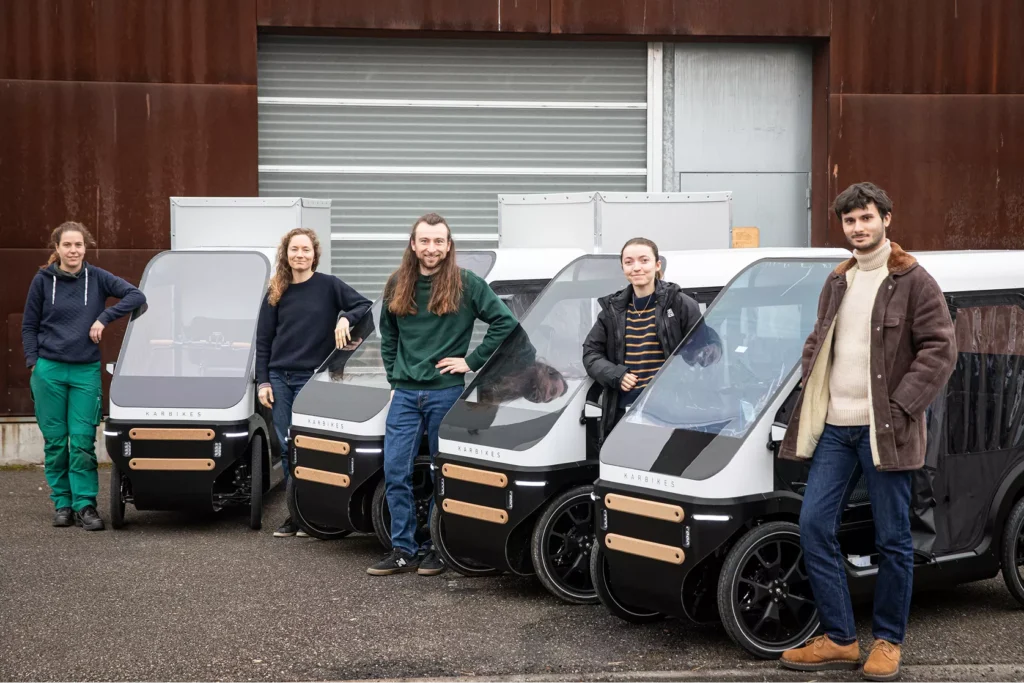
Their timeline is already laid out in public. They say production started in September 2024 in a workshop in Strasbourg. In May 2025, they moved to a new workshop near Strasbourg airport and attached a capacity claim to it, 400 Karbikes per year. That’s not a moonshot number. It’s the kind of target you set when you believe the build can be systematized.
The “made local” angle is also presented with unusual specificity, and it’s worth reading it the way they frame it. Karbikes doesn’t claim that every part is made nearby. They talk in terms of value. They claim 80% of the vehicle’s value is French, and 50% is produced within roughly 100 km of the assembly workshop. If those figures hold, it signals a supplier strategy built around short distances and tighter feedback loops, the boring advantages that matter once the first real warranty cases start landing.
The bigger shift comes next. A post from the mobility cluster Pôle Véhicule du Futur describes a move from early batches into industrial production in spring 2026, with chassis and bodywork made in Alsace and assembly in a new workshop on the outskirts of Strasbourg. That’s the transition that decides the story. Not the concept, not the positioning, but whether they can build the same vehicle twice, then a hundred times, then keep quality stable as volume climbs.
Funding, partners, and what they signal
Karbikes’ funding story is small by vehicle-industry standards, and that’s the point. The public headline is a €1.1M raise linked to France 2030 support, described as coming from individual investors and business angels. They also present the round as still open, with a stated target of €1.5M to push industrialization through.
Additional reporting adds useful color on who’s involved and how much of this is public-backed. It points to private investors including Valeureux, and roughly €300k in public subsidies, with France 2030, Bpifrance, ADEME, and Région Grand Est named.
Taken together, this doesn’t read like a company gearing up for a massive rollout overnight, but reads like a company trying to do the next hard thing well. Money for tooling, early supplier commitments, and the working capital required to turn reservations into delivered vehicles, without building a giant factory story around it.
That lines up with the broader strategy. Keep CapEx contained, tighten the production loop, and earn scale through repeatable builds rather than big fundraising headlines.
Go-to-market plan (pricing, lead times, service)
Karbikes isn’t being coy about the offer. The pitch is simple and very transactional. A €500 reservation, a 2-year warranty, and pricing that starts in the €10–11k range.
The next question is always timing, and their public info shows more than one answer. Their website communicates lead time between order and delivery is currently around six months, with an explicit nudge for fleet buyers to plan ahead.
Service is described in similarly practical terms. You get a maintenance booklet for preventive care. If you buy through a shop, service runs through that seller. If you order directly online, Karbikes points to a direct support line, access to spare parts, and, when needed, a technician visit. They also say they can deliver across Europe by road, and beyond Europe by boat, with vehicles arriving assembled and ready to use.
Put together, the go-to-market looks like families and fleets in parallel, but the real constraint is neither marketing nor demand, but throughput. Once the spring 2026 industrial phase they describe is in motion, the story becomes brutally simple – how fast they can deliver, and how well they can keep vehicles running once real daily wear starts showing up.
Where Karbikes fits in the market
vs cargo bikes
Karbikes sits exactly where cargo bikes start to lose people. Not because the bikes stop working, but because the conditions stop cooperating. Weather turns. Traffic feels exposed. Loads get awkward. The trip stops feeling like a simple ride and starts feeling like a small operation.
Their pitch is to keep the e-bike rulebook, then fix the parts of the experience that push riders back into cars. Same pedal-assist logic and the same 25 km/h ceiling, but with a full cabin, four-wheel stability, and a set of “vehicle” touches that matter when you’re loaded and maneuvering in tight streets. On Kozi’s published spec story, that’s an 80 cm footprint paired with a high-torque system and automatic gearing.
So it’s not competing with the best cargo bikes on perfect days. It’s competing with the days that make cargo bikes feel like commitment. The rain commute. The school run with a headwind. The delivery route that becomes stop-start-stop-start for two hours. That’s the moment Karbikes is built to own.
vs microcars like Ami Cargo
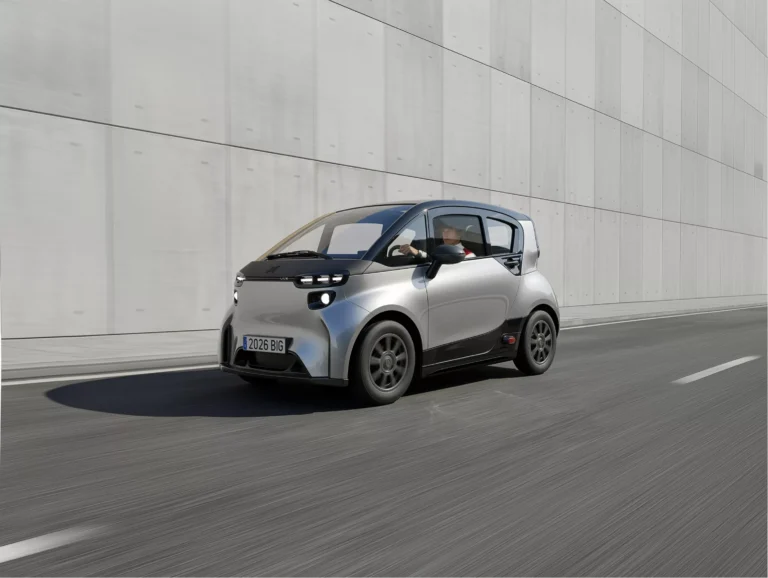
Ami Cargo solves the opposite problem. It gives you a small enclosed EV that behaves like a vehicle, but it still lives in the quadricycle world, with the paperwork, road expectations, and curb reality that come with it.
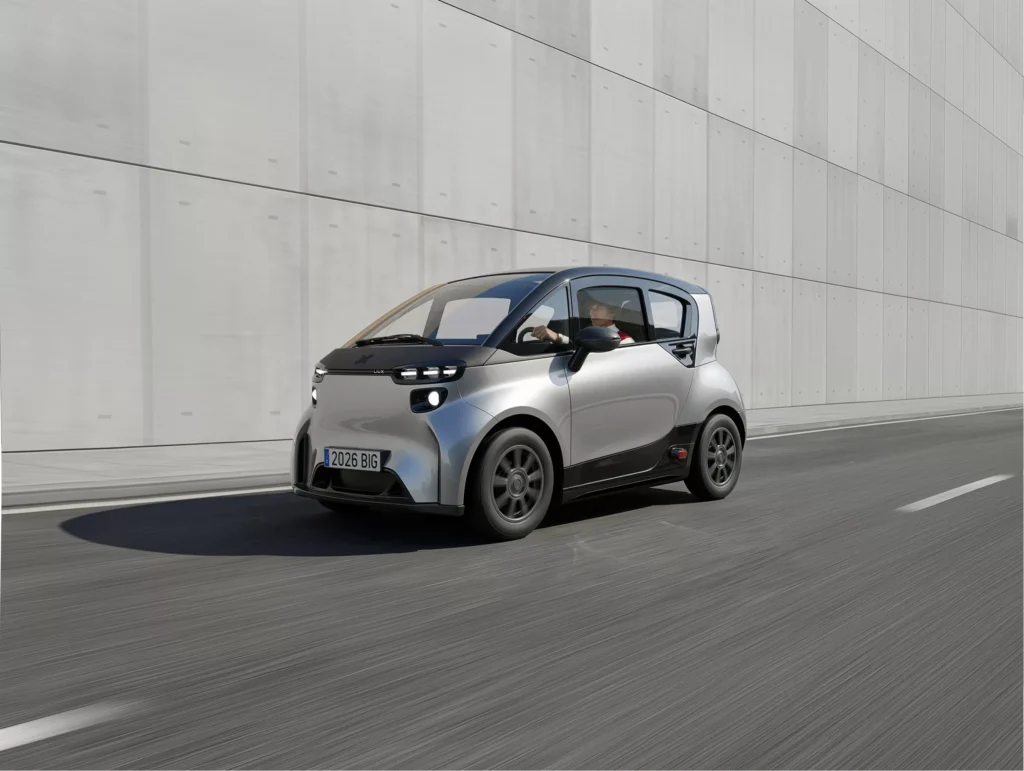
On Citroën’s own positioning, Ami Cargo is around 140 kg of payload and about 200 L of loading capacity. The broader Ami package is familiar: about 45 km/h top speed and roughly 75 km of range in normal coverage. It’s a straightforward tiny car.
Karbikes isn’t trying to beat that on speed or road performance. It’s trying to beat it on “city fit.” If the EPAC classification holds in a given market, you trade speed for a different kind of convenience: lower overhead, simpler operation, and a footprint that can behave more like a bike than a road vehicle in daily use. Ami feels more car-like. Karbikes stays slower, but tries to be easier to live with when the trip is short and the city is tight.
vs other enclosed e-quads and “car-bikes”
This is the real comparison set, because it’s the same core idea: pedal-assist vehicles that look like tiny cars.
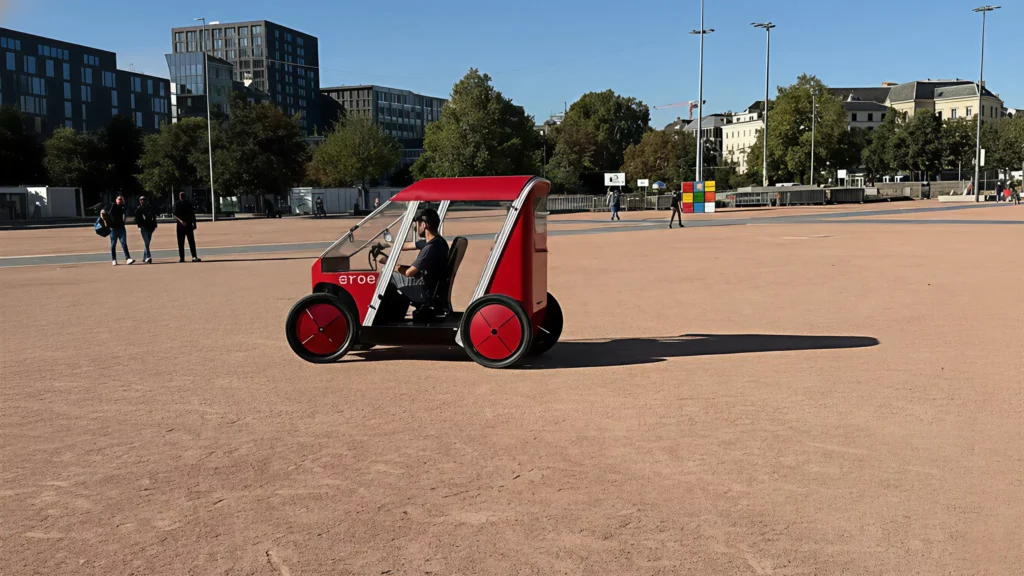
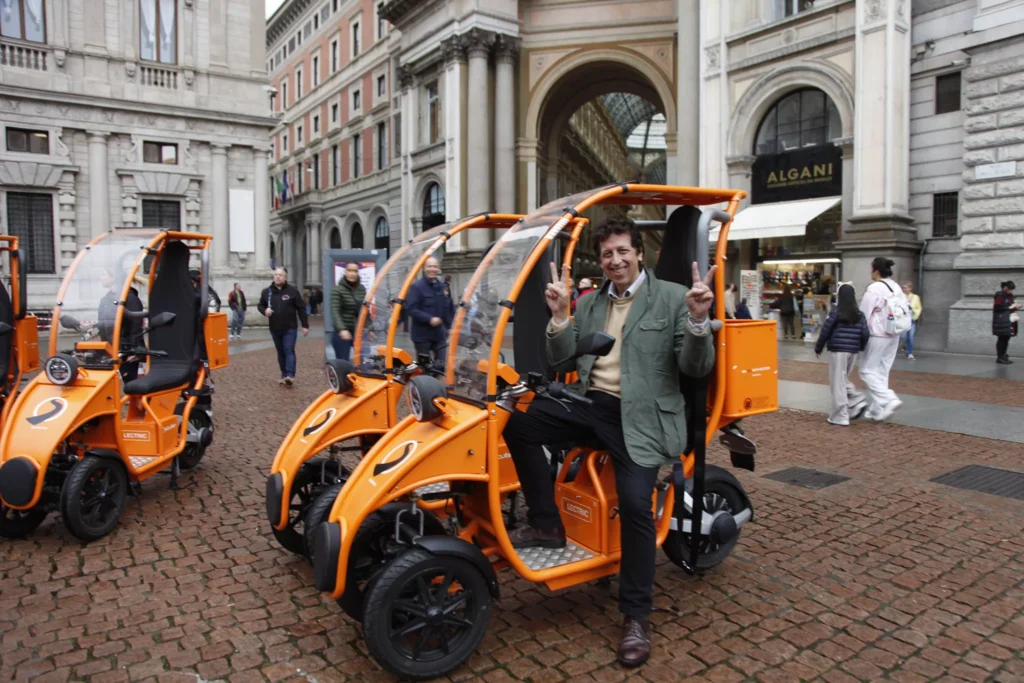
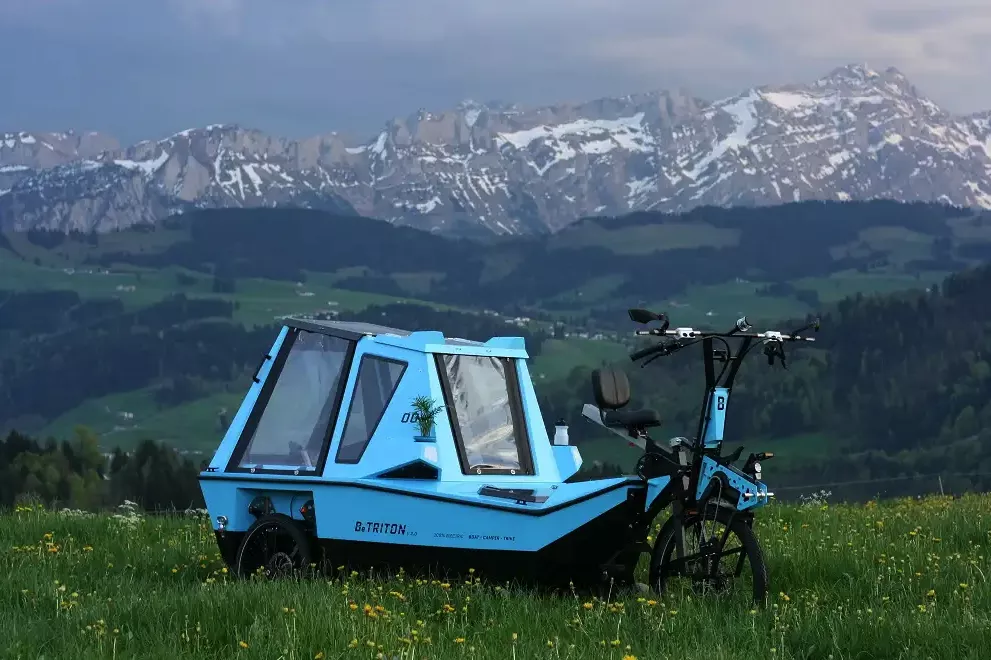
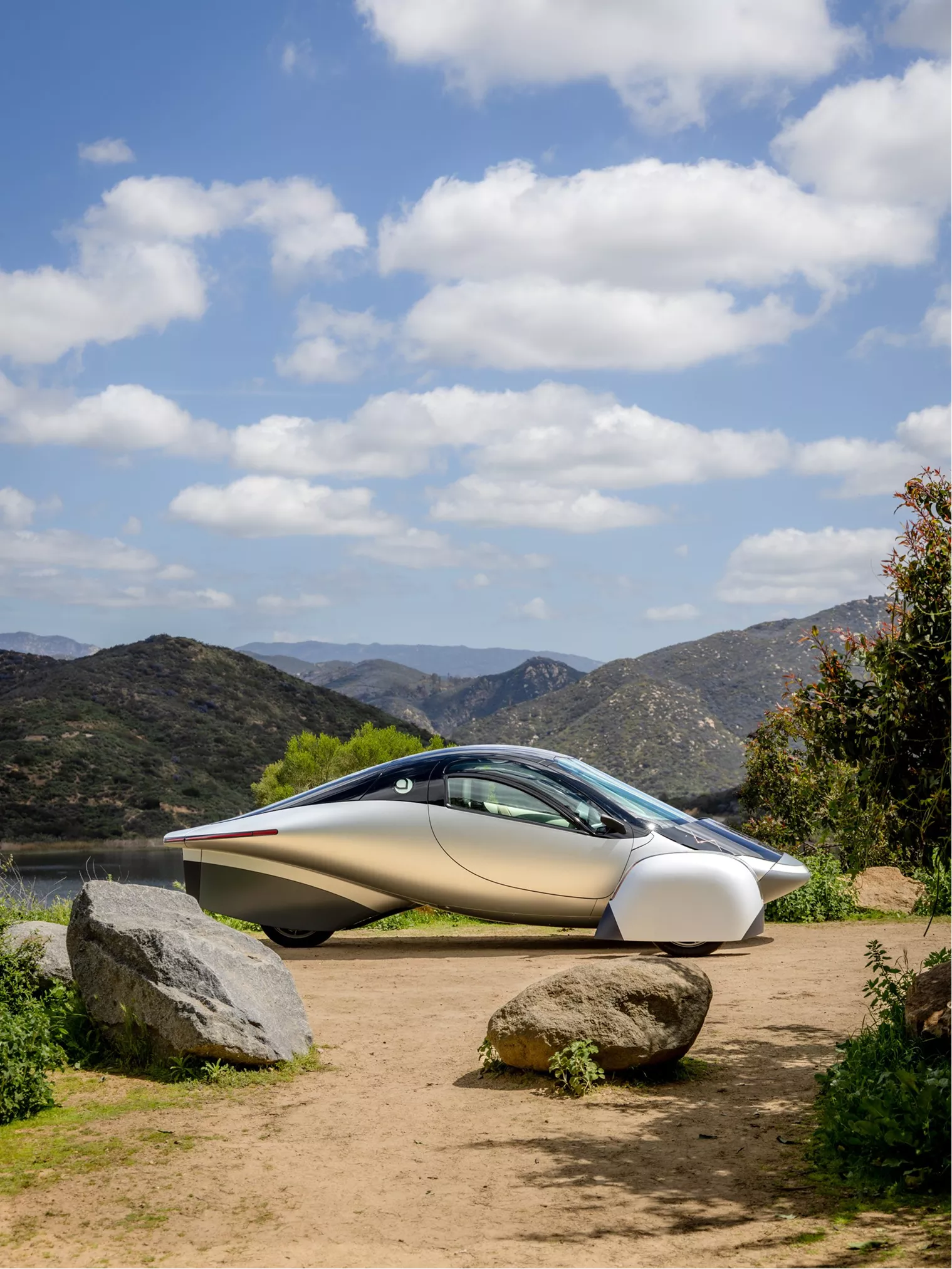
Podbike Frikar is the closest in concept. Podbike lists 84 cm width, assist up to 25 km/h, and 160 L of storage behind the seat, with a base price starting at €5,000 (+VAT, shipping, options). It’s commuter-first, built around weather protection and efficiency for one main rider.
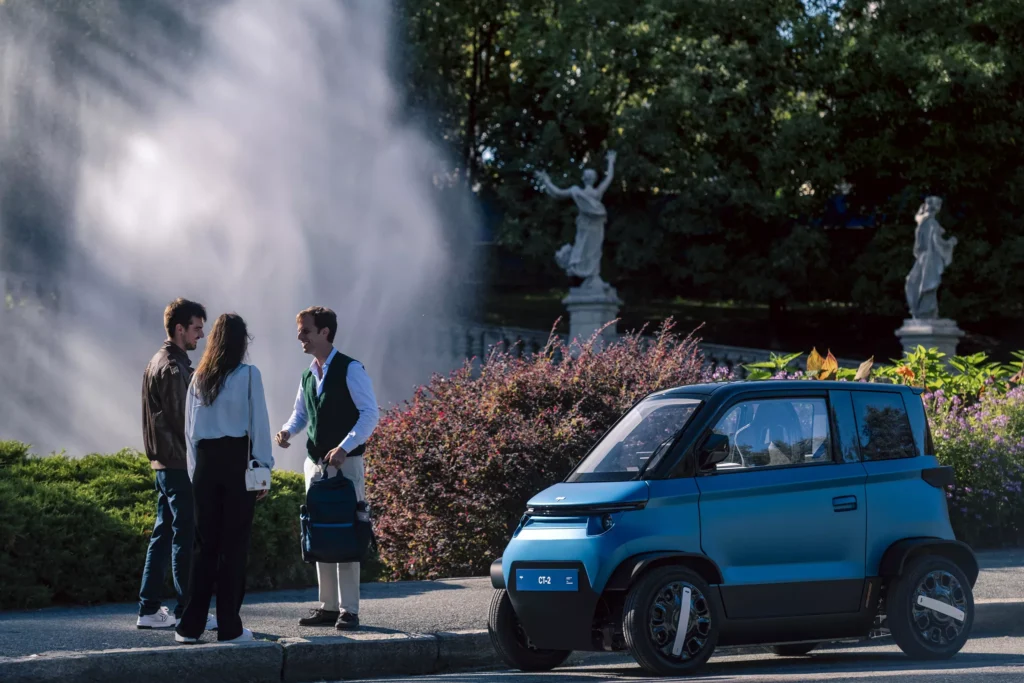
CityQ lives in the same “bike classification” framing. CityQ explains it’s treated as a bike because max speed is 25 km/h, and you need to pedal to go beyond 6 km/h, with a more software-defined drivetrain approach. Pricing has been reported in a premium band, with Forbes citing an expected £10k–£12k range.
Karbikes leans more practical than both. Kozi is framed around family use, and Kubi/Koli turn the rear into fixed-volume work boxes at 500 L and 1,000 L. Then there’s the operator detail: the drivetrain choices are sold as usability features, not tech bragging. Auto shifting to keep effort consistent under load. Reverse so you can back out cleanly when you’re fully packed and nose-in at the curb.
If you want the simplest read on the segment:
- Podbike is a commuter capsule.
- CityQ is a bike-like vehicle with a car-ish feel.
- Karbikes is a short-trip tool, built to carry people or cargo, and shaped to be manufactured and serviced like a real product line.
Here’s what to watch next
Karbikes is past the concept stage. Now it’s entering the phase where small manufacturers either harden into something reliable or get stuck in the gap between preorders and deliveries.
Three things will tell you which way this goes.
Production ramp + delivery timeline consistency
The first test is simple: dates. Right now, Karbikes’ own pages don’t fully agree. You can find “next deliveries: January 2026” on some model pages, “delivery from March 2026” in reservation copy, and an FAQ line that frames lead time at roughly six months. That’s not unusual at this stage, but it becomes a credibility issue if it stays messy. Fleets and families don’t buy concepts. They buy schedules they can plan around.
The second test is output. They describe a clear transition with production beginning in 2024, a workshop move in 2025, and a step into industrial production in spring 2026 with chassis and bodywork made in Alsace and assembly in a new Strasbourg-area facility. That shift has to show up in the only metric that matters, delivered vehicles with consistent build quality.
The third test is whether capacity turns out to be real. The newer workshop is tied to a stated capacity of about 400 units per year. The question isn’t whether that number can exist on paper. It’s whether it holds up under the boring realities – parts availability, quality control, rework, warranty loops, and assembly rhythm.
Service model, durability, and regulatory edge cases
This category doesn’t get decided by the idea. It gets decided by repeat use. The kind of use where nobody is gentle and nobody has patience.
Start with service. Karbikes lays out a split route. Buy through a shop and service runs through the seller. Order direct and you go back to Karbikes for parts, support, and, when needed, a technician intervention. That’s a perfectly normal setup early on. The question is what happens when the first wave of vehicles is out in the wild at the same time. Families want quick fixes. Fleets need predictable turnaround. If support stays ad-hoc, downtime becomes the hidden bill.
Then comes durability. A four-wheel cabin running daily errands doesn’t get treated like a bicycle, even if it sits in the e-bike category. Doors get opened a hundred times a week. Seals get hammered by rain and winter grime. Brakes and tires wear under load. The drivetrain has to feel the same on day 300 as it did on day three. Karbikes’ own warning about overspeed affecting warranty is a quiet tell here. They’re thinking about misuse and edge cases because they know that’s where the product gets tested.
And finally, the regulatory edge cases. EPAC is the advantage, but it’s also where friction can show up without warning. Four wheels inside “bike” rules isn’t interpreted uniformly. Even if the assist limit is compliant, cities can differ on where it’s allowed to ride, where it can park, what insurance expectations look like, and how enforcement treats it on mixed-use paths. The proof won’t be another spec sheet or a cleaner render. It’ll be boring, repeatable deployments in multiple municipalities, with no recurring access drama.
Where is Karbikes heading?
Karbikes will not win by trying to out-spec anyone. It wins if it becomes the thing people reach for when the “quick trip” starts feeling like work on a bike, but still feels absurd in a car. School runs, grocery loops, a parcel pickup, a local service route. The boring trips that quietly decide what ends up clogging a city.
The product logic is already solid. A proper cabin so weather stops being the deal-breaker. Four wheels so loads feel stable and stops feel controlled. Pedal-assist so the running costs stay closer to an e-bike than a microcar. That combination only matters if the surrounding system holds up, and 2026 is where it gets judged in public.
Three questions will decide the story. Can they ramp output without quality drifting and without lead times turning into a moving target. Can support stay fast when the first real wear shows up, not when everything is new. Can the EPAC advantage survive city-by-city rules, enforcement quirks, and the inevitable grey areas that appear when you put four wheels into bike infrastructure.
If those pieces land, Karbikes stops being a clever in-between idea. It becomes a repeatable tool that families and operators actually keep using, which is the only kind of success that matters in this category.
Now it’s simple. Build it consistently, support it properly, and prove it in daily life.