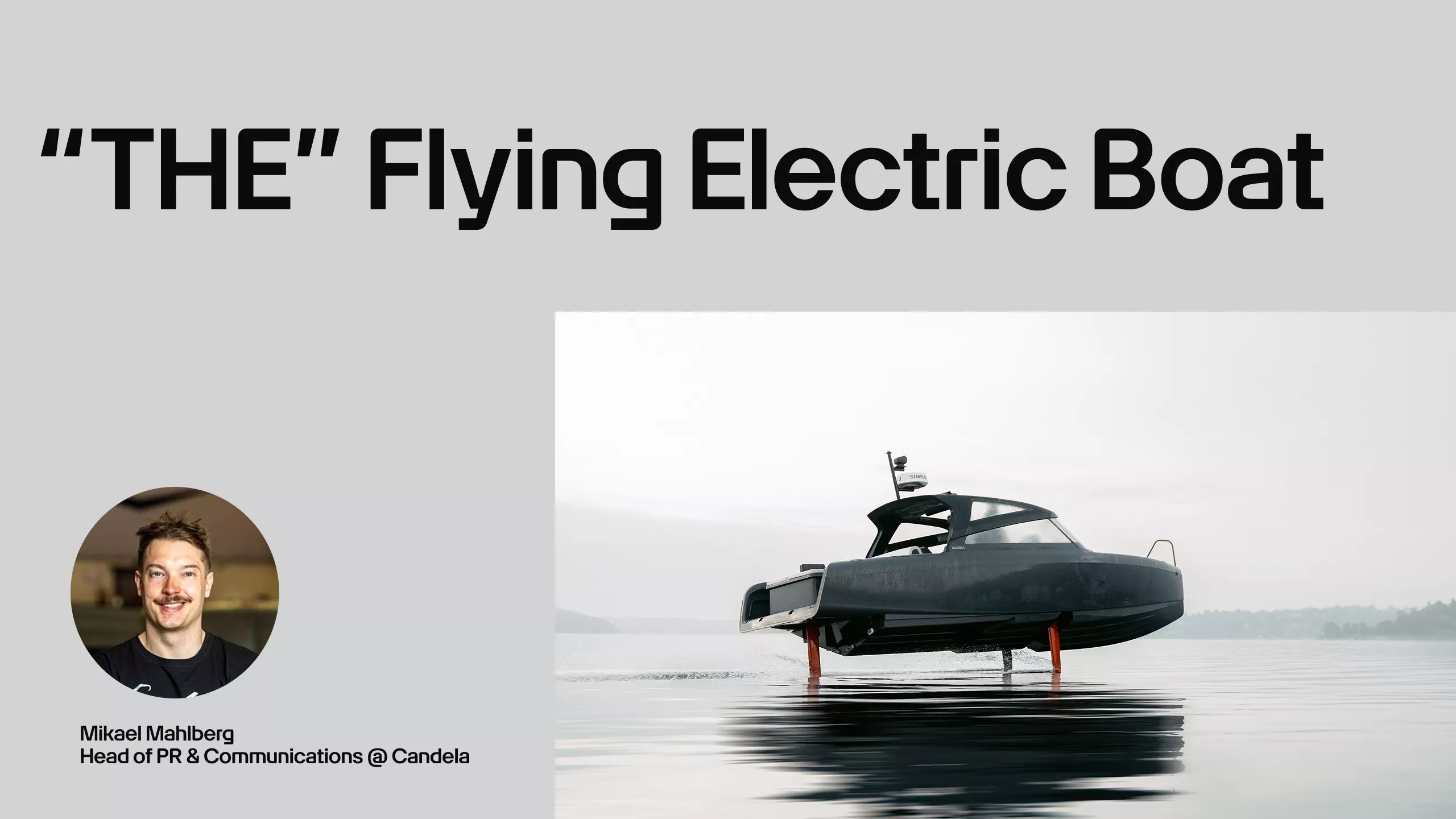
In this episode of Charging Stack, we talk with Mikael Mahlberg, Head of PR & Communications at Candela, the Swedish company building electric hydrofoil boats that literally fly above the water. From the C-8 leisure boat to the P-12 commuter ferry, Candela is cutting energy use by up to 80% while making boat travel quieter, smoother, and a lot faster.
We get into why boats are so hard to electrify, how hydrofoils change the equation, and what happens when you turn city waterways into high-speed public transport lanes.
This episode is for you if:
City planners and public transport operators exploring new ways to move people on water
EV and battery geeks curious how car tech translates to boats and ferries
Maritime professionals watching the shift from diesel ferries to electric fleets
Anyone who likes the idea of “flying” over the waves instead of slamming through them
In this episode, you’ll learn:
⚡ Why conventional boats burn so much energy and how hydrofoils cut consumption by up to ~80% ⚡ How Candela’s C-8 leisure boat and P-12 ferry work: batteries, range, speed, and what it actually feels like to “fly” above the waves ⚡ How wake-free electric ferries can slash travel times and reduce damage to waterfront infrastructure ⚡ What it takes to charge electric boats using existing marina and DC car charging hardware ⚡ Where Candela is deploying first (Stockholm, Mumbai, Lake Tahoe) and how this points to a new layer of urban transport on the water
Topics covered include
Why boats are so hard to electrify, and how Candela’s founder realised his family boat used ~15× more fuel per mile than his car
How hydrofoils lift the hull out of the water, cutting energy use by ~80% and using carbon fibre plus drone-style sensors to stabilise the ride
Key specs of the Candela C-8: 8.5 m electric hydrofoil, ~100 hp equivalent motor, 69 kWh Polestar 2 battery, ~57 nautical miles of range at 21 knots, and room for a small family to sleep
What the “magic carpet” ride feels like when the boat lifts at ~16 knots and engine noise and slamming are replaced by near-silence
How the in-house C-Pod motor and retractable foils reduce maintenance, with no gearbox, no oil changes, seawater cooling, and foils stored above the waterline in harbour
What the P-12 electric ferry can do: 12 m hydrofoil, ~30 passengers plus bikes and wheelchairs, ~40 nautical miles of range, and ~98% uptime in Stockholm public transport
Why wake-free electric ferries can run faster inside cities, cut commute times, and reduce wake damage to waterfront structures
How charging works on water: C-8 DC charging up to 150 kW (roughly 10–80% in about 25 minutes), using three-phase marina sockets and standard 300 kW DC car chargers for the P-12
Where Candela is deploying first: Stockholm commuter routes, an 11-vessel P-12 order for airport links in Mumbai, and a Lake Tahoe shuttle when winter roads are closed
Why current ferry procurement rules favour big, slow, half-empty boats and Candela’s case for smaller, faster, more frequent electric vessels
Candela’s 2030 vision: scaled production and “water subways” in major coastal cities, with electric hydrofoils as a core part of urban mobility, not just a luxury toy
Subscribe to Charging Stack for more podcast episodes, deep dives, and case studies with the people keeping the future of mobility running. ⚡
Share your love
Filip Bubalo
Researcher & writer for Charging Stack. Marketing manager at PROTOTYP where I help mobility companies tell better stories. Writing about the shift to electric vehicles, micromobility, and how cities are changing — with a mix of data, storytelling, and curiosity. My goal? Cut through the hype, make things clearer, and spotlight what actually works.