
From EVs and batteries to autonomous vehicles and urban transport, we cover what actually matters. Delivered to your inbox weekly.
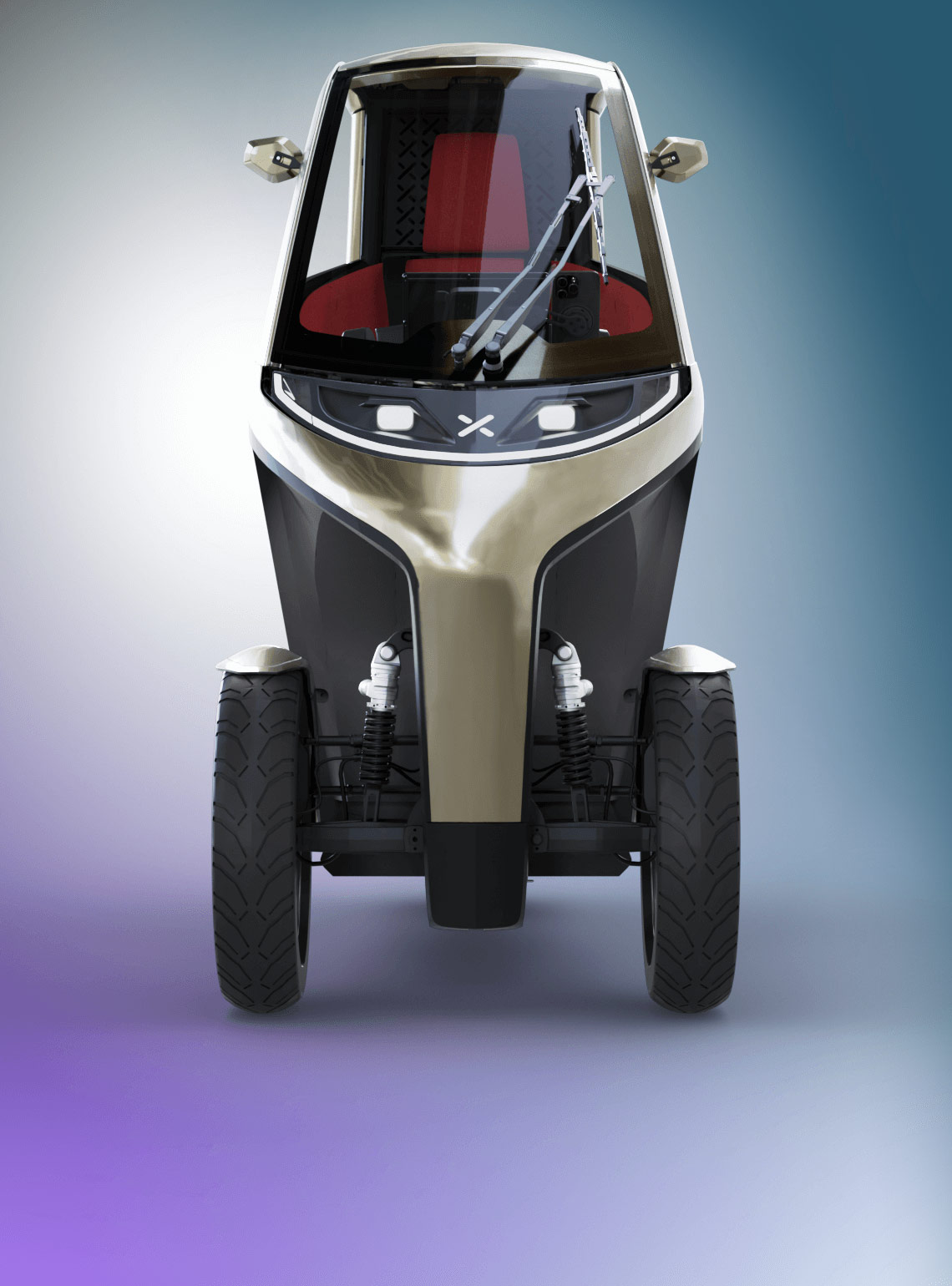
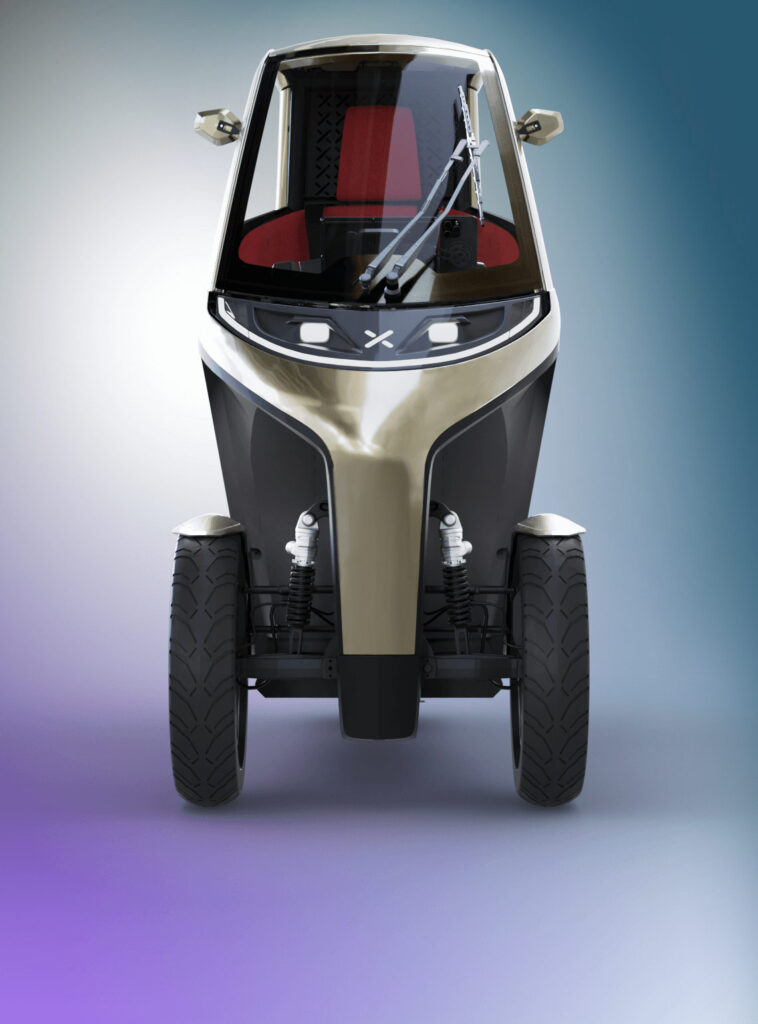
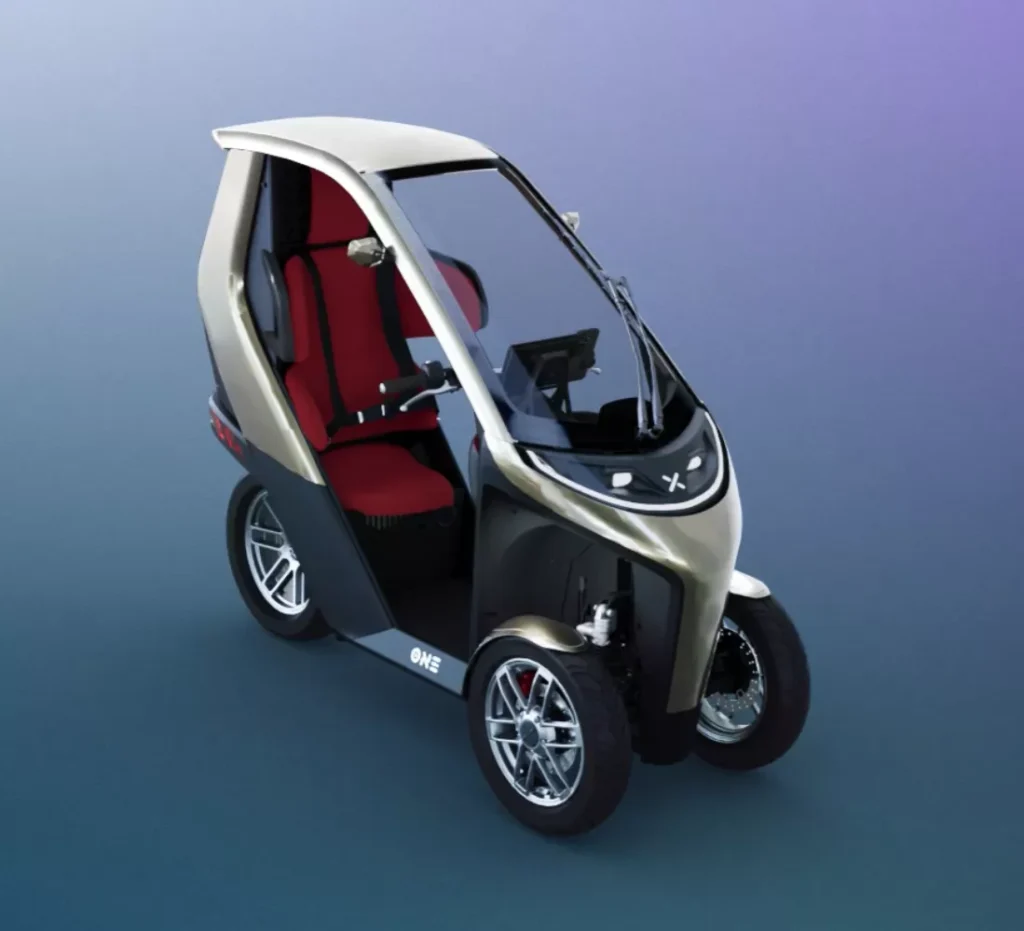
The XYTE ONE puts one person under a roof, inside a four-point harness and across 79 centimetres of road width. It is for the daily trip that feels wasteful in a car and exposed on a scooter.
The ONE is built around a familiar commute. One person drives the same route each morning, sits in traffic, then parks a car designed to carry a family. A scooter takes up less room, but brings a helmet, weather gear and two wheels that many car drivers have no interest in riding.
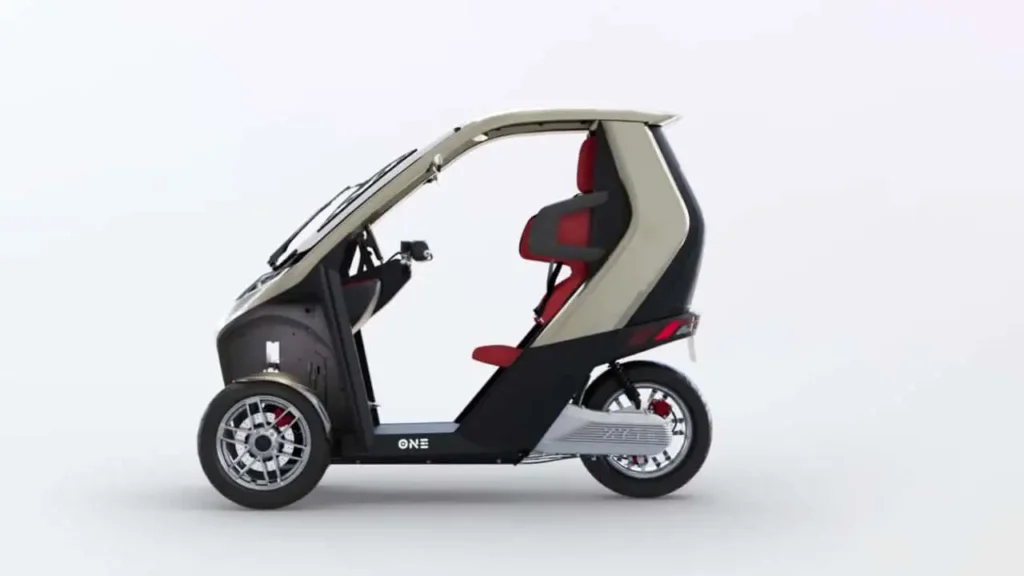
XYTE’s answer has one seat, two front wheels, a roof, an aluminium structure, a four-point harness and a front axle that tilts through corners. Its current specification page lists a 7.6 kWh fixed battery, 102 km WMTC range and a 114 km/h electronically limited top speed. XYTE labels the figures tentative while type approval is pending. They are pre-production numbers, not final production specifications or independent test results.
The company is taking €250 reservations. Its order page says deliveries begin from September 2026.
Let’s dive in.
In our conversation with XYTE CEO Gero Kempf and chief marketing officer Christoph Walz, both kept returning to the daily commuter. Kempf described a rider who knows the home-to-work distance because they cover it every day. Walz described interest from households considering a replacement for a second or third car, including people already used to public transport, sharing services or smaller electric vehicles.
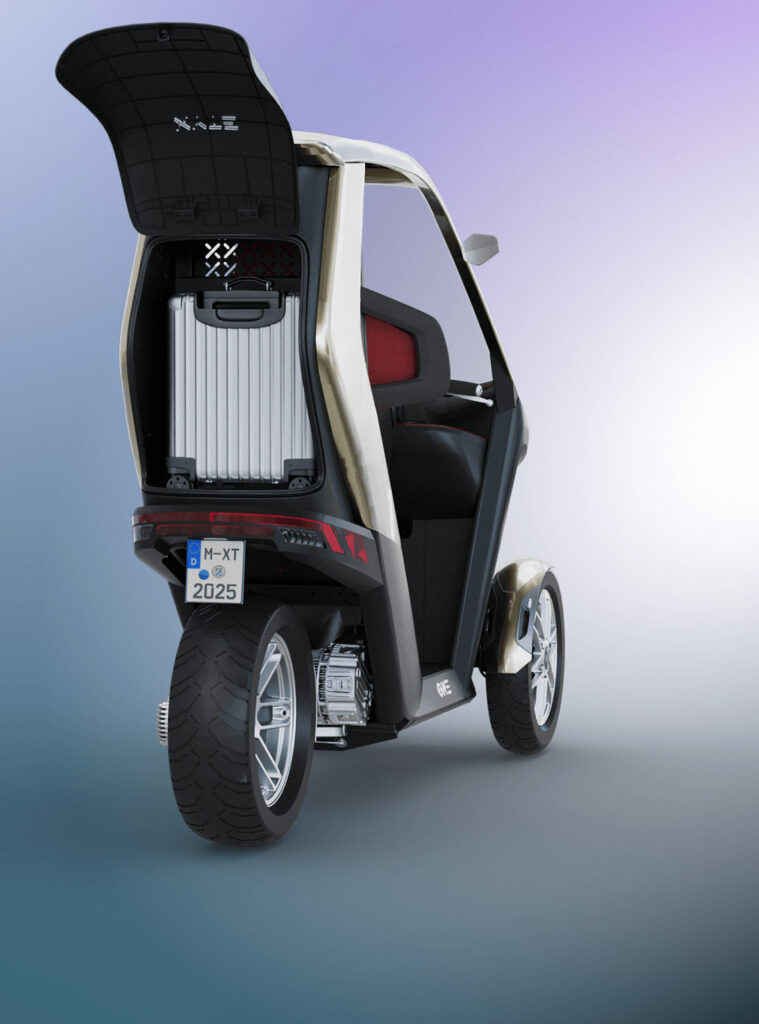
The absence of a passenger seat is not incidental. The ONE cannot take a child to school, collect a friend or rescue a family errand that runs longer than expected. Its 72-litre luggage compartment is for work bags, shopping and a carry-on case. It will not absorb the occasional jobs that make a conventional car useful even when most trips carry one person.
XYTE lists the ONE at 217 cm long and 79 cm wide, excluding mirrors. It has removed the seats and width that a second passenger demands, but kept space behind the rider for everyday luggage. That is the trade. The product suits a person whose repeated solo trip outweighs the few days when a second seat would help.
XYTE has not published a customer breakdown, a reservation-conversion rate or a dated count of likely owners. Walz’s account of early interest is useful reporting from the company, not market research. The buyer profile is nevertheless specific enough to judge the vehicle against – people who want a smaller daily machine without going back to a conventional scooter.
The BMW C1 is the reference point because it put a rider under a roof without making them buy a car. BMW launched the covered two-wheeler in 2000 with a roof, protective cell, head restraint and crossed belts. Its original press material lists a 103 km/h top speed, 2.08 m length, 1.03 m width and 185 kg weight. BMW’s archive captures the appeal – weather protection and motorcycle scale in the same vehicle.
XYTE’s homepage says its team drew on feedback from over 250 C1 drivers. It also says XYTE has no official link to BMW.
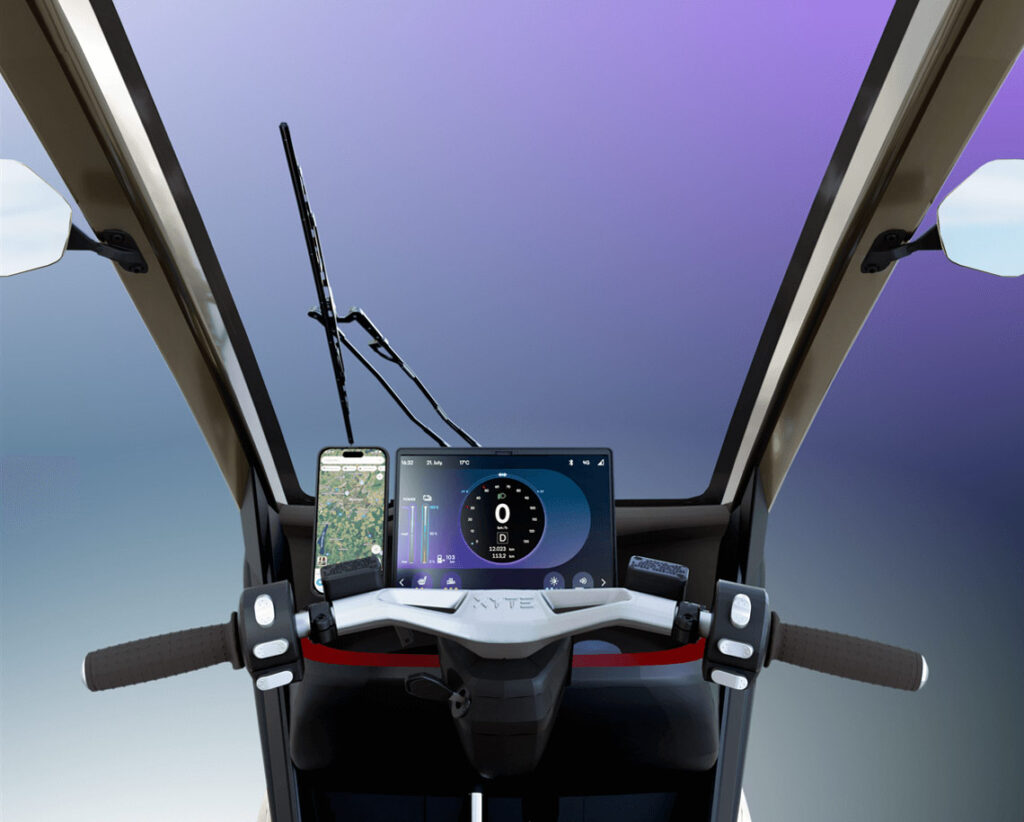
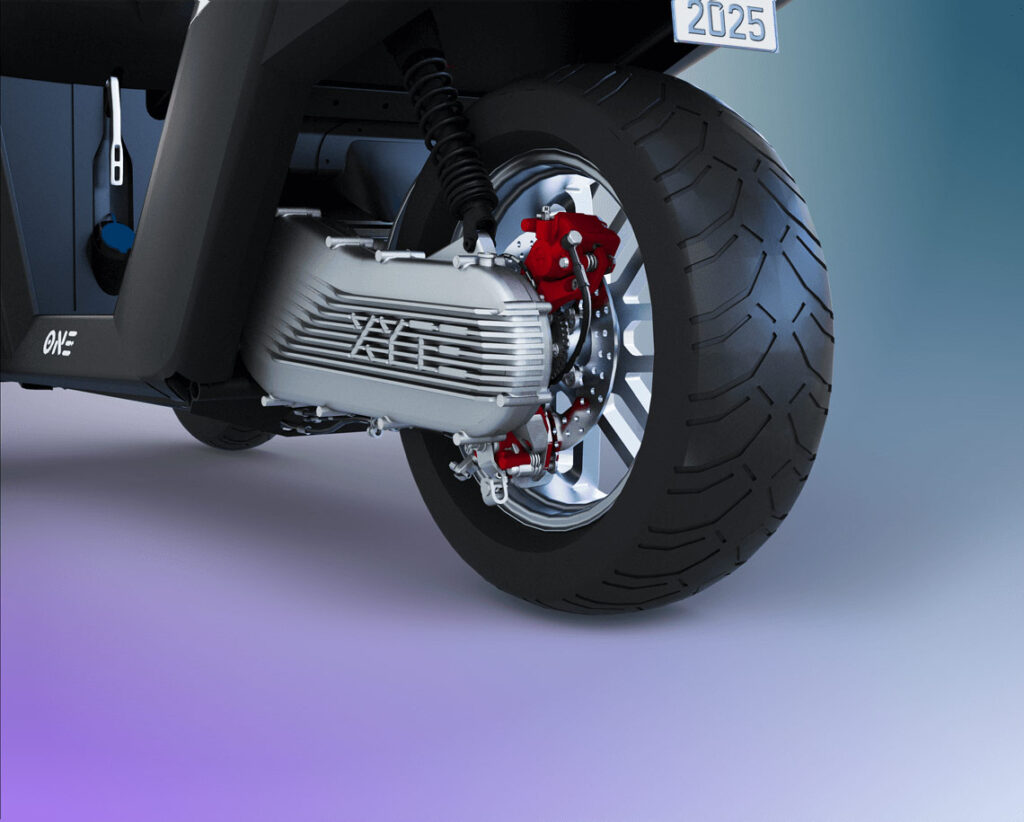
The ONE uses a different layout. It has two independently suspended front wheels, a hydraulic tilt system that XYTE says can lock at low speed, a rear drive wheel and an electric powertrain. XYTE also lists three-channel ABS, 240 mm brake discs on all wheels, an aluminium unibody and a four-point harness.
The geometry is different as well. BMW listed the C1 at 2.08 m long and 1.03 m wide; XYTE lists the ONE at 2.17 m and 79 cm. The ONE is therefore slightly longer on paper but materially narrower. The C1 comparison helps with the basic appeal, but it does not tell a buyer how the newer machine will feel when filtering through traffic, turning into a tight driveway or stopping on a wet road.
XYTE says the tilt mechanism can be hydraulically locked at low speed and lists a maximum tilt angle of 39 degrees. That is useful information for someone considering the vehicle’s physical behaviour at junctions and in slow traffic. It is still a specification-page claim. How the system behaves day after day, including in poor weather and after service work, has not been independently tested in public.
Those components do not amount to a passenger-car crash rating. We found no independent crash rating, and XYTE’s early “world’s safest” marketing language is not supported by the public evidence reviewed for this article.
The ONE occupies a slightly different part of the category from other enclosed light vehicles. AEMOTION is pursuing a 79 cm-wide tilting vehicle with four wheels and two seats. Scuter uses a protected one-seat three-wheel format in a 45 km/h shared-mobility system. XYTE is aiming at private ownership with a fixed battery and a higher stated top speed. The vehicles may look related on a city street, but they ask different things of their owners and operators.
XYTE’s detailed specification page is the current source for the figures below. The company describes all of them as tentative pending type approval.
The width is central to the ONE’s appeal. At 79 cm, it occupies far less space than a compact car at the kerb, in a garage or between parking bays. It also remains a substantial vehicle: 236 kg empty, with a roof, three wheels and a fixed battery. That combination will feel familiar to some C1 riders and foreign to someone coming from a bicycle or a light scooter.
At a stated 114 km/h, the ONE is not confined to 30 or 45 km/h streets. XYTE is putting it forward for suburban and faster urban approaches as well as inner-city routes. That is why the top-speed figure is worth checking against the final vehicle rather than treating it as a marketing number. It affects where an owner can use it, what traffic it has to keep up with and what they expect from the chassis in bad weather.
The 102 km WMTC range is a useful reference, but it does not say how far every owner will travel in winter, rain or heavy traffic. XYTE’s FAQ says range varies with traffic, weather and driving style. For a rider with a 10 km commute each way, the charging routine may carry greater weight than the difference between a 90 km and 102 km real-world result.
The listed 20 kW peak output and 65 Nm maximum torque also belong in that practical picture. XYTE states 2.7 seconds from 0 to 50 km/h, but it has not published an independent road test. Buyers using faster roads will want the vehicle to join traffic calmly, carry its stated speed and feel predictable under braking. A pre-production acceleration figure cannot establish any of that on its own.
The 72-litre compartment gives the ONE a defined limit rather than the vague promise of “storage”. It should cover the daily objects that tend to end up in a passenger footwell: a backpack, laptop, food shopping or wet gear. It will not replace the rear seats or load bay of even a small car. A household that needs either regularly will need another vehicle.
XYTE’s public figures need a final cleanup before a customer can compare the ONE with alternatives. The homepage says up to 100 km/h, while the detailed specification page says 114 km/h. The detailed page lists 236 kg; the story page still says 210 kg. The detailed page claims 6.1 kWh/100 km, while the FAQ says about 8 kWh/100 km. These are the kinds of figures buyers use to choose a vehicle, so they need one current source.
The listed price is €10,750 plus local VAT, or €12,900 including German VAT. XYTE presents the first 500 units as a Launch Edition. XYTE Autoflotte That places the ONE above a basic scooter and into the same decision as used cars, small EVs and other light vehicles. The buyer is paying for a particular mix of weather protection, size and route capability, not for a substitute family car.
The 7.6 kWh battery stays in the vehicle. XYTE says the fixed pack helps keep the centre of gravity low and supports performance. It also means the owner cannot take the battery upstairs when the vehicle is parked on the street. XYTE FAQ
For someone with a garage socket or workplace charger, the arrangement looks straightforward. XYTE lists a 2 kW onboard charger, household and Type 2 connections, and a 20 to 80 percent charge time of 2.2 hours. Its FAQ gives a four-to-five-hour estimate for a full charge. Specifications FAQ
Street parking changes the calculation. Public AC charging may be enough, but the owner needs a charger near a place where the ONE can be left, a cable arrangement they are comfortable with and enough availability to repeat the routine each week. The narrow body makes parking easier. It does not solve access to a plug.
Early buyers may therefore be people with a private parking space, a stable workplace charger or both. Dense-city residents without either are still possible customers, but their decision depends on local charging rather than the battery capacity alone.
XYTE has not set out to build a factory in Munich. Jiaxing Leroad Special Vehicles announced in October 2025 that it would become XYTE’s development and contract-manufacturing partner. Leroad’s parent, SOE, also said it would become a shareholder through an undisclosed equity investment. The agreement covers product planning, engineering, supply-chain integration, market expansion and manufacture of the ONE.
The arrangement gives XYTE access to manufacturing capability without building every industrial function itself. It also leaves the owner reliant on a longer chain: component quality, production control, European transport, pre-delivery inspection, parts availability and a trained repairer in their own city.
Trade publication Autoflotte reported that production would take place with Leroad in Jiaxing and that Lagermax would handle transport, pre-delivery inspection and delivery to service partners. It also reported named component suppliers and a partner network. Those details are useful context, but they were not independently confirmed by the named organisations in our review.
XYTE’s partner page says a network is ramping across major European cities and promises maintenance, warranty support and test rides. It did not show a useful public list of named partners when we reviewed it. A buyer will need the local version of that information: who delivers the ONE, where it is repaired, how parts are supplied and what happens when the tilting system, charger or bodywork needs attention.
Kempf discussed one part of that trade-off in our conversation. He described a choice between cosmetic finish, price and time to market, while treating safety, protection and performance as non-negotiable. That is a familiar low-volume vehicle problem. Owners will decide whether the final panels, fit and finish justify the price once they can inspect a delivered vehicle.
ALEE says it completed a manufacturer initial assessment for XYTE in May 2025. It is a quality-system step required by Germany’s KBA before EU type approval can be granted. ALEE described the ONE as a planned L5e-A powered tricycle. ALEE Regulation (EU) No 168/2013 defines that category as a powered tricycle mainly designed for passenger transport.
Company and partner posts say brake testing took place at fka and that pre-series vehicles reached engineering partner MVI Group for service and media work. XYTE on LinkedIn The public specification page continues to say type approval is pending. We found no completed certificate to support a stronger claim.
That status shapes the licence, helmet, insurance and road-access questions. XYTE says a regular car licence is sufficient and a helmet is not required. Its FAQ also says that official approval across EU countries is still in progress. XYTE FAQ Until it publishes final approval details and country-level guidance, those claims should be read as the intended use case, subject to approval and local rules.
The reservation language also needs clarification. The €250 fee is described as credited toward the vehicle and refundable after a test ride if the customer decides against it. Elsewhere in the order flow, XYTE says cancelling a reservation means losing the fee. XYTE order page One final policy should explain the difference before a buyer pays.
The ONE is easy to picture in a commuter’s life: one seat, a roof, a narrow footprint, enough luggage space for a working day and a route that does not demand a full car. The harder part is giving that owner the ordinary things they expect from a vehicle: final approval, one consistent specification sheet, clear purchase terms and a repairer who can work on it nearby.
The first owners will show whether the one-seat format, fixed battery and narrow footprint still make sense after a winter, a service visit and the first repair.