
From EVs and batteries to autonomous vehicles and urban transport, we cover what actually matters. Delivered to your inbox weekly.

IPOP’s electric quadricycles are built around the jobs a second car usually ends up doing: school runs, short commutes, local errands and trips around a second home.
Most households do not use a second car like a primary car. It may cover a five-kilometre commute, a school drop-off, a supermarket run or a quick trip across town. It may sit at a holiday home for weeks, then carry two people and a few bags. A small business may use it for short jobs where taking a van feels excessive.
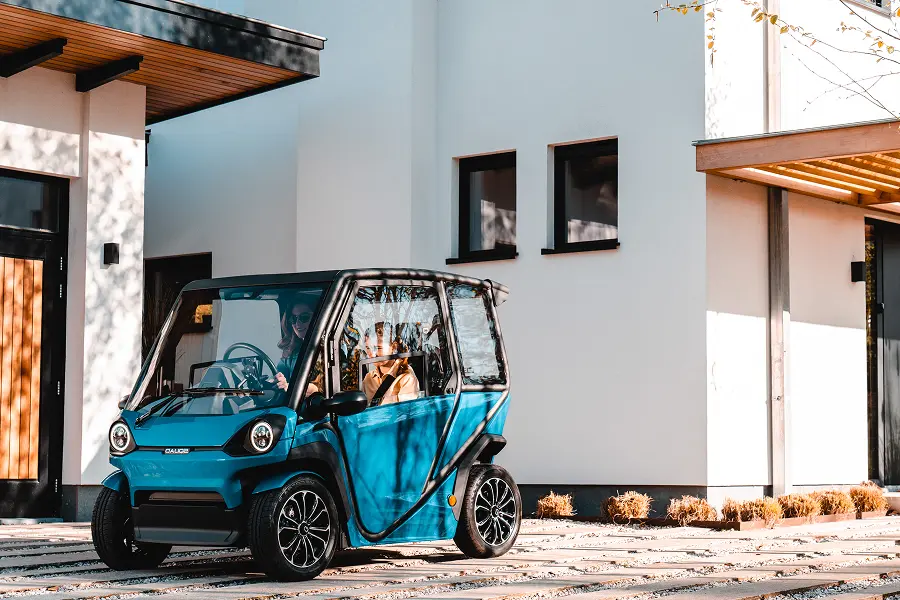
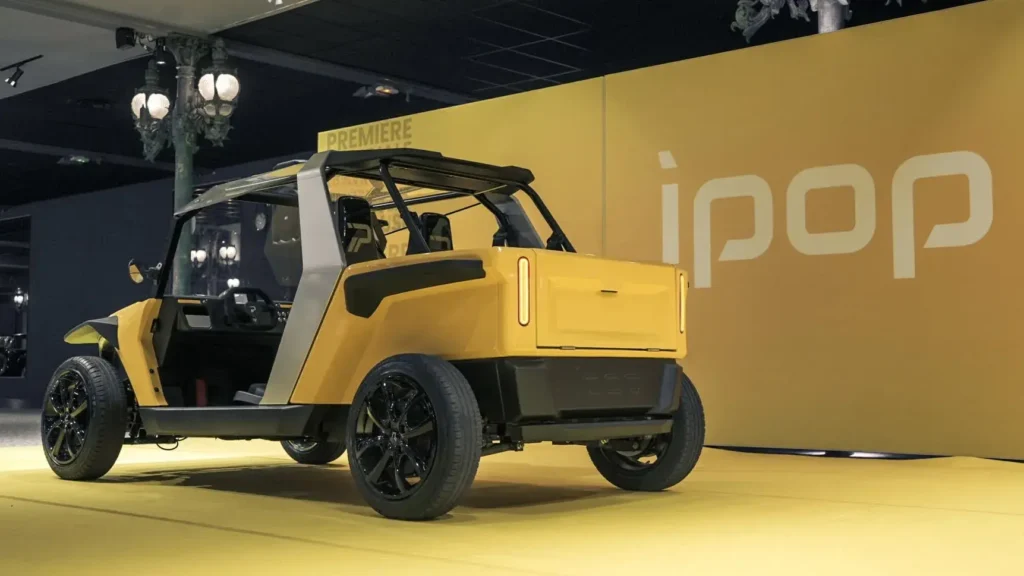
IPOP Automobiles has built its two electric quadricycles around that kind of use. The IPOP 45 is the slower, two-seat version. The IPOP 90 adds four seats, a 90 km/h top speed and a more conventional household role. The company has also shown open, half-door, full-door and hardtop body configurations.
The IPOP 90 is where the second-car idea becomes more interesting. Four seats, more speed and a configurable body put it closer to the kind of trips people already make in an old hatchback or small EV, just with less vehicle around them.
IPOP is still pre-production. At its April 2026 launch, Automobile Propre and Numerama reported that homologation was under way and customer deliveries were planned for 2027. The company has since shown a working vehicle and opened online pre-orders.
That is enough to look seriously at the product and the use case. The harder part now is what happens between prototype and ownership.
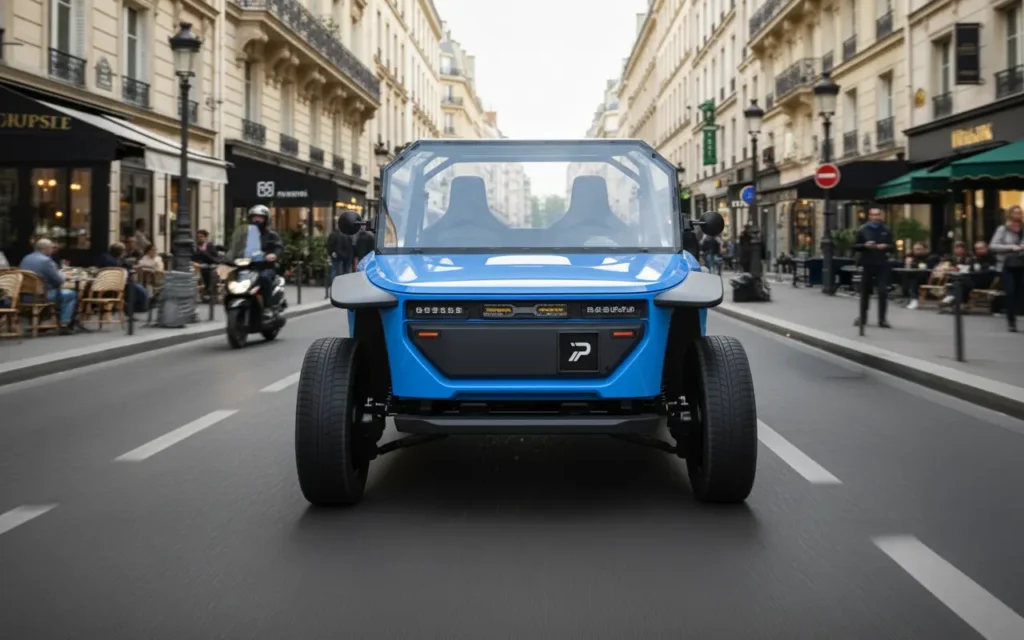
The IPOP 45 and IPOP 90 are built for different kinds of use.
Launch coverage describes the 45 as a two-seat L6e quadricycle limited to 45 km/h. The 90 moves into L7e territory with four seats and a 90 km/h top speed. Those categories affect where the vehicles can be driven and who can drive them, with the exact rules depending on the market.
IPOP currently lists the 90 with four seats, 350 litres of cargo space, a 15 kW motor, a 48 V LFP battery, a 4–5-hour charge time and an estimated 135 km range.
The 45 is easier to place. It suits short local trips where two seats and 45 km/h are enough.
The 90 asks more from the vehicle. Four seats and higher speed make it relevant for school runs, shopping, local commutes and the kinds of everyday trips people already make in a small car. That also raises expectations around weather protection, comfort, range and service.
For IPOP, the 90 is probably the more important test. It has to feel small and simple without feeling compromised in the situations where people would actually use it as a second car.
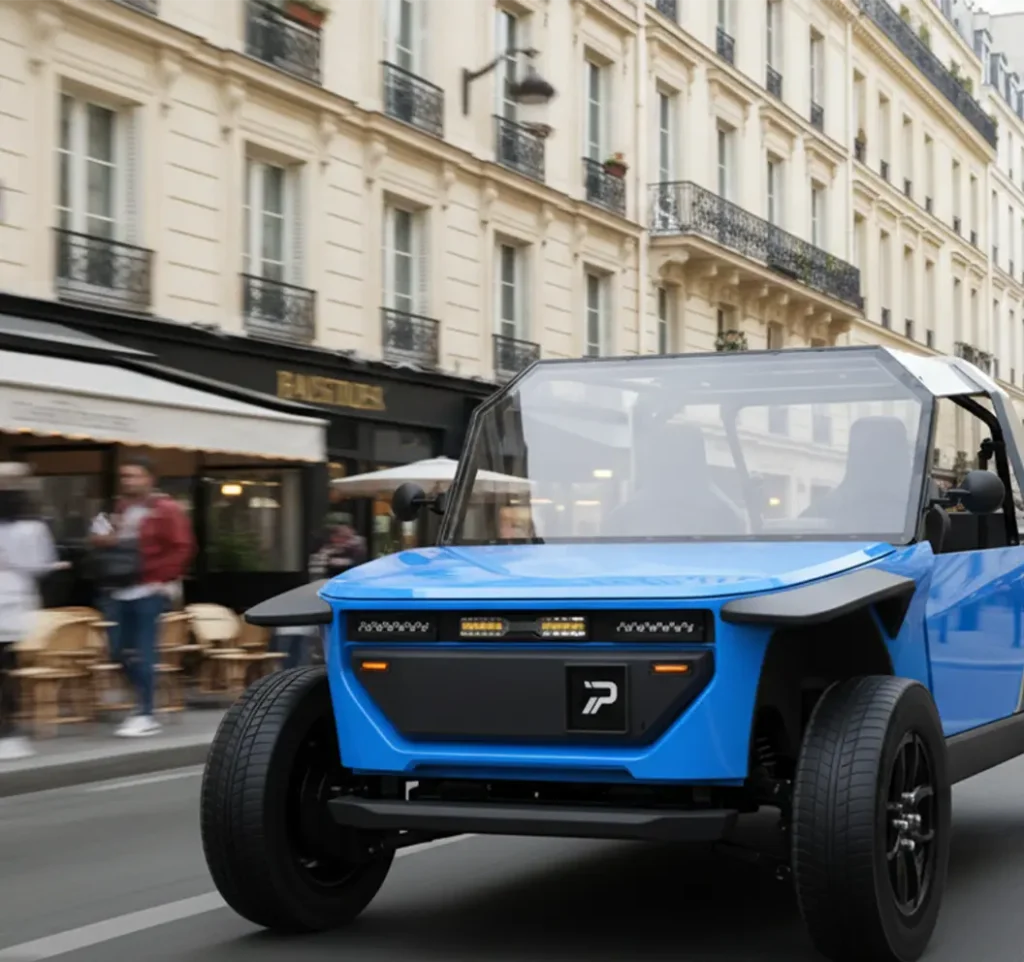
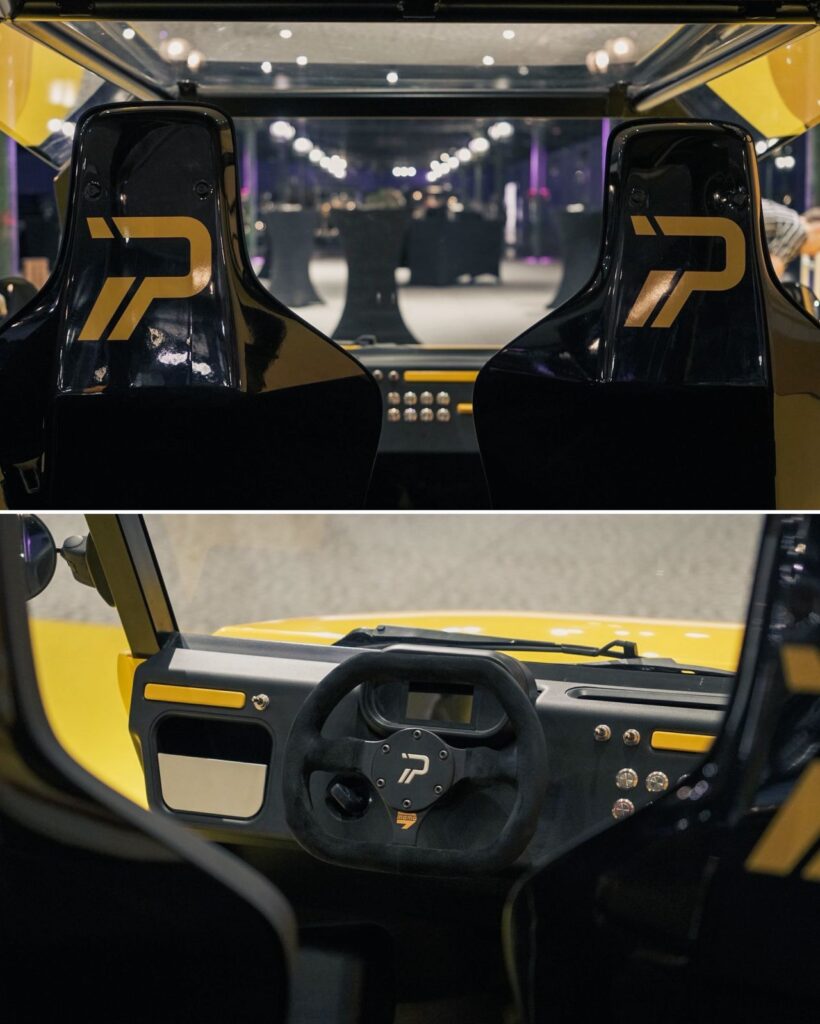
IPOP has shown several body configurations, including an open version, half doors, full doors and a hardtop. The IPOP 90 is also reported to have folding rear seats and front storage.
Those choices change how the vehicle can be used. An open setup may suit warm-weather local trips. Full doors and a hardtop matter more for year-round school runs or commuting. Folding the rear seats gives more room for equipment, shopping or luggage.
The useful part is that buyers can shape the vehicle around a fairly specific job. A florist, property manager or second-home owner will not need the same setup as a household using the car every morning.
What is still missing is a clear list of the final orderable combinations. IPOP has not yet published which roof, door and seating options will be available on each version, what they will cost, or whether they affect weight, range or classification.
Once those combinations are fixed, the modular body becomes much easier to judge as a buying decision rather than just a launch feature.
IPOP founder Christophe Winkelmuller also founded L’Agence Automobilière, a used-car franchise network. Before the IPOP launch, Le Journal de l’Automobile reported that the network would form part of the commercial plan. Its later launch coverage said IPOP intended to sell through both its own website and L’Agence Automobilière.
That gives the company a useful starting point. The network already handles local customer contact, trade-ins, finance discussions and vehicle handovers, so IPOP is not starting from zero when it comes to retail access.
The bigger question is what happens after delivery. Public information does not yet explain which locations will handle IPOP, whether repairs will happen inside the network, how technicians will be trained or how parts will be stocked and distributed.
For buyers, that matters as much as the sales process. A small vehicle still needs somewhere to go when a door mechanism, body panel or electrical component needs attention.
If IPOP can connect L’Agence Automobilière’s retail footprint with a clear repair and parts setup, the network could become a meaningful advantage. For now, it is best understood as a planned sales channel with the after-sales side still to be defined.
IPOP says Automobiles Dangel will assemble the vehicle in Alsace. The plan appears on IPOP’s history page, and Dangel brings experience in vehicle conversion and low-volume automotive work.
We did not find a separate public announcement from Dangel confirming the programme, so for now this remains IPOP’s stated production plan.
The supply chain is expected to mix French and imported components. Automobile Propre reported that the battery cells would come from China, with the pack assembled in France, while other parts would come from French suppliers. Earlier trade reporting also mentioned a target of 80 percent local content.
If production starts as planned, the more interesting questions will be practical ones. How consistent is the first series? How easy are body panels and other parts to replace? How quickly do production issues get fed back into repairs and later vehicles?
Building close to the intended market could help with that, especially for a low-volume vehicle. The real test will come once customer cars are being assembled and serviced regularly.
At launch, Automobile Propre and Le Journal de l’Automobile reported starting prices of €11,000 for the IPOP 45 and €15,000 for the IPOP 90. Le Journal de l’Automobile also reported €17,000 for a planned four-wheel-drive version. IPOP’s terms note that prices can change, so these are best treated as launch-period figures rather than final customer quotes.
At around €15,000, the IPOP 90 is likely to be compared with more than other quadricycles. Used small cars and entry-level EVs can fall into the same household budget, even if they sit in different vehicle categories.
That puts more weight on the way the IPOP 90 is actually used. For a household, compact size, weather protection and local support may matter more than outright performance. A business may care about easy parking and low running costs. Someone keeping the vehicle at a second home may care most about simplicity and having somewhere nearby to get it repaired.
The final comparison will depend on details that are still missing. IPOP has not yet published model-specific delivered prices, option costs, warranty terms, maintenance assumptions or a clear explanation of how range changes with speed, heating and payload.
Once those numbers are available, buyers will have a much better basis for deciding whether the smaller format is worth choosing over a conventional used car or full EV.
The Citroën Ami is an obvious reference for the IPOP 45. It helped make the 45 km/h electric quadricycle familiar to a much wider audience.
The IPOP 90 sits in a different part of the market. With four seats, a claimed 90 km/h top speed and more cargo flexibility, it is closer to the kinds of trips people already make in an old hatchback, a small EV or a larger quadricycle.
That is where the comparison gets more practical. A buyer may be willing to give up some size, performance or range if the car is easier to park, cheaper to run and still comfortable enough for everyday use.
We have seen other small EVs tackle that problem differently. Squad Mobility focuses heavily on short urban trips and charging constraints. Our Silence S04 deep dive looked at what battery swapping changes for daily use. IPOP is leaning more on compact size, body flexibility and a local sales route.
For the IPOP 90, the important part will be how all of that holds up once people own the car. Delivery timing, weather protection, repair access and parts availability will matter just as much as the launch specification.
IPOP is still before customer deliveries, so some important details are naturally unfinished. As of 23 September 2026, the public information we reviewed does not confirm final type approval, a settled specification sheet for both versions or a defined service network.
Approval is the first one. Buyers still need to know the final status of each version, where it can be sold and what driving rules apply in each market. Reporting from April pointed to deliveries beginning in 2027, but IPOP has not yet published a newer timeline.
The ownership side is also still taking shape. Public information does not yet list service locations, warranty terms, parts lead times or the repair process. IPOP’s terms explain the online ordering flow, including configuration, confirmation and a 40 percent payment step, but there is less detail on what happens once the vehicle is on the road.
Range could also be presented more clearly. IPOP currently lists an estimated 135 km for the 90, while earlier reporting and the founder conversation contain slightly different figures. Public numbers for the 45 vary as well. A final model-specific specification sheet would make those figures much easier to compare.
None of this is unusual for a vehicle that has not reached customer deliveries yet. The useful next update would be a clearer picture of approval, final specifications, delivery timing and after-sales support.
IPOP is not trying to cover every trip a conventional car can handle. The more realistic role is as a second vehicle for shorter, repeatable trips where four seats, compact dimensions and lower running needs are enough.
The IPOP 90 fits that use case better than the 45. Its higher speed, four seats and configurable body make it relevant to school runs, local commuting, shopping and trips around a second home.
The remaining work is mostly about turning that idea into something people can buy with confidence. Final approval, delivered pricing, production quality, service coverage and the first customer handovers will tell us much more than another prototype reveal.
For now, the second-car use case is clear. The next step is showing that the ownership experience can match it.