


From EVs and batteries to autonomous vehicles and urban transport, we cover what actually matters. Delivered to your inbox weekly.
Urban delivery often defaults to vans because they are practical and familiar. But a lot of city routes do not need that much vehicle. Scooters are easy to move and easy to park, yet they run out of useful cargo space quickly.
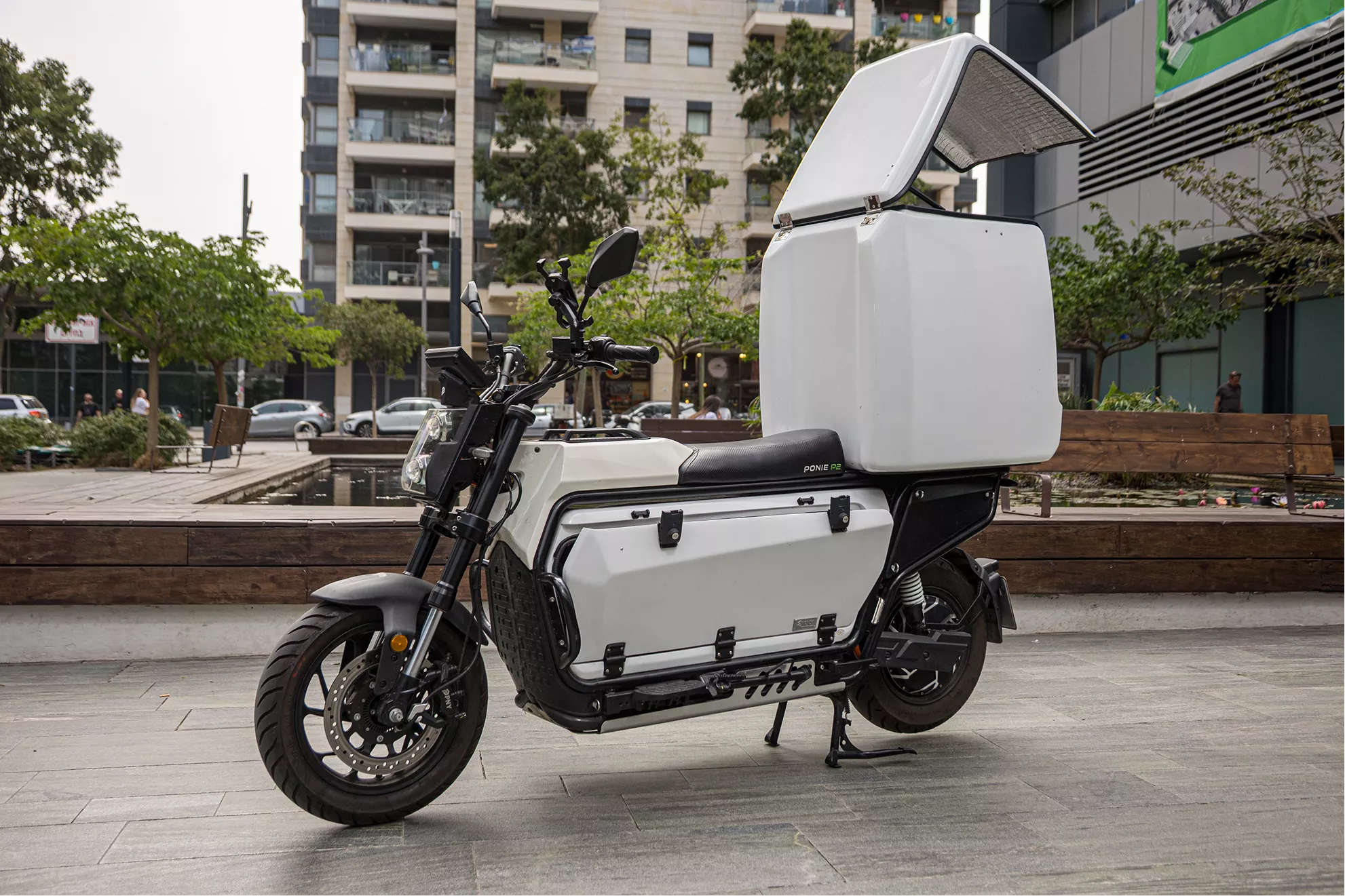
Vans carry more, but they also bring parking delays, curb friction, and wasted footprint on short, repetitive trips. PNY is built around that gap. The Ponie P2 is designed for work that sits between the two: more cargo utility than a standard scooter, less street burden than a van.
The open question is whether that middle category holds up in real fleet use.
Electrification alone is not enough to explain why PNY matters. Plenty of delivery vehicles are already electric, but that does not solve the bigger urban problem. City logistics still relies on vehicles that are often poorly matched to the job: vans take too much space on short, repetitive routes, while scooters run out of useful cargo capacity too quickly.
PNY builds its case around that gap. On its own site, the company presents the Ponie P2 as a cargo-first vehicle for couriers and logistics operators, with the emphasis placed on carrying ability, daily utility, and lower operating friction rather than on the usual electric-vehicle talking points. Even the “CargoPower” language points in the same direction. The pitch is less about swapping petrol for batteries and more about giving urban delivery a vehicle that fits the work better.
The Ponie P2 only works if enough city routes need more than a scooter, but less than a van. That is the gap PNY is trying to occupy.
PNY’s case starts with a practical fleet problem. In conversations with logistics operators, including DHL in Israel, Netzah Sadeh, CEO of PNY, says the same losses kept coming up – time burned in traffic, time lost hunting for parking near the drop-off point, and money spent on parking fines. On short urban loops, that turns vehicle size into part of the cost.
A van still makes sense when the route is heavy, consolidated, and worth the footprint. Many city deliveries are not. They involve small drops, frequent stops, and dense streets where access matters as much as load. That is where excess capacity stops being helpful and start slowing the job down.
Scooters solve one part of urban delivery very well. They are cheap to run, easy to park, and fast enough to slip through streets that punish larger vehicles.
But they were never designed around cargo first.
That matters more now than it used to. Last-mile work is no longer just one rider carrying a small bag of food. Deliveries have grown bulkier, heavier, and more varied, which means the basic delivery scooter starts running into the same limit again and again – useful carrying capacity. You can strap on a rear box or add side storage, but that does not change what the vehicle was built to do. It just stretches it beyond its original job.
A standard scooter can still move quickly through the city, but once the route depends on larger package volume, longer shifts, or more consistent daily throughput, the vehicle starts to run out of working utility. The problem is not that scooters are bad at delivery, but modern urban logistics is asking them to do more than they were built for.
PNY is building around a gap that existing urban delivery vehicles handle badly.
On one side are scooters – agile, cheap to run, and easy to park, but limited once routes get bulkier or longer.
On the other side are vans – stronger on volume, but slower and more awkward once the job turns into short stops, dense streets, and repeated parking.
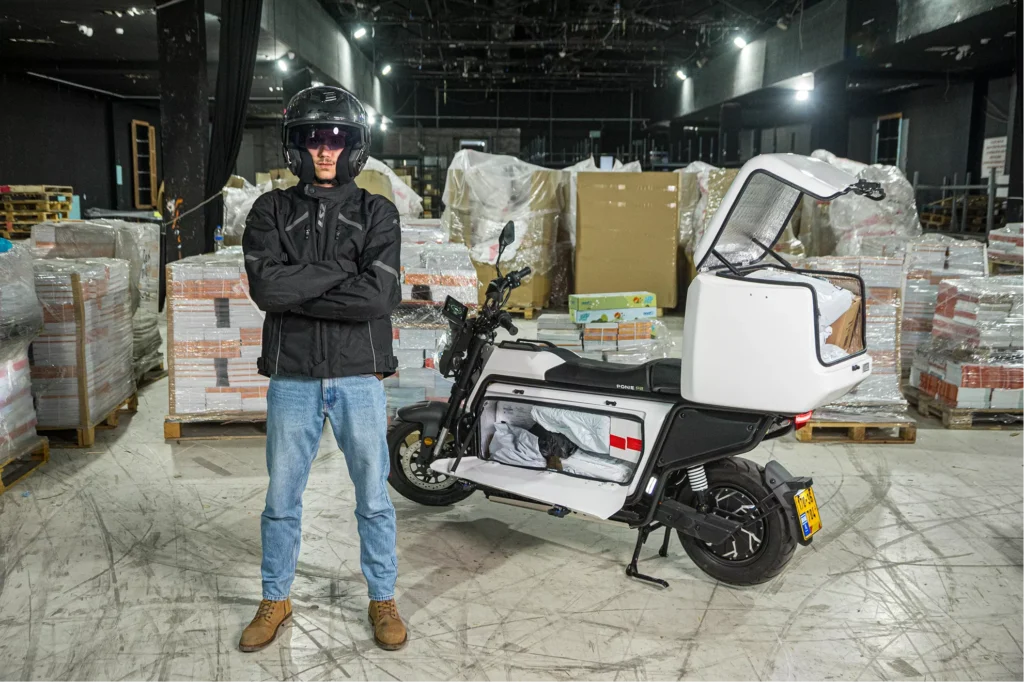
The Ponie P2 is aimed at the space in between. Its 400-liter cargo volume, low-center-of-gravity chassis, 100 km/h top speed, and L3e A1 homologation are all meant to make a two-wheeler useful for work that would otherwise move upward into a van.
The ambition goes beyond one vehicle. PNY is trying to show that this middle layer can hold as a distinct commercial category, not just as a stretched scooter or a downsized van. That still has to be proven in real fleet use, but the direction is clear.
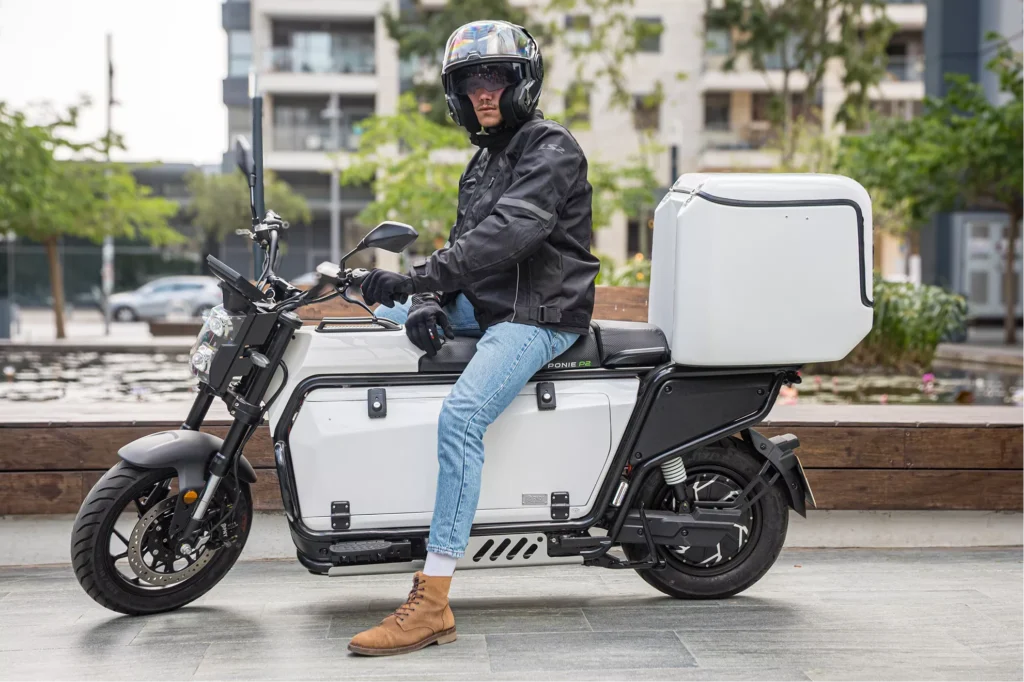
PNY uses fleet language throughout. Cargo volume, stability under load, maintenance, and daily output come before performance or rider appeal.
The Ponie P2 is described as a vehicle built for couriers and logistics operators, with the emphasis placed on hauling, uptime, and lower operating friction across a full shift. That framing shows up in the company’s own “CargoPower” language as well, where the selling point is not excitement or speed on its own, but how much useful work the vehicle can absorb in one day.
Read that way, the Ponie P2 sits closer to a commercial delivery asset than to a conventional motorcycle launch.
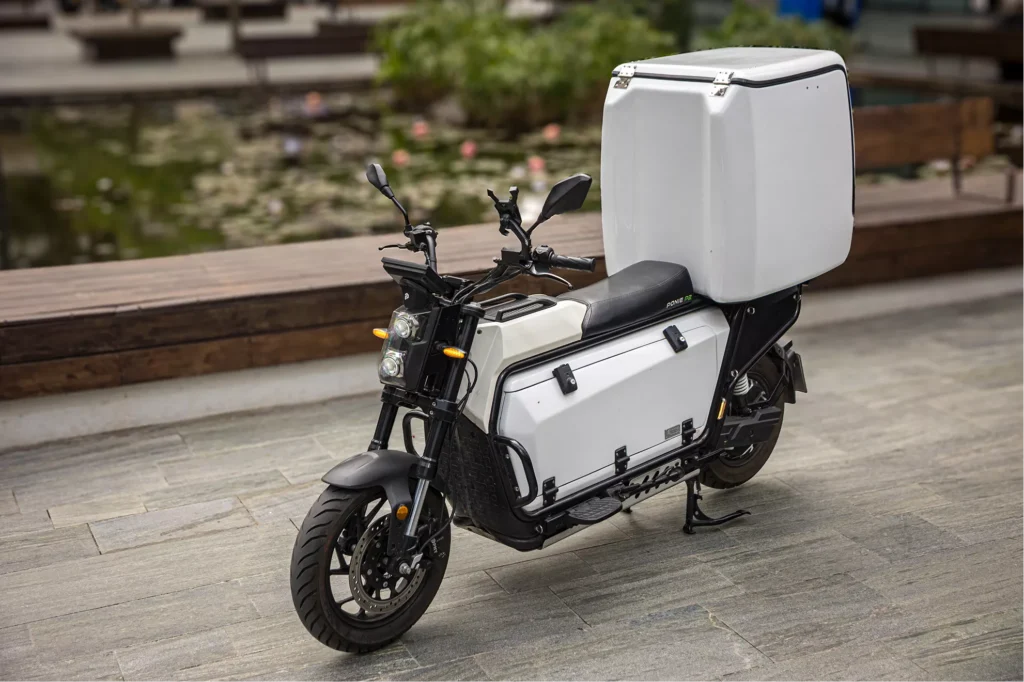
The Ponie P2 sits in the L3e-A1 class, but its layout is aimed at work that usually stretches a normal scooter too far. PNY combines a 72V 6.7 kWh CATL battery, 100 km/h top speed, ABS, and a claimed 400 liters of storage into a format meant for longer urban shifts, heavier loads, and roads where a slower bike-lane vehicle would be too limited.
The low-mounted battery and patented chassis matter here because load stability changes once the vehicle starts carrying real volume, not just a rear box and a few bags.
The capacity figures also need careful reading. PNY pairs 400L with 199 kg, but that 199 kg is the maximum combined weight for rider, passenger, and cargo, not cargo alone.
Even with that caveat, 400 liters already pushes the Ponie P2 into small-crossover territory. Nissan lists 422 liters for the Juke, Peugeot lists 434 liters for the 2008, and Volkswagen lists 475 liters for the T-Roc.
That comparison helps clarify what is unusual here. PNY is still selling a two-wheeler, but the claimed cargo volume sits much closer to the boot space of compact crossovers than to the usual rear-box setup of a standard delivery scooter.
That does not make the Ponie P2 a car substitute in every practical sense — loading shape, access, and payload still matter — but it does show why the storage claim is central to the whole proposition.
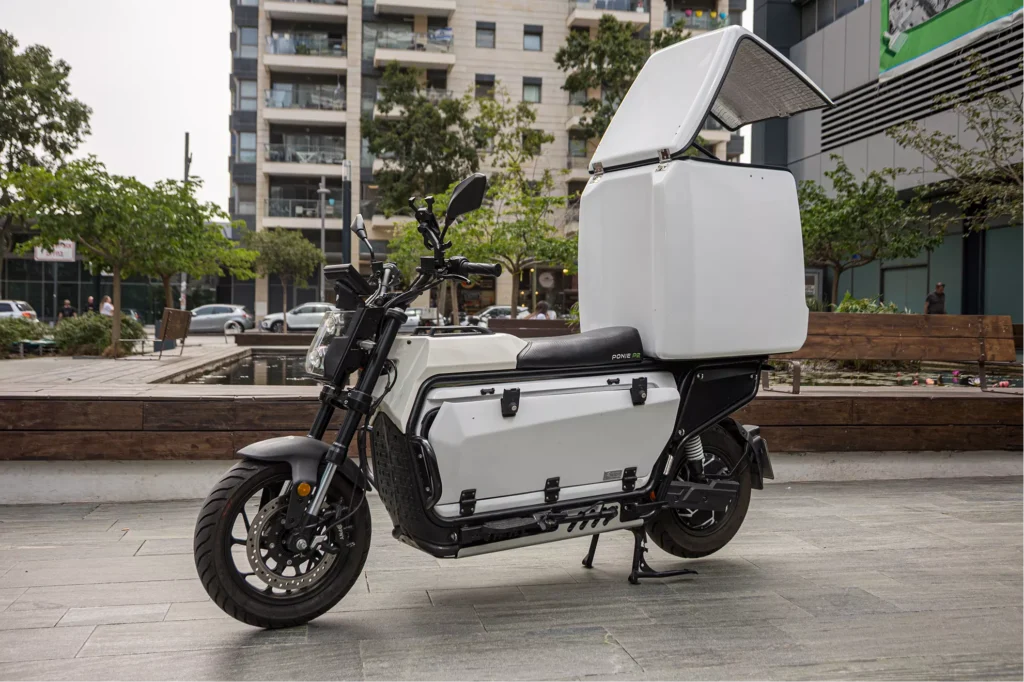
Another useful detail in the spec sheet is the L3e-A1 homologation. That places the Ponie P2 in the EU’s low-performance motorcycle class, where power stays at 11 kW or below and the bike has to meet motorcycle-type approval rules rather than lighter moped-style limits. PNY’s own numbers — 72V, 4000W, 100 km/h — show the vehicle is being configured to stay road-usable while still fitting that lower-powered motorcycle bracket.
The braking choice is also more meaningful than it first looks. Under EU rules, an L3e-A1 motorcycle must use an advanced brake system, but the manufacturer can choose ABS or CBS. PNY explicitly fits ABS.
For a cargo bike carrying real volume and weight, that matters more than a display size or a comfort feature. It says something about how the company expects the Ponie P2 to be used: on normal roads, in traffic, under load, and with commercial riders who may be braking hard in unpredictable urban conditions.
The Ponie P2 can be configured with different boxes and accessories for different jobs. That makes it more than one fixed delivery setup. The same vehicle can be adapted for parcel delivery, grocery runs, or service work, which gives the cargo format more range without moving up into van territory.
A cargo-first electric motorbike built for urban delivery routes that need more carrying ability than a scooter, without moving all the way up into van territory.
| Vehicle type | Electric cargo motorbike |
|---|---|
| Use case | Urban delivery, courier work, service routes, dense city logistics |
| Homologation | L3e-A1 |
| Claimed range | Up to 185 km |
| Cargo volume | 400 L |
| Max combined load | 199 kg (rider, passenger, and cargo combined) |
| Top speed | 100 km/h |
| Motor | 4000W motor |
| Braking | ABS |
| Format | Cargo-first two-wheeler with configurable boxes and accessories |
| Design focus | High cargo utility, lower maintenance, stable handling under load |
| Commercial angle | Built to sit between a delivery scooter and a small urban van |
Note: the 199 kg figure refers to the maximum allowed combined weight for rider, passenger, and cargo, not cargo alone.
The harder part of this product is not adding cargo space. It is making that cargo space usable on a two-wheeler once the bike is actually loaded. The Ponie P2 deals with that through packaging. The battery sits low in the frame, the motor is kept out of the way of the cargo area, and the whole layout is built around keeping weight low and centralized instead of letting the load turn the bike top-heavy. The 400 liters capacity only becomes commercially useful if the bike can still be handled with confidence once the boxes are full.
The riding position is important too. This is still a motorcycle layout, not a step-through scooter. The rider sits with the bike between the legs, which gives more control over a loaded machine than a flatter scooter posture does. That becomes more important once the work shifts from small food orders to bulkier parcels, technician gear, or grocery runs where weight distribution starts affecting how the bike brakes, turns, and filters through traffic. Cargo volume on its own is easy to advertise. Load stability is the part that decides whether the vehicle can survive daily work.
The same applies to construction. A commercial bike does not just need to work when new. It needs to stay easy to repair once fleets start using it hard. A simpler structure, visible fasteners, and easier access to components all matter because service time is part of uptime. On a fleet vehicle, awkward repairs are not a workshop problem alone, but also a utilization problem.
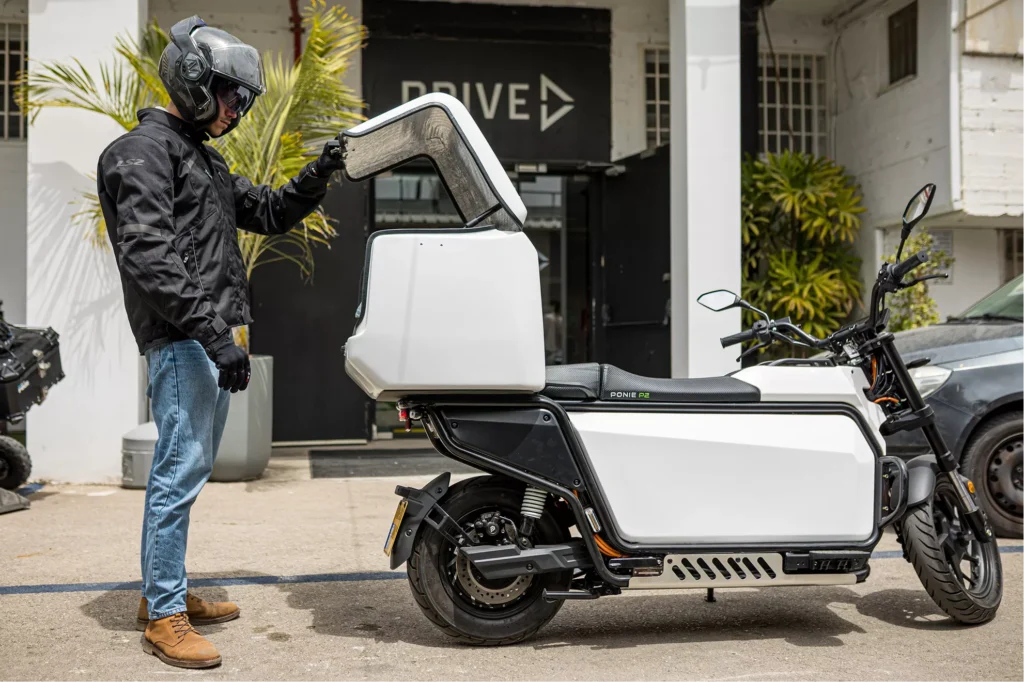
PNY presents the Ponie P2 with up to 185 km of claimed range from its 6.7 kWh CATL battery, but the more useful operating picture is a bike built around one full urban shift, overnight charging, and another day back on the road. That framing also matches the way the vehicle was tested in real use.
The pilot feedback is more useful than the headline number because it shows what riders actually noticed once the bike left the spec sheet. Food couriers reportedly praised its nimbleness and acceleration in dense traffic. Mail carriers valued the large rear cargo box and underseat storage. The ambulance-use case showed something else again – the bike could move through congestion faster while still carrying gear that would normally require a much larger vehicle.
The pilot helped surface where the bike still needs work. The feedback PNY highlighted was not about top speed or headline range, but about seat comfort on long shifts and the need for fast charging to support two shifts a day. That places the Ponie P2 more precisely. One-shift city work already looks credible. Longer-duty use is where turnaround time, rider fatigue, and uptime start to matter more.
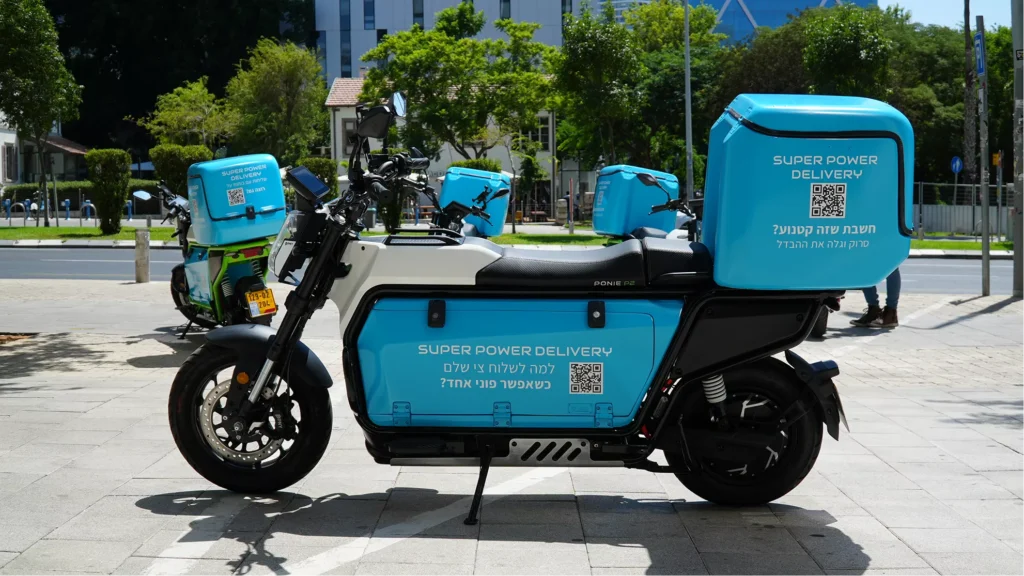
The more useful operating target here is a full urban shift. In the Charging Stack podcast episode with Netzah Sadeh, the numbers attached to that use case are much more specific than the 185 km headline. Work with logistics operators, including DHL in Israel, pointed toward roughly 100 km of usable range and 200 to 400 liters of cargo capacity as the practical requirement for city delivery.
That makes the bike easier to place. The intended routine is not long-distance riding or all-day top-ups. It is a 7–8 hour urban shift, overnight charging, and another day back on the road. The same discussion also adds something useful – the bike was being shaped around warehouse-to-city work, front-hub deployment, and short dense loops where access, parking, and daily throughput matter more than maximum distance on paper.
The base routine is simple. A normal city shift ends with the bike going back to charge overnight. That is the cleanest fit for the Ponie P2: short urban routes, repeated stops, one full day of work, then a return to the charger at night.
The longer-day logic is where the product gets more interesting. Sadeh describes a second layer built around riders who stay on the road well beyond one shift or depend on more hours to earn more. In that use case, the standard charger is no longer the point. The faster charger is.
The example he gives is practical – ride half a day, cover roughly 70 to 80 km, stop for a break, charge, and go back out with another 70 to 80 km of usable range. He also puts numbers on that distinction. The regular charger takes about nine hours from 0 to 100%, while the fast charger cuts that to about two and a half hours.
That makes the operating model easier to place. One-shift city work is the natural fit. Double-shift use is possible, but it starts depending much more on charging turnaround, break timing, and how heavily the bike is being worked across the day.
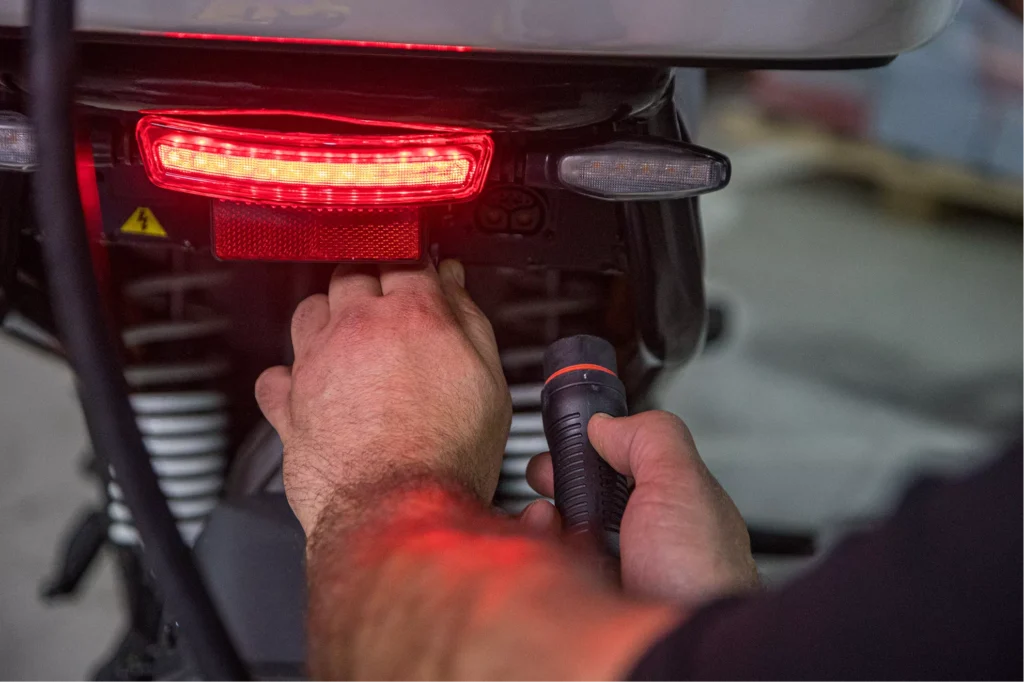
PNY is not trying to enter each market by building its own retail, service, and after-sales network from scratch. The company is using a more familiar vehicle-industry model where local distributors handle import, sales, financing, service, and customer contact, while PNY stays focused on the bike itself, spare parts, and the product layer around it.
Israel already shows how that works. The first 50 vehicles went into the market through MAYER Cars and Trucks, with the local sales flow running through Meir Electric Utilities (2015) Ltd. and a Tel Aviv showroom. That matters because Mayer is more than a buyer. It gives the Ponie P2 a route into an existing automotive and micromobility system with local support already in place. For a company at PNY’s size, that is a much more realistic path than trying to build market infrastructure country by country.
That also explains why distribution matters as much as fleet interest. A cargo motorbike does not scale just because operators like the idea. It still needs import handling, homologation, parts flow, service response, financing, and commercial follow-through once the first bikes arrive. Getting a product into the field is one job. Keeping it there is another.
PNY’s early Israel rollout suggests the company understands that difference. The bike may open the conversation, but the distributor is the layer that decides whether a pilot turns into repeat orders or stalls after the first shipment.
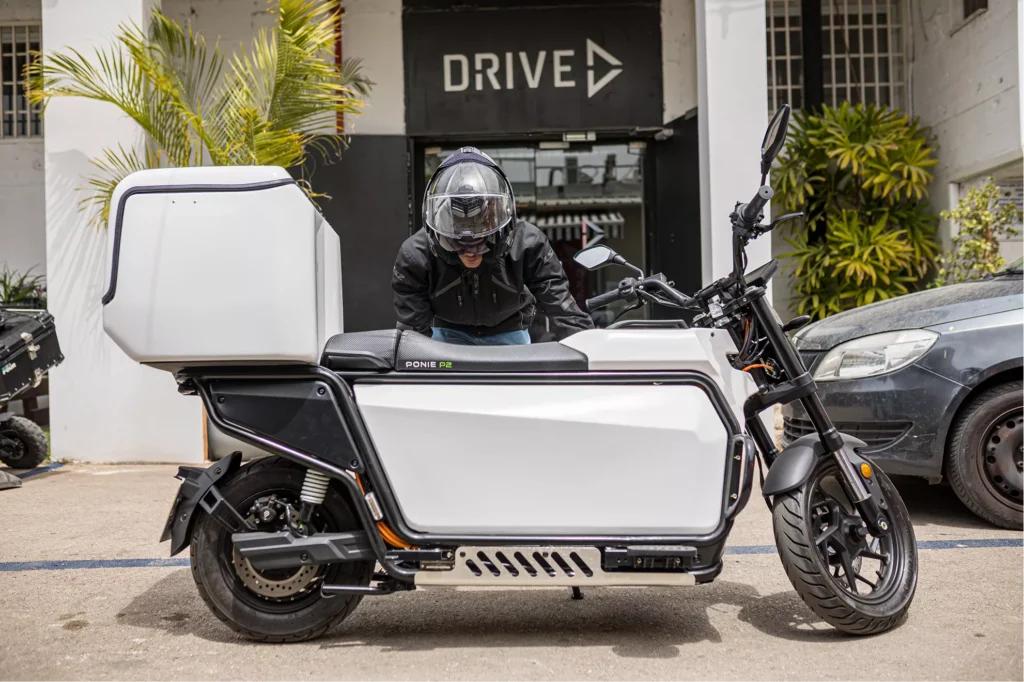
PNY’s scale strategy starts with a simple constraint: a small manufacturer cannot build import, retail, financing, service, and customer support from scratch in every market it wants to enter. So the company is using distributors to carry that layer instead, while it stays focused on the bike, spare parts, and the product itself.
Israel shows the model clearly. PNY partnered with MAYER Cars and Trucks in 2022, started manufacturing in China in 2024, and delivered the first 50 vehicles into Israel through that channel in early 2025. The local sales flow runs through Meir Electric Utilities (2015) Ltd., part of the wider Mayer group, with a Tel Aviv showroom handling customer contact and test rides. That gives the Ponie P2 a local commercial structure before it has to prove itself at scale.
Mayer also brings something more useful than showroom space. Its network already covers sales, financing, service, and logistics, and MEU already works with established electric two-wheeler brands in Israel.
For PNY, that reduces the amount of market-building it has to do on its own. The bike is not entering a blank market, but an existing one through a partner that already knows how to support powered two-wheelers.
That is why distribution sits so close to the center of the story. Fleet interest can open the door, but it does not solve import handling, homologation, parts flow, service response, or what happens after the first bikes arrive. Getting into a pilot is one step, and staying on the road long enough to earn repeat orders is another. PNY’s early rollout tells us the company understands that difference.
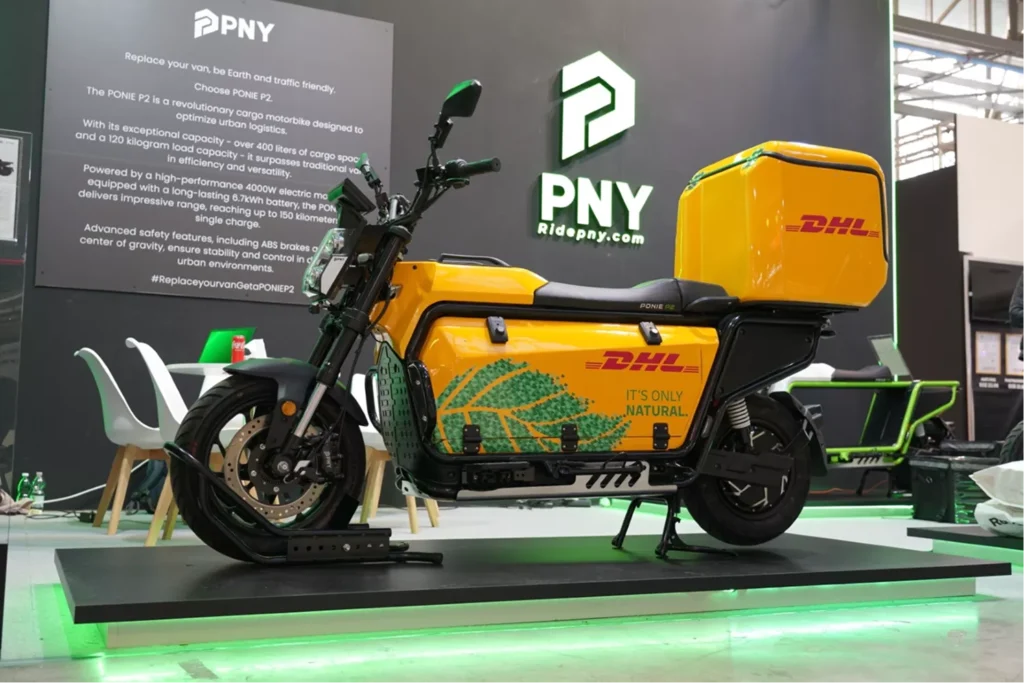
That choice also reflects how early the company still is. PNY was built bootstrapped, developed five prototypes, partnered with Mayer and DHL in 2022, started manufacturing in China in 2024, and only got its first 50 vehicles into Israel in early 2025. Also, they still employ up to 10 employees. At that scale, trying to build import, service, financing, and customer support internally across multiple markets would spread the company too thin.
That helps explain the division of labor. PNY keeps its effort on the product, while distributors carry the local commercial machinery around it. A company this small still has to prove the vehicle, keep refining it, and get it through real fleet use before it can even think about owning every other layer of the market.
CargoPower is PNY’s attempt to turn a delivery bike into a commercial equation. The formula is simple: carrying capacity multiplied by distance, divided by net operating cost per kilometer. It moves the benchmark away from the usual two-wheeler language of speed, power, or displacement and toward a fleet question: how much paying work can one vehicle complete in a day, and what does that work cost to deliver.
That helps explain why PNY keeps leaning on the same numbers. 400 liters of volume changes how much can be moved per trip. 185 km of claimed range stretches how much of the workday can be covered before the bike has to stop. Near-zero fuel cost changes the denominator in the CargoPower formula. ABS, the 4000W motor, and the low-center-of-gravity chassis also feed into the same logic. More CargoPower depends on stable load-carrying, predictable control at full weight, and a bike that can stay productive in traffic instead of becoming difficult to manage.
The examples make the metric easier to follow. PNY uses Metrofun to show what CargoPower looks like in practice: a regular scooter reportedly carried 10 batteries per trip, while the Ponie P2 carried 30, which the company describes as 3x efficiency and 50% cost reduction. In another case, service technicians moving from vans to the Ponie P2 were said to triple daily service calls because less time was being lost to congestion, parking searches, and vehicle running costs. Those examples show what CargoPower is meant to capture: fewer reloads, fewer wasted kilometers, and more completed work per shift.
CargoPower is still PNY’s own lens. It is useful because it makes the company’s commercial logic easier to follow. It is also still unproven, because the strongest supporting examples come from company case studies rather than broad third-party fleet data. The idea is strong enough to take seriously. The metric still sits in the claim stage, not the settled-proof stage.
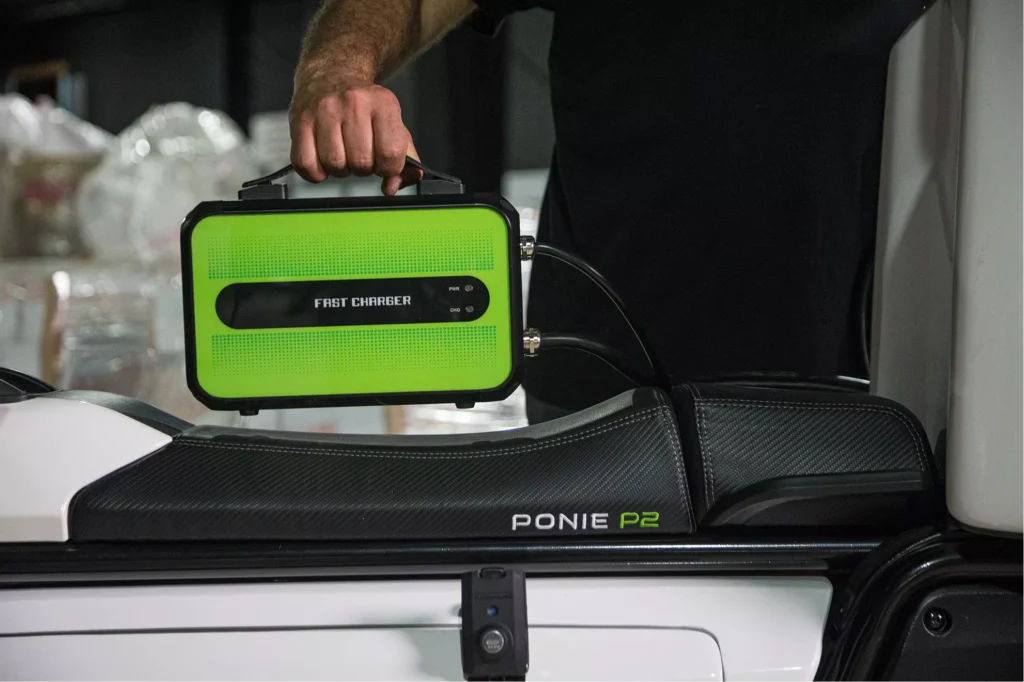
The pilot work was broader than a generic “fleet test.” By late 2024, the first 50 Ponie P2s had come off the line and PNY was preparing pilot programs with DHL and the local postal service in Israel. By October 2025, those pilots had extended into three distinct use cases – food delivery, mail service, and ambulance-duty work.
The pilots also produced more concrete feedback than the article currently says. In delivery use, riders reportedly liked the bike’s nimbleness and acceleration in dense traffic. In mail service, the useful part was the cargo layout itself – the large rear box and underseat storage. The ambulance-use case pushed the format hardest. The bike was used to move through congested streets faster while still carrying a range of lifesaving gear that would normally require a much larger emergency vehicle.
Those are useful signals because they show where the Ponie P2 already works, and that’s tight cities, repeated stops, and jobs where access matters almost as much as carrying capacity.
What the pilots achieved was not category proof, but product proof. They verified that the bike could handle real routes, and they also surfaced the first clear development priorities: better seat comfort for long shifts and a fast-charging option for two-shift use. That is a valuable outcome, since it shows the Ponie P2 has moved beyond prototype theater and into real operating feedback. It still does not show repeatable adoption across cities, fleets, and duty cycles, which is why this remains traction rather than a settled category.
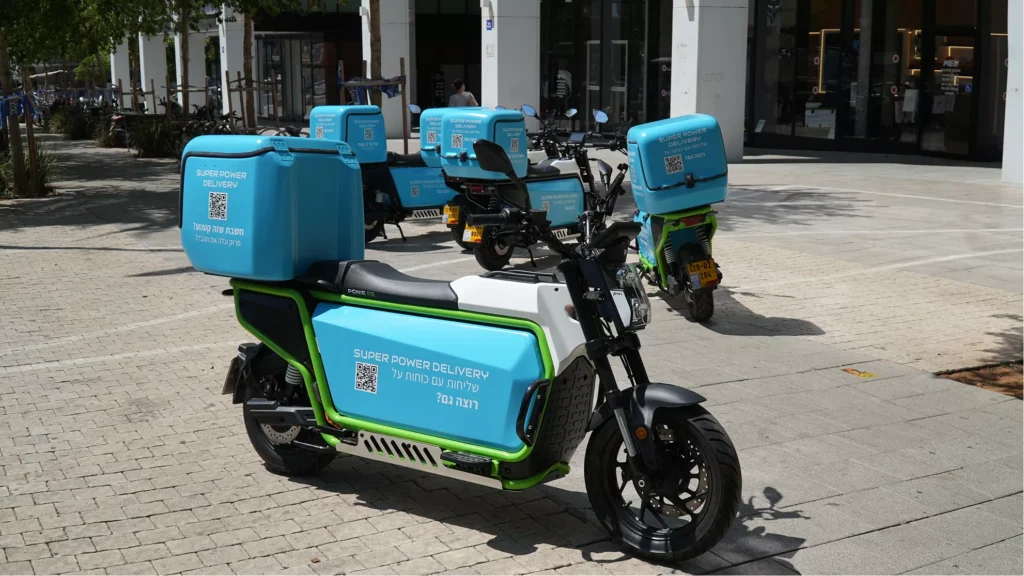
PNY’s competitor set is clearer than it first looks. On one side are the 125cc scooters that dominate delivery work today. On the other are the mini vans operators still rely on once scooter capacity starts running out. The company’s claim is not that vans disappear. It is that a meaningful slice of their urban use case starts shrinking once a two-wheeler can offer more cargo volume, more range, more speed, and more safety than a standard scooter without inheriting the traffic, parking, and operating-cost burden of a van.
That also makes the market strategy easier to read. Wolt does not buy its own fleets, so the bike is being pushed through Mayer toward riders rather than through a simple fleet-sale model. PNY also says it has already sold to an emergency organization, has demo vehicles in Germany and France, and is targeting Western Europe first.
That gives the “move down from vans” argument a more practical shape. It is not only a theory about city logistics, but a bet that some operators and riders already doing urban work with scooters or mini vans will find this middle format easier to justify.
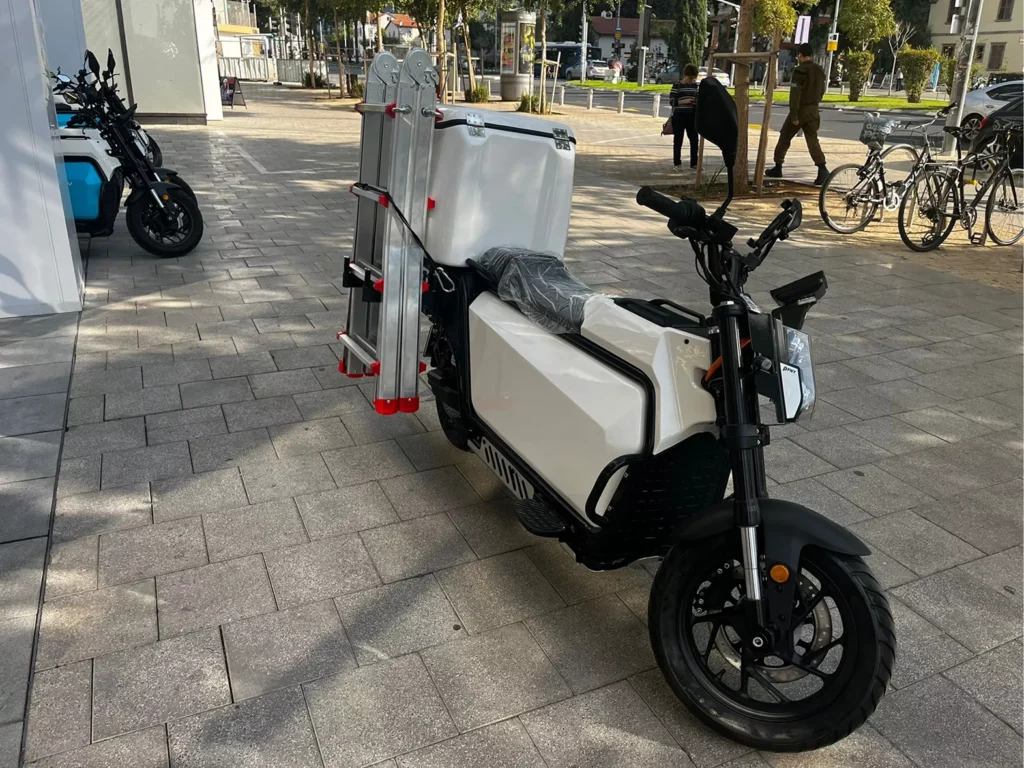
PNY has done enough to make the format credible. The Ponie P2 is on the road, the pilots are real, and the use cases already reach beyond one narrow delivery lane. That matters. A lot of new vehicle ideas never get that far. They stay in renders, teaser videos, and founder logic. This one has already made contact with actual routes.
But that is only the first threshold. Categories are not built when a pilot works once. They are built when somebody orders again. Then orders again after that. They are built when service support stops being a launch promise and becomes routine. When spare parts are available. When a damaged bike gets repaired fast enough to go back into work without turning uptime into a management problem. When distributors keep backing the product after the novelty has worn off. When riders choose it again because the job still makes sense on Tuesday in November, not just during a well-managed trial.
That is where the standard changes. Early traction proves the vehicle can enter the conversation. Repeat demand proves it belongs in the fleet. For something like the Ponie P2, that proof has to show up across more than one city, more than one operator type, and more than one duty cycle. It has to hold in delivery, service work, emergency response, and any other lane where the company says this middle format can win. One successful pilot is encouraging. A category needs boring consistency.
That is the closing test for PNY. Can a cargo motorbike like this become a normal line item in urban fleet buying, with reorder logic, working support, and enough operational trust to stand beside scooters and vans as an established option?
Or does it remain a clever answer to a real problem that stays too narrow to spread? The Ponie P2 has already cleared the idea stage. What comes next decides whether this is a product story or the start of a category.