

From EVs and batteries to autonomous vehicles and urban transport, we cover what actually matters. Delivered to your inbox weekly.
In Barcelona’s Eixample district, a courier pulls up to the curb. There is no engine noise, no wait at a charging bay, and no long pause before the next run. The battery comes out on its trolley, a fresh one goes back in, and the vehicle is moving again.
That promise is easy to understand. It is also easy to overstate. Battery swapping only feels useful when the network is dense enough to make it part of daily life rather than a special workaround.
That is what makes the Silence S04 worth watching.
On its own, it is a tiny two-seat urban EV built for short trips, tight streets, and fast turnaround. But the car is only half the story.
The real bet is the system around it – removable batteries, subscription pricing, and swap infrastructure that already makes sense in Spain and now has to prove it can travel beyond Silence’s home market.
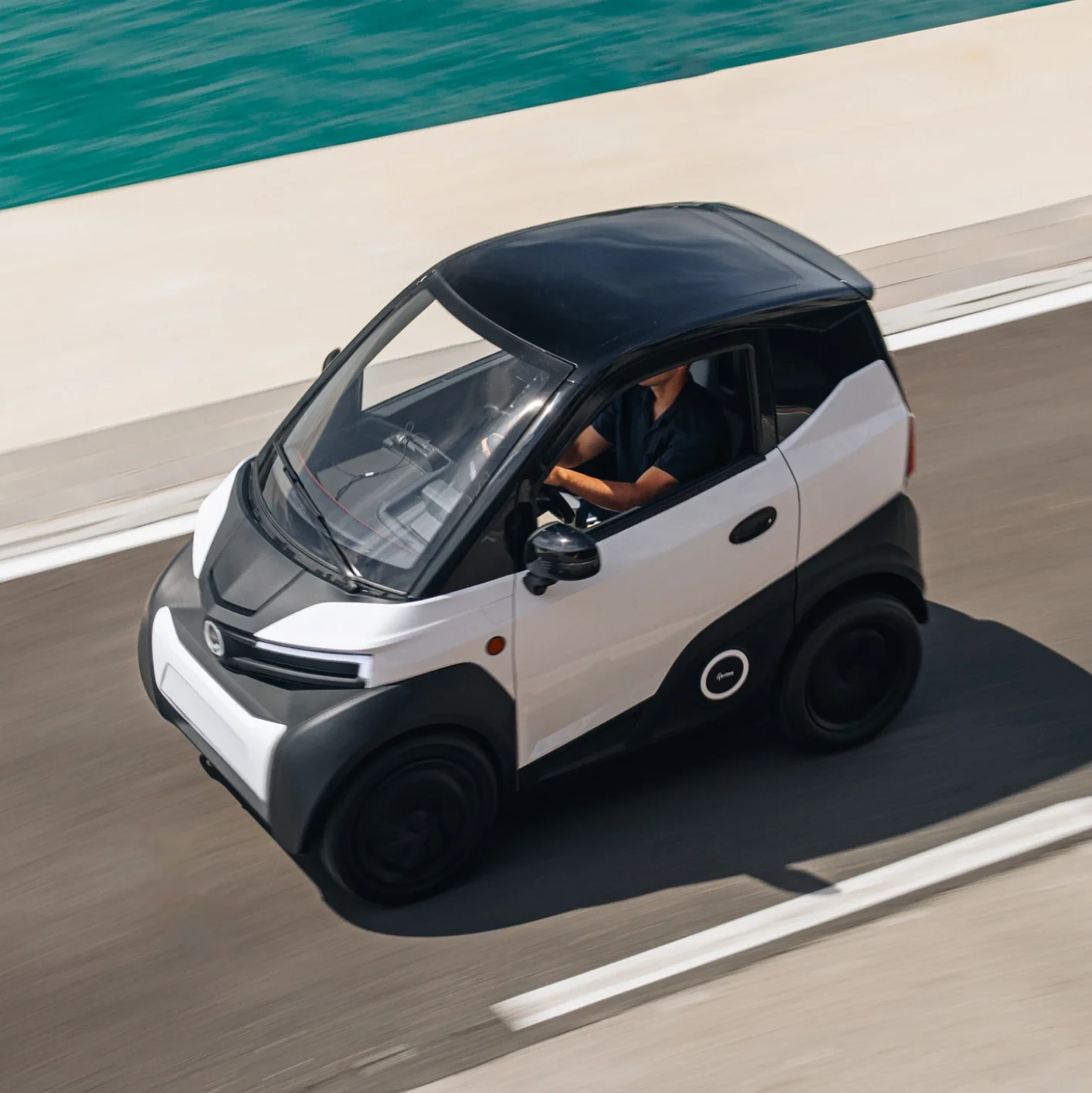
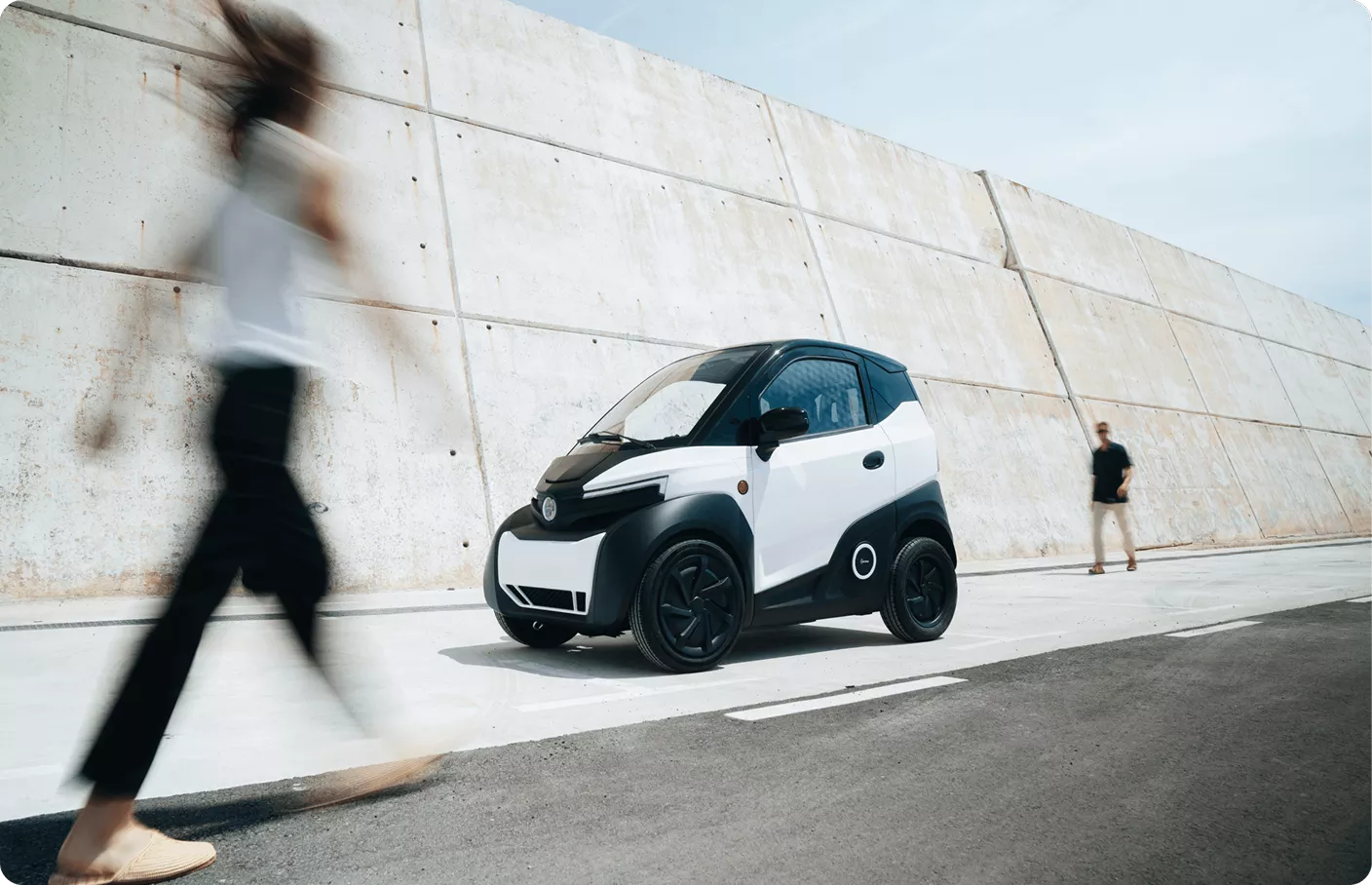
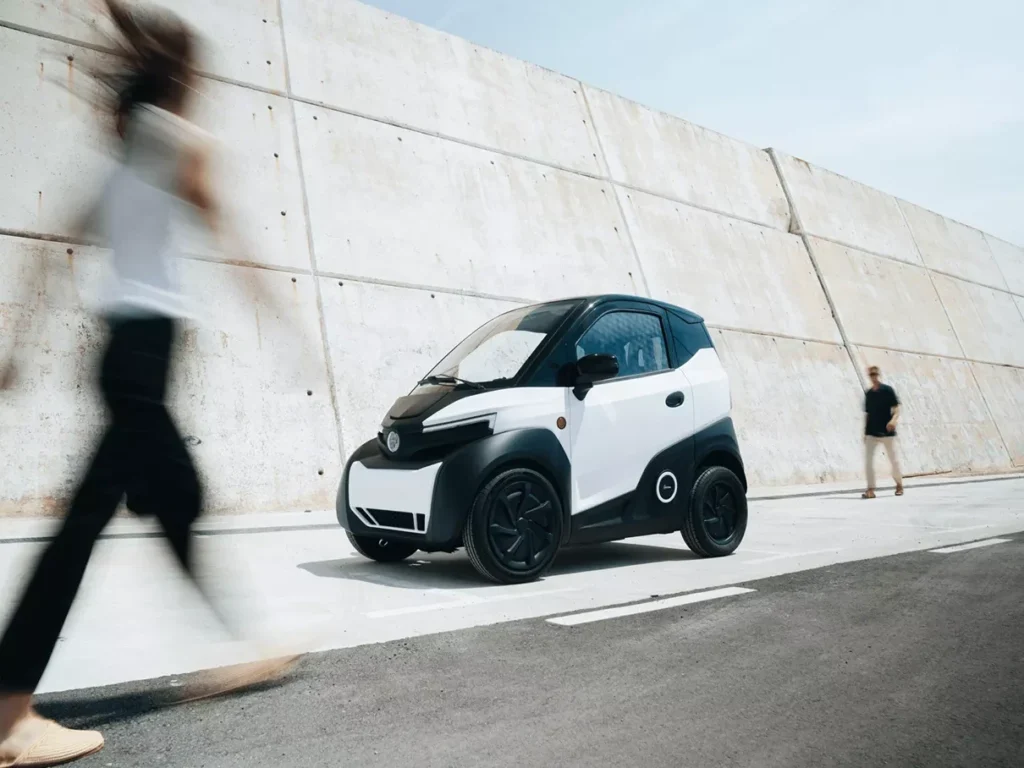
The Silence S04 does not try to behave like a full-size car. It sits somewhere between a scooter and a compact urban vehicle, built around the realities of short trips, narrow streets, and parking spaces that keep getting harder to find.
At roughly 2.28 meters long and 1.27 meters wide, it takes up far less room than a typical hatchback while still offering an enclosed cabin, two seats, and enough everyday practicality to make city use feel more realistic.
That compact footprint is only part of the story. The current lineup is split across three main versions: the L6e Unico, the L6e Vivo, and the faster L7e Plus.
The low-speed L6e models are capped at 45 km/h and aimed squarely at dense local use, while the L7e Plus reaches about 85 km/h and stretches the car’s usefulness onto faster urban roads and metropolitan connectors.
What makes the S04 stand out is the energy system underneath it. Depending on trim and market, it uses one or two removable 5.6 kWh battery packs that can either be charged from a normal socket or exchanged through Silence’s battery-swap network. That changes the logic of owning a small EV in the city. The real question is not just how far the car can go on a charge, but how quickly it can get back into service once the battery runs low.
That is the idea behind the whole product. The S04 is not trying to win on status, long-distance comfort, or oversized-car expectations. It is trying to fit the city instead of forcing the city to make room for the vehicle.
Silence did not start with a microcar. It started with scooters. Founded in Barcelona in 2012, the company built its early business around electric two-wheelers for dense urban use, then grew into one of Europe’s better-known names in the category by pairing that hardware with a removable battery system designed for everyday city operation.
That battery logic is what matters here. Silence was never just building vehicles with electric drivetrains.
It was building a shared energy platform: standardized 5.6 kWh packs, off-board charging, swap access, app-linked services, and a model that could work across multiple vehicle types.
The S04 came out of that foundation. Instead of starting from car-market conventions, Silence extended the same operating logic into an enclosed two-seat format for users who wanted more weather protection and practicality than a scooter could offer.
That shift became much more credible once ACCIONA took a majority stake in 2021. The company did not just add funding. It added factory scale in Barcelona, infrastructure rollout capacity, and the kind of industrial backing needed to turn battery swapping from a clever feature into a wider urban mobility system. Seen that way, the S04 is the next test of whether the same platform that helped Silence gain traction in scooters can also support a new class of compact city EV.
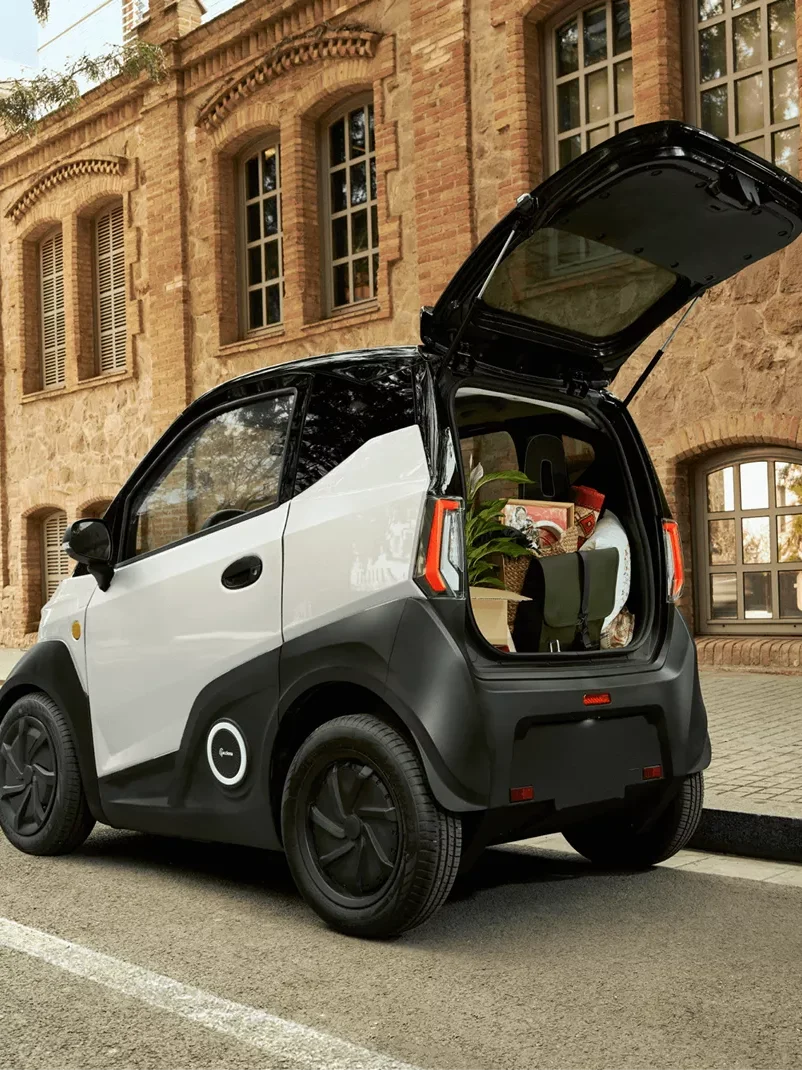
The S04’s size is the point. At roughly 2.28 meters long, 1.27 meters wide, and 1.57 meters high, it sits far below the footprint of a normal hatchback and makes its strongest case in the kind of city driving that punishes larger vehicles – short trips, tight turns, scarce parking, and constant curb pressure. That compactness is the core of the vehicle’s usefulness.
Silence and ACCIONA lean into that logic by presenting the S04 as a way to take up less urban space without dropping all the basics of enclosed transport.
The cabin seats two in a staggered arrangement, giving the car a more practical layout than its exterior size first suggests. Cargo capacity is less tidy on paper. Some sources put the trunk at 247 liters, while others place it closer to 310 liters, so the safest way to describe it is as roughly 250 to 310 liters depending on source and measurement method.
That is still enough for shopping bags, small luggage, or the kind of daily load that dominates short urban errands.
That trade-off is really what defines the S04. It is not trying to stretch small-car logic into something more versatile than it is. It gives up long-distance flexibility and all-purpose practicality in exchange for something many dense cities now value more: a vehicle that is easier to park, easier to store, and easier to justify for everyday local use.
The design language follows that same discipline. The body is upright, narrow, and visually simple, with very little wasted form. Nothing here is trying to signal motorway ambition or private-buyer luxury. The S04 looks like a vehicle shaped by congestion, limited space, and the economics of moving through a city efficiently. That is why it reads less like a cut-down car and more like a city tool built around the realities of urban life.
The S04 lineup makes more sense when you read it as three trims rather than one clean L6e/L7e split. At the entry point sits the L6e Unico, a low-speed city version with a 4 kW motor, one 5.6 kWh removable battery, and a quoted range of up to around 100 km depending on source and test context.
Above that is the L6e Vivo, which keeps the 45 km/h cap but steps up to a 6 kW motor and is presented with different battery and range configurations depending on market.
At the top of the range is the L7e Plus, which uses two 5.6 kWh batteries, delivers 14 kW of continuous power, reaches about 85 km/h, and posts a quoted 149 km WMTC range.
That spread tells you a lot about how Silence sees the category. The lower trims are tightly focused on short urban use, where compact size and low running friction matter more than speed. The Plus pushes the concept a bit further, giving the S04 enough pace for faster urban roads and metropolitan connectors without pretending to be a conventional small car.
| Specification | Unico | Vivo | Plus |
|---|---|---|---|
| Vehicle class | L6e | L6e | L7e |
| Motor power | 4 kW | 6 kW | 14 kW |
| Top speed | 45 km/h | 45 km/h | 85 km/h |
| Battery setup | 1 × 5.6 kWh | Market-dependent; typically 1 × 5.6 kWh, with some sources also referencing broader configurations | 2 × 5.6 kWh |
| Quoted range | Approximately 70–100 km on one battery, depending on source and conditions | Market- and configuration-dependent | 149 km WMTC |
| Swap / charge logic | Removable battery, charge from a domestic socket or swap at Battery Stations | Same | Same |
| Battery swap time | Less than 30 seconds at a swap station | Same | Same |
The important part is the battery architecture. Across the range, the S04 is built around removable battery packs that can be charged from a normal socket or exchanged through Silence’s swap network in less than 30 seconds.
That changes what “range” means in daily use. In a conventional EV, range mostly tells you how long you can stay away from the charger. In the S04, it also tells you how quickly the car can get back into service once energy runs low.
That is why the S04’s numbers make more sense in context than they do on paper alone. Judged as a tiny urban tool built for short distances, constrained space, and fast turnaround, it looks focused rather than underpowered. Judged as a miniature version of a normal car, it makes much less sense.
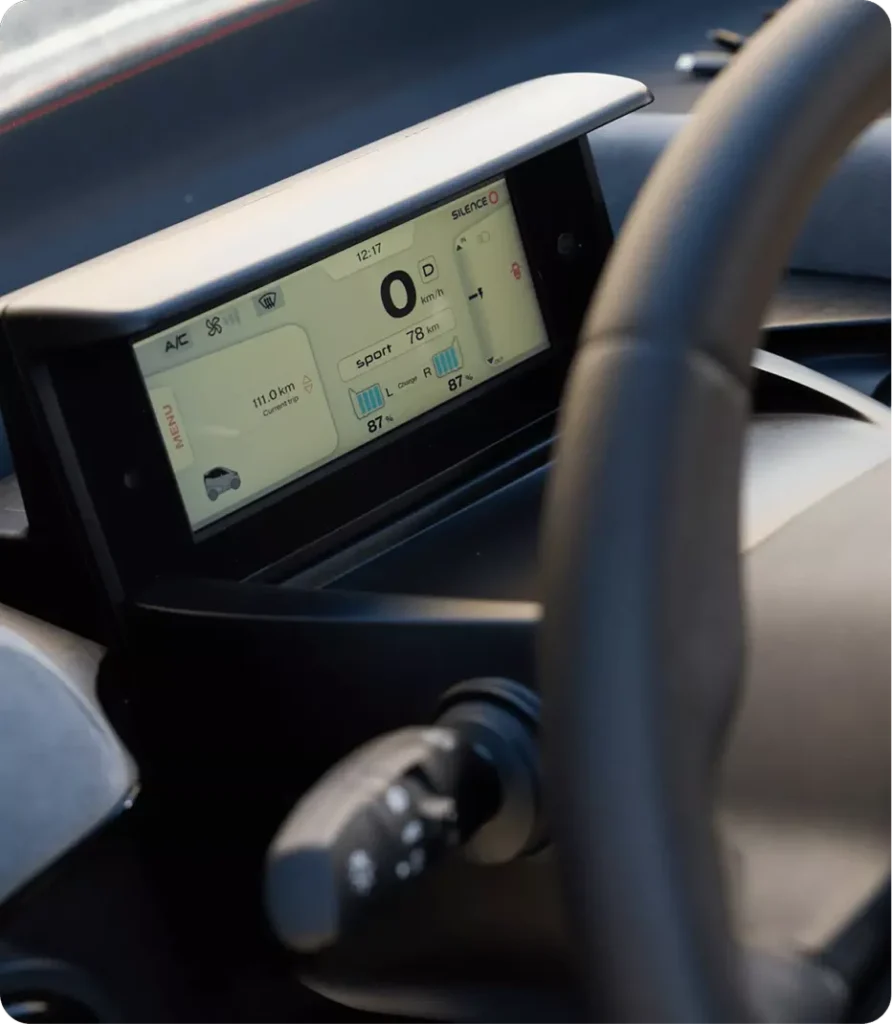
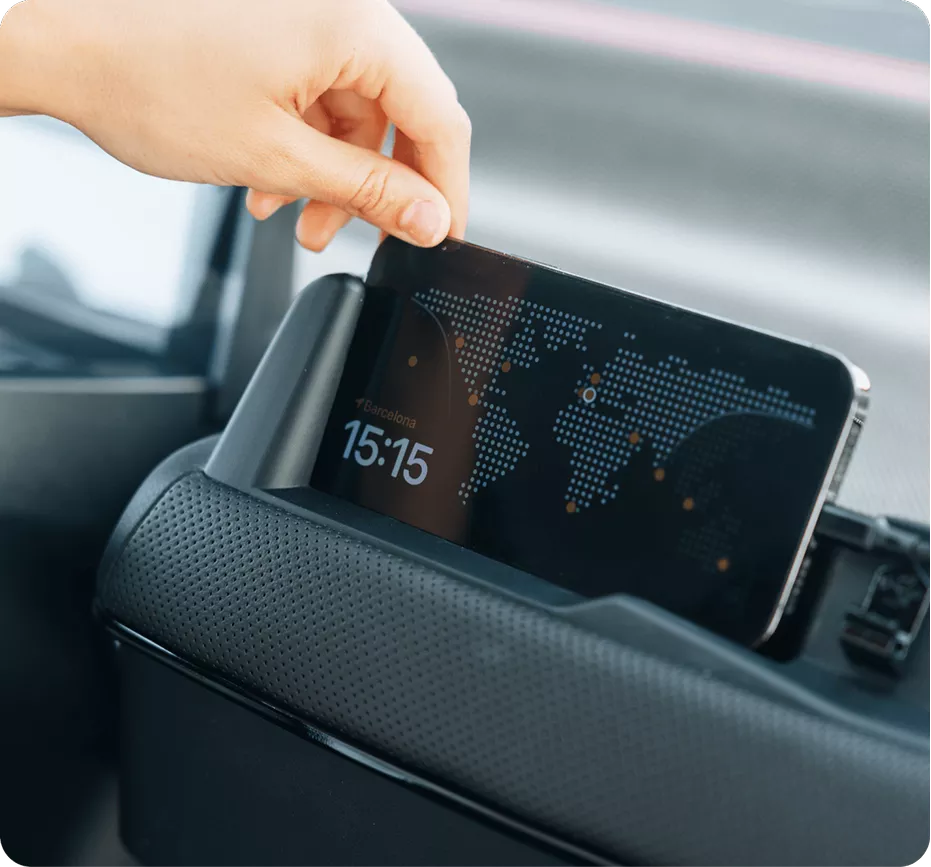

The S04 keeps the cabin simple, but it does not skip the essentials. Across the current lineup, the confirmed equipment story is functional – air conditioning and heating, power windows, a 7-inch TFT display, and MySilence app connectivity with keyless functions are all part of the package.
That makes the interior feel less like a stripped-down experiment and more like a small urban vehicle built to handle everyday short trips without unnecessary complexity.
Safety and usability follow the same logic. Current source-backed materials point to a rearview camera and, in some materials, optional ABS, while the broader digital layer helps with access, battery status, and basic vehicle management through the app.
The result is a straightforward, city-focused interior that gives users weather protection, core comfort, and enough connected functionality to make the S04 feel practical in daily use.
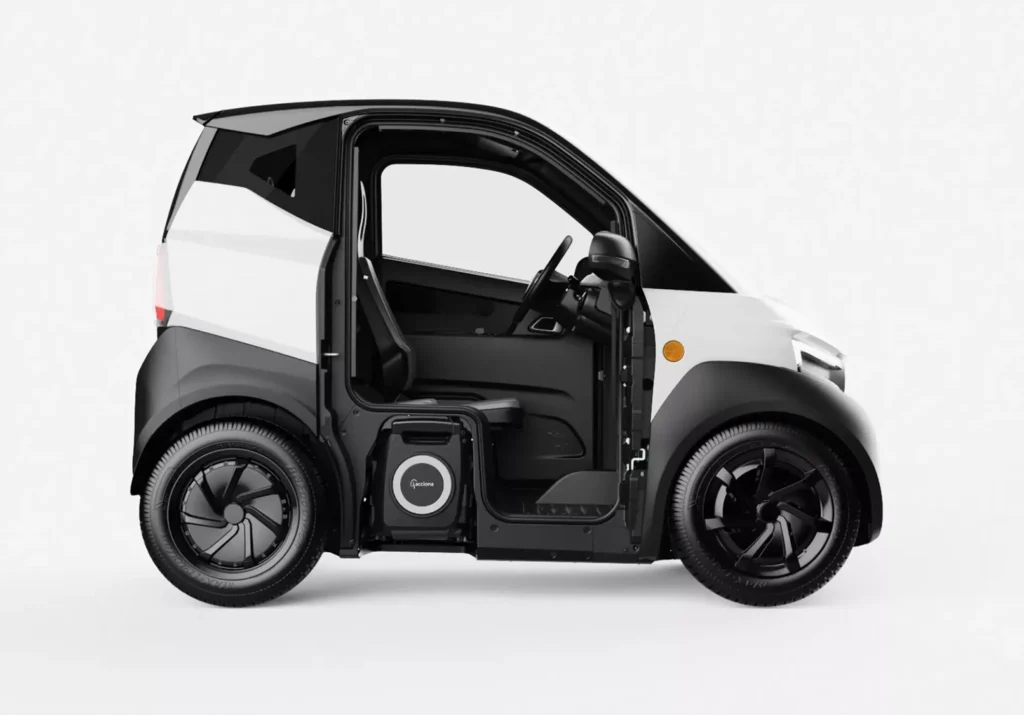
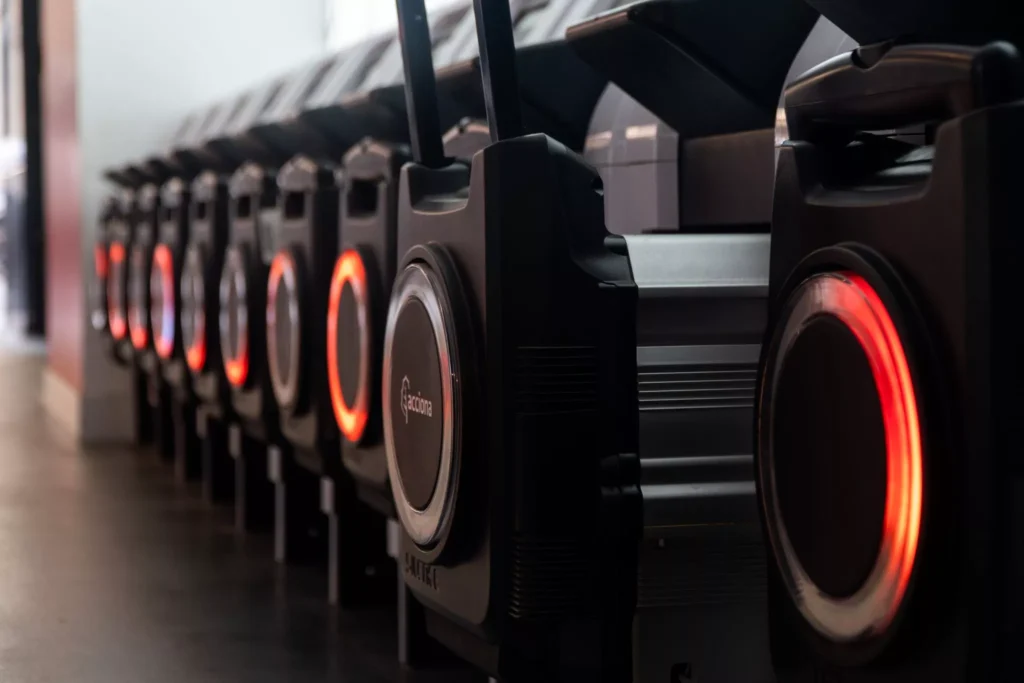
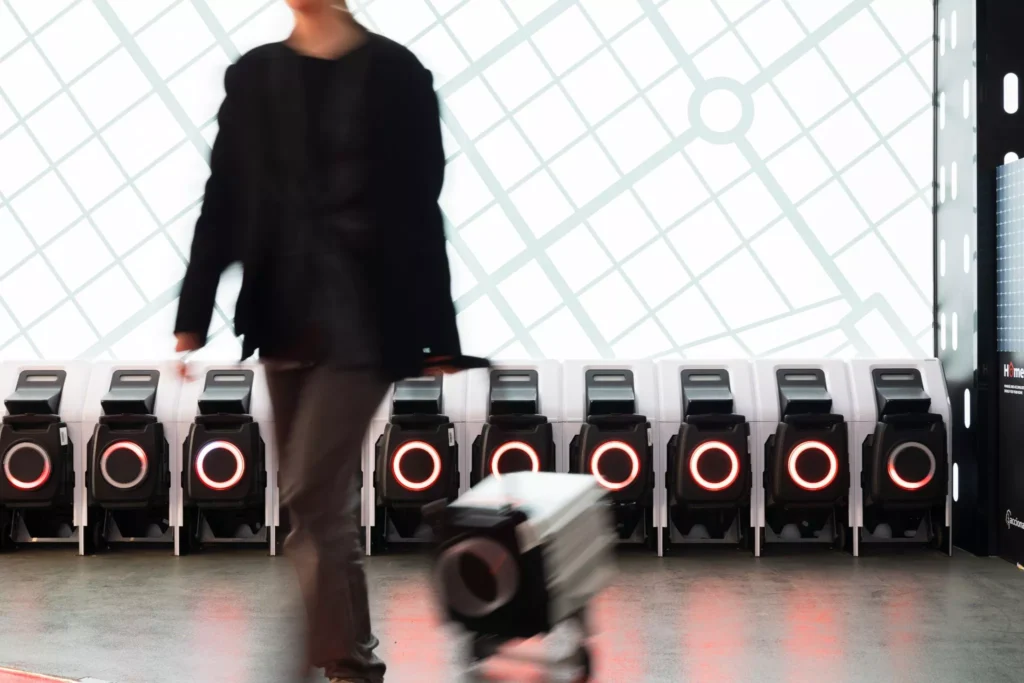
The battery system is the most distinctive part of the S04. Instead of treating the battery as a sealed component buried inside the vehicle, Silence builds the car around removable 5.6 kWh packs that can either be charged from a normal socket or exchanged through the company’s Battery Station network. That changes the ownership logic in a meaningful way. The key question is not only how far the car can travel before stopping, but how quickly it can get back into service once energy runs low.
The design of the pack reflects that idea. It uses a trolley-style format with wheels and a telescoping handle, so the battery is designed to be movable rather than light. In practice, that makes the system more flexible for users who do not have dedicated charging at home or who want the option to recharge off-board without relying on fixed infrastructure every time.
Just as importantly, the same removable-battery logic runs across the wider Silence platform, which helps explain why the S04 makes more sense as part of a broader ecosystem than as a standalone microcar.
That ecosystem becomes most convincing at the swap station itself. Silence says depleted batteries can be exchanged for charged ones in less than 30 seconds, turning what would normally be a slow charging stop into something much closer to a refueling moment. That is the real significance of the system. In the right market, battery swapping does not just add convenience. It changes the rhythm of urban EV use altogether.
Silence gives users two ways to stay powered:
That flexibility is the S04’s strongest practical advantage, but it is not equally valuable everywhere. Charging works when a socket is easy to reach.
Swapping becomes far more useful when the network is dense enough to make it part of normal daily use rather than a separate errand.
That is why this model is strongest for users without reliable home charging, but only where swap density already exists or is starting to become real. The broader subscription model is built around exactly that use case.
Battery swapping only works when the network is dense enough to feel routine. That is where Silence has its clearest advantage. When ACCIONA launched the S04 in July 2024, it said the brand already had 1,200 exchange points across 120 battery stations in Spain’s major cities, with a target of 160 stations and 1,600 exchange points before the end of that year.
That early lead did not stay static. By June 2025, ACCIONA said Spain had more than 150 battery stations in the country’s main cities, and by October 2025 it described the Spanish network as more than 160 battery swap stations. That matters because it pushes the model beyond pilot-stage novelty. At that scale, swapping starts to look less like a clever workaround and more like a real layer of urban energy infrastructure.
France is now the first serious test of whether that model can travel. In October 2025, ACCIONA said Silence had opened its first fourteen battery swap stations in Paris and the surrounding metropolitan area, with further expansion planned across the French Riviera before year-end. Most of those first French stations were placed at Esso service stations, with others in strategic car parks and brand locations.
That leaves Silence in a fairly clear position. Spain is the mature market, France is the emerging one, and the rest of Europe is still in early rollout. ACCIONA said in June 2025 that France would be the first international expansion point for the network, with other European countries expected to follow later in 2025 and in 2026.
The real question is whether Silence can reproduce enough density, market by market, for the S04’s biggest advantage to travel with the vehicle itself.
Silence is not the only company chasing the small-EV category, but it is taking a different route from most of its peers. The real distinction is that Silence is trying to pair the vehicle with a battery-swap and subscription system, while most rivals still sell a compact EV first and leave energy access to conventional charging.
That makes the S04 easier to understand as part of an urban operating model rather than as a pure consumer product.
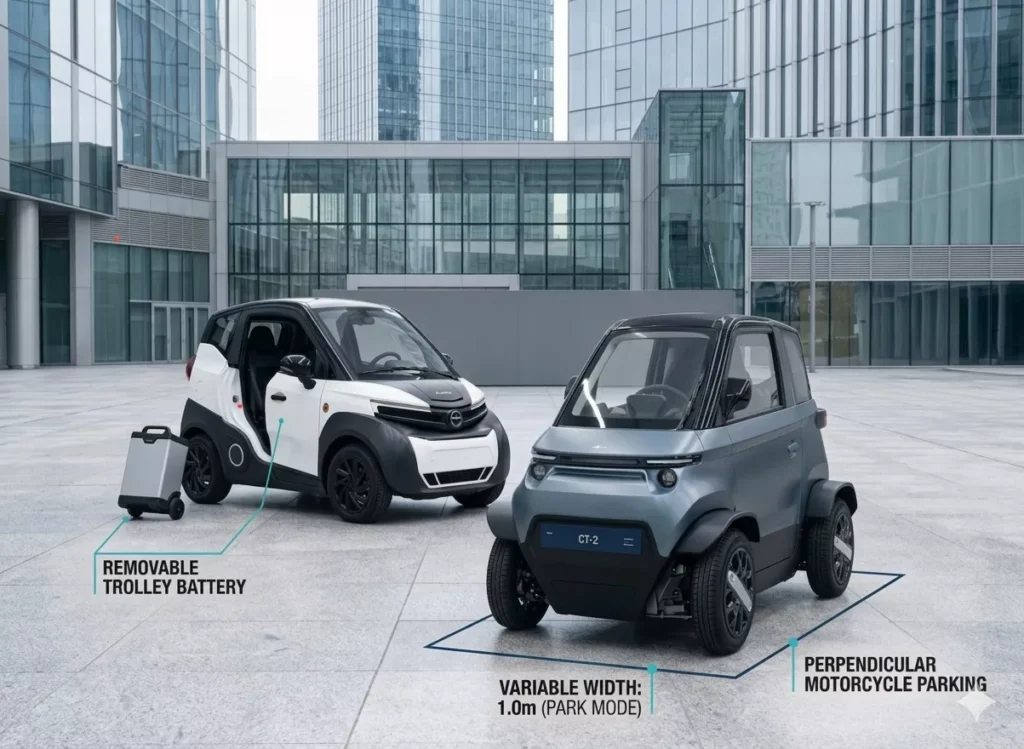
The CityTransformer CT-2 tackles the same urban-space problem from a different angle. Where Silence focuses on battery access and everyday operability, CityTransformer puts more weight on vehicle architecture itself.
What the S04 stands out:
Where the CT-2 takes a different path:
The difference comes down to what each company is trying to solve first. CityTransformer is rethinking the vehicle. Silence is trying to make a small EV easier to keep moving day after day.
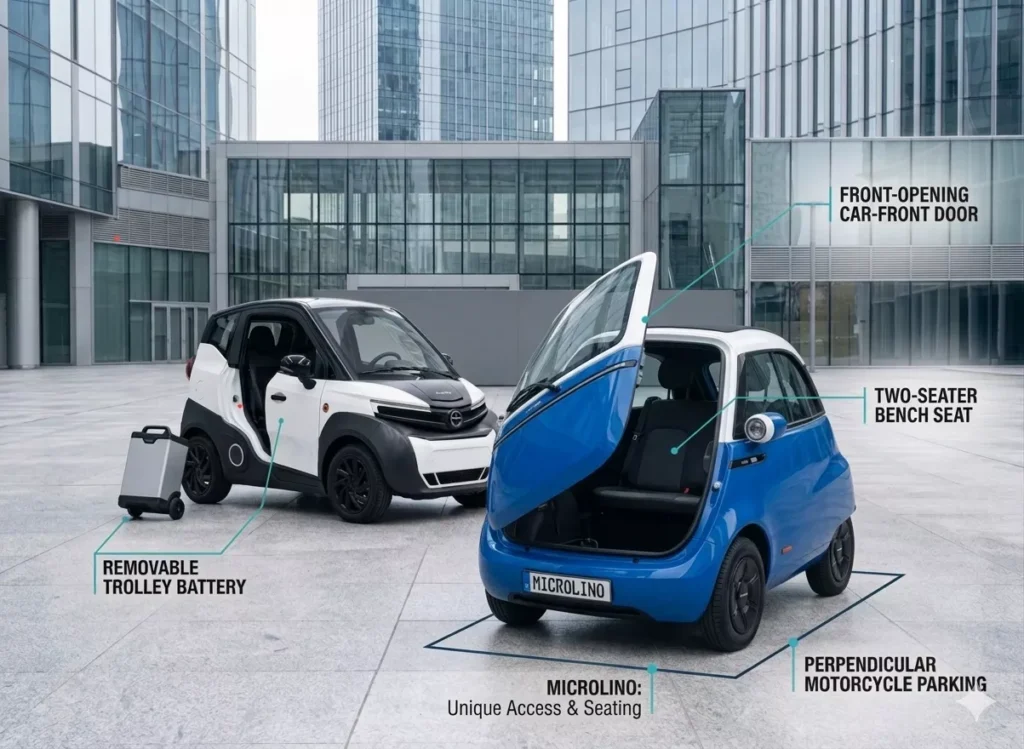
The Microlino and the Silence S04 both target urban drivers, but they make very different pitches. The Microlino leans into charm, design, and the feeling of owning a compact EV with real personality. The S04 is much more practical in its logic.
What the S04 stands out:
Where the Microlino takes a different path:
The contrast is fairly clear. Microlino is selling a more character-driven micro-EV. Silence is making a harder case around uptime, utility, and system logic.
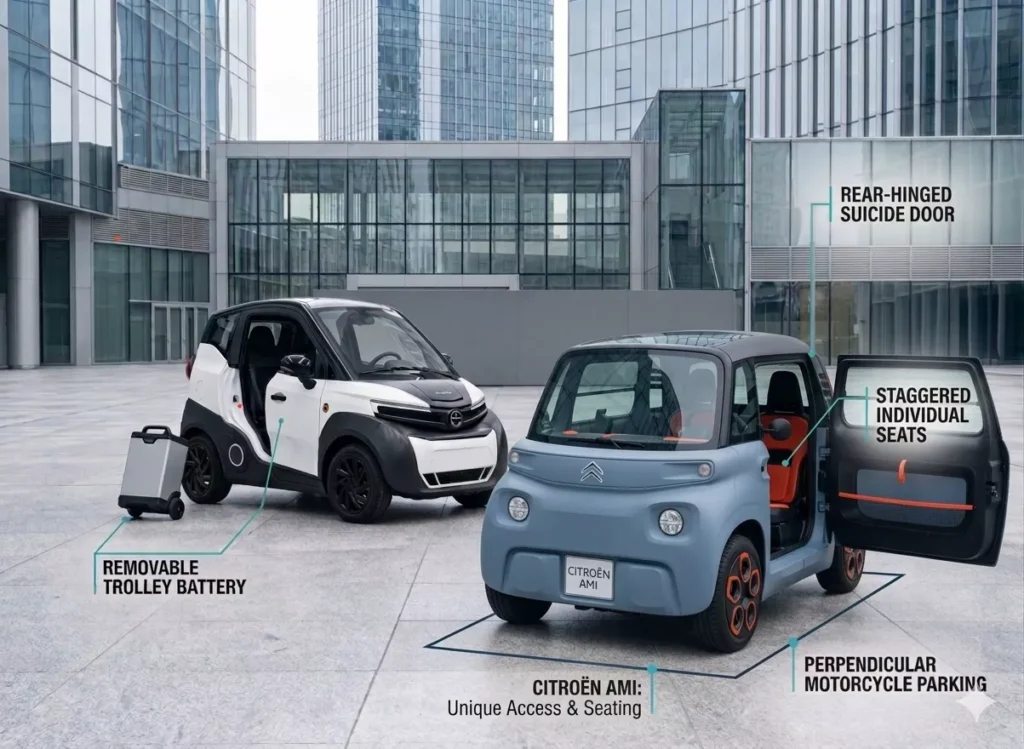
The Citroën Ami is the clearest benchmark in this category because it already made the idea of a tiny city EV easy for people to understand. Both vehicles are built for short urban trips, tight parking, and low-speed everyday use, but they approach that job in different ways.
What the S04 stands out:
Where the Ami takes a different path:
The difference is fairly simple. The Ami is the easier product to grasp. The S04 is more ambitious because it tries to solve the energy side of urban EV use as well. That gives it more upside where the swap network already exists, but it also makes the model more dependent on infrastructure.
One of Silence’s most important ideas sits outside the vehicle itself. By separating battery ownership from the car, the company turns the most expensive part of the S04 into an ongoing service rather than a one-time purchase.
That lowers the barrier to entry, reduces some of the risk around battery ownership, and keeps the whole model focused on access, flexibility, and uptime. In a city EV built around swapping and fast turnaround, that matters almost as much as the hardware itself.
Most EVs are sold as a single package, with the battery folded into the vehicle price from day one. That means the buyer absorbs the full upfront cost of the most expensive part of the product, along with much of the uncertainty around long-term battery ownership.
Silence takes a different route. The S04 can be bought either with the battery included or through a subscription model that separates the battery from the vehicle itself. That lowers the initial purchase cost and shifts part of the expense into a monthly service, which makes the whole proposition easier to access for urban users who care more about affordable mobility and quick turnaround than about owning every component outright.
That matters even more in city markets where many drivers do not have reliable private charging and need a model built around flexibility rather than garage-based ownership.
The bigger point is that by keeping the battery inside a managed service model, Silence turns the most sensitive part of the vehicle into part of a wider operating system that includes swapping, maintenance, and ongoing access.
Silence’s battery model changes the price conversation in a useful way. Instead of forcing every buyer to pay for the battery upfront, the company also offers a subscription route that lowers the entry cost of the vehicle and shifts part of the expense into a monthly fee.
The latest info suggests that the battery plan starts from €19.99 per month, while the broader Battery-as-a-Service model is described as cutting the upfront cost by up to around 35 percent, depending on the version, market, and usage plan.
Base pricing for the entry-level Unico has also been cited at about €9,990 in 2025-era materials, though pricing still varies by country, subsidy context, and configuration.
That structure makes the most sense when the S04 is judged as an operating model rather than a conventional ownership package. Buyers get a lower entry point, access to the swap ecosystem, and less direct exposure to battery upkeep, while Silence keeps the battery inside a wider service system tied to swapping, maintenance, and app-based management.
In dense urban markets, where private charging is often awkward and cost sensitivity matters, that makes the S04 easier to justify than it would be as a simple buy-it-all-upfront microcar.
The S04 makes the most commercial sense when it is treated as an operating model rather than a standalone consumer product. Silence’s battery subscription lowers the upfront cost, keeps battery maintenance inside the company’s ecosystem, and ties the vehicle more closely to swap access and app-based management.
That matters most in fleet environments, where downtime, charging access, and predictable running costs usually matter more than emotional product appeal.
That is also where the wider Silence platform starts to look more credible. The company is not only selling the S04. It is combining vehicles, removable batteries, swap stations, software, and subscription pricing into one system. Fleet deals and B2B partnerships fit that logic much better than a pure retail story because they give Silence the kind of concentrated urban usage where fast battery exchange and centralized management can make a real difference.
There is a broader lifecycle argument here too, but it should be kept in proportion. A managed battery model gives Silence more control over how packs are used, maintained, and eventually replaced, which can support a cleaner long-term operating loop. The stronger case, though, is still economic rather than symbolic – lower entry cost, better uptime, and a tighter connection between the vehicle and the infrastructure that keeps it moving.
That is what makes the S04 interesting at scale.
The clearest proof of demand around the S04 is coming from fleets, not from broad private-buyer adoption. That does not make the vehicle unimportant. It tells you where the model is strongest right now: managed urban use cases where uptime, charging flexibility, and centralized operations matter more than emotional appeal.
The strongest example is OK Mobility. In June 2023, ACCIONA said it had delivered the first 325 S04s to the rental company as part of a wider agreement covering 5,800 S04 nanocars and 700 S01 scooters over three years. Those first vehicles were set for deployment in Madrid, Barcelona, Mallorca, and Málaga, with the possibility of extending the service to other European cities later on. That is exactly the kind of environment where Silence’s battery, app, and fleet-management logic starts to look more convincing than a simple retail microcar launch.
That fleet-first pattern shows up elsewhere in the company’s wider platform strategy too. OK Mobility and PandaGo-style partnerships are the evidence that Silence’s system already fits organized urban mobility better than it fits a pure mass-retail story, while also noting that the brand’s traction still appears concentrated in Spain.
The broader European rollout adds momentum, but it does not yet change that basic picture. Nissan began distributing Silence products in France and Italy from June 2024, with Germany following later, and ACCIONA expanded that agreement in 2025 to cover a wider group of European markets. That gives the S04 a much broader route to market, but distribution reach is not the same thing as proven day-to-day adoption.
So far, that leaves the S04 in a fairly clear position. It already has real-world credibility in fleet and structured urban-mobility settings. What it still does not have is equally strong public evidence of widespread private-owner pull across Europe. For now, the best-supported reading is that the S04 works most convincingly when it is part of a managed system rather than a standalone consumer success story.
Spain gave Silence the clearest head start. That is where the company already had its strongest scooter presence, its own sales network, and the battery-swap infrastructure that made the S04 easier to understand as part of a working urban system rather than just another small EV. By June 2025, ACCIONA said Spain had more than 150 battery stations in its main cities.
The first real step beyond that home market came through Nissan. In April 2024, ACCIONA said Nissan would begin selling the S04 and Silence motorcycles through its retailers in France and Italy from June 2024, with Germany set to follow from September. That mattered because it gave Silence a much wider route to market without forcing the company to build its entire retail presence country by country.
That distribution push expanded further in 2025. ACCIONA said in June 2025 that Nissan was already selling Silence vehicles in France, Germany, and Italy, and would add the Netherlands, Belgium, Luxembourg, Norway, Denmark, the United Kingdom, Turkey, Greece, Poland, and Ireland during the year.
That is what makes the rollout strategy easier to take seriously. Silence is no longer relying only on Spain or on a small direct-sales footprint. It now has a credible path into a broader group of European markets.
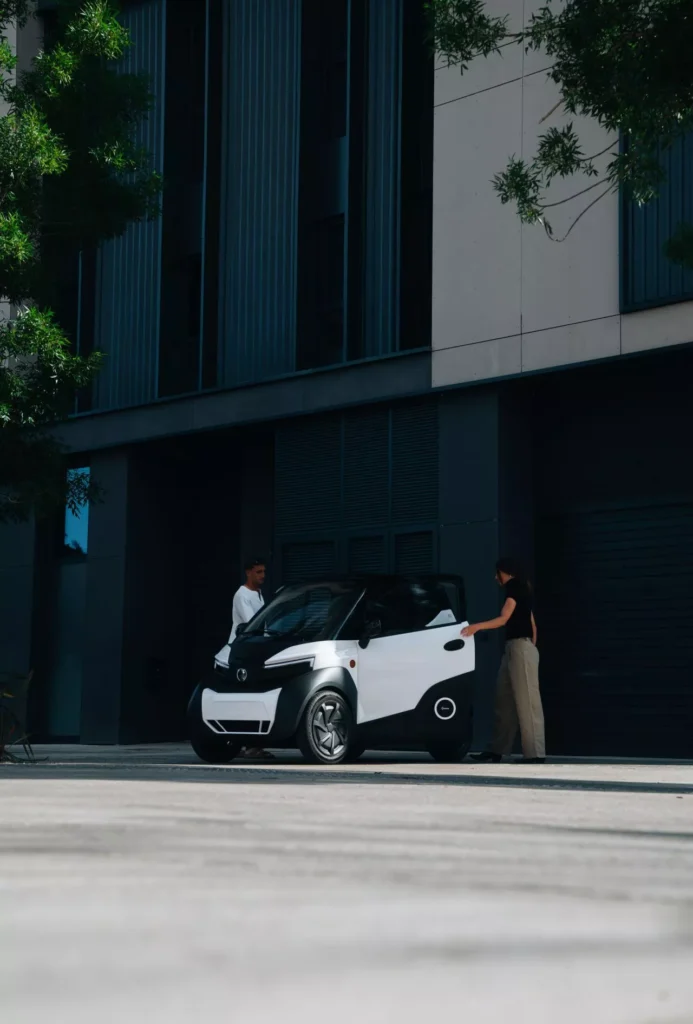
The S04 makes the strongest case in urban settings where short trips, limited parking, and awkward charging access are already daily problems. It is not a catch-all replacement for a normal small car. It works best when the job is narrow, repetitive, and city-based.
The clearest use cases today are:
That matters because the S04’s logic is operational before it is emotional. The car becomes easier to justify when uptime, charging flexibility, and compact size matter more than versatility or long-range freedom.
This is also where the current evidence is strongest. Silence already looks more credible in structured urban mobility, fleet environments, and tightly defined local use than it does as a broad private-buyer hit across Europe.
Designing a convincing micro-EV is one challenge. Building it repeatedly, at useful scale, and inside a wider operating system is another. Silence is not approaching the nanocar as a one-off experiment, but instead it is building it inside a broader platform that already includes scooters, shared batteries, swap infrastructure, software, and distribution partnerships.
What gives the S04 more credibility than many small-EV programs is that Silence now has industrial backing to match the concept. ACCIONA’s role is not limited to funding. It has helped turn the S04 into part of a larger urban-mobility system with real factory capacity in Barcelona, a growing battery-swap network, and a wider commercial path into European markets.
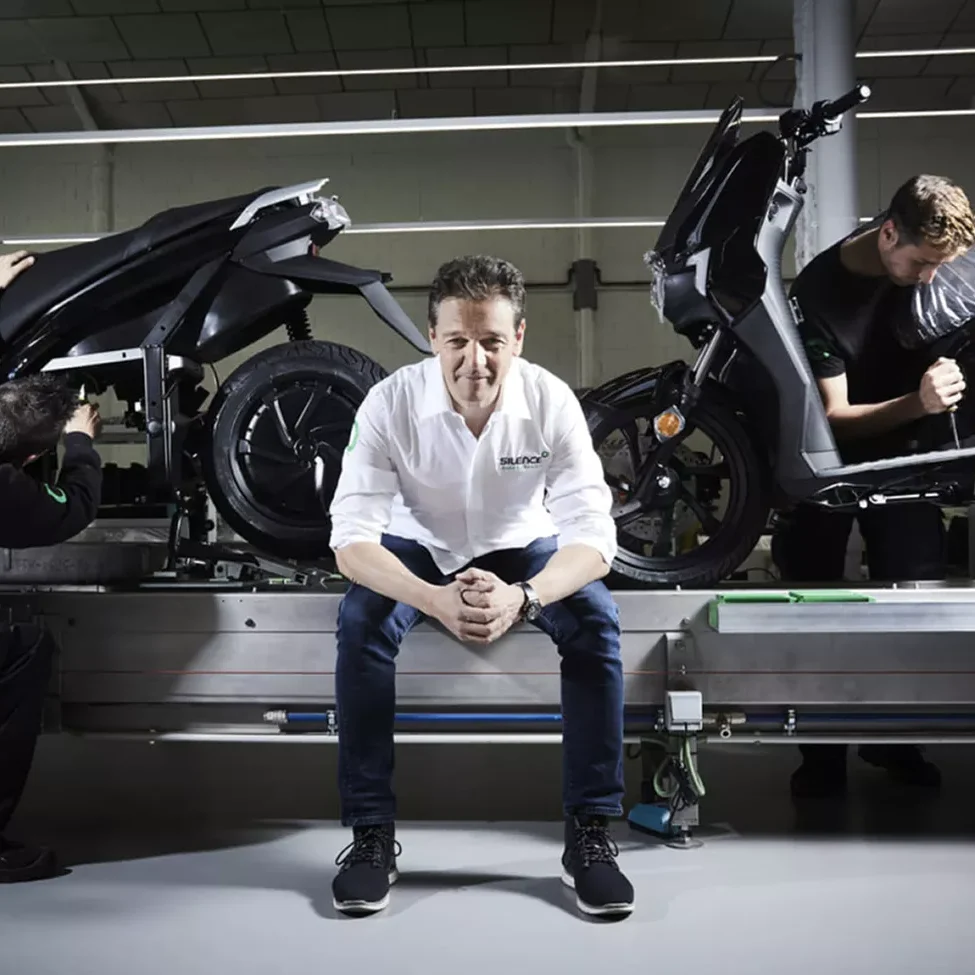
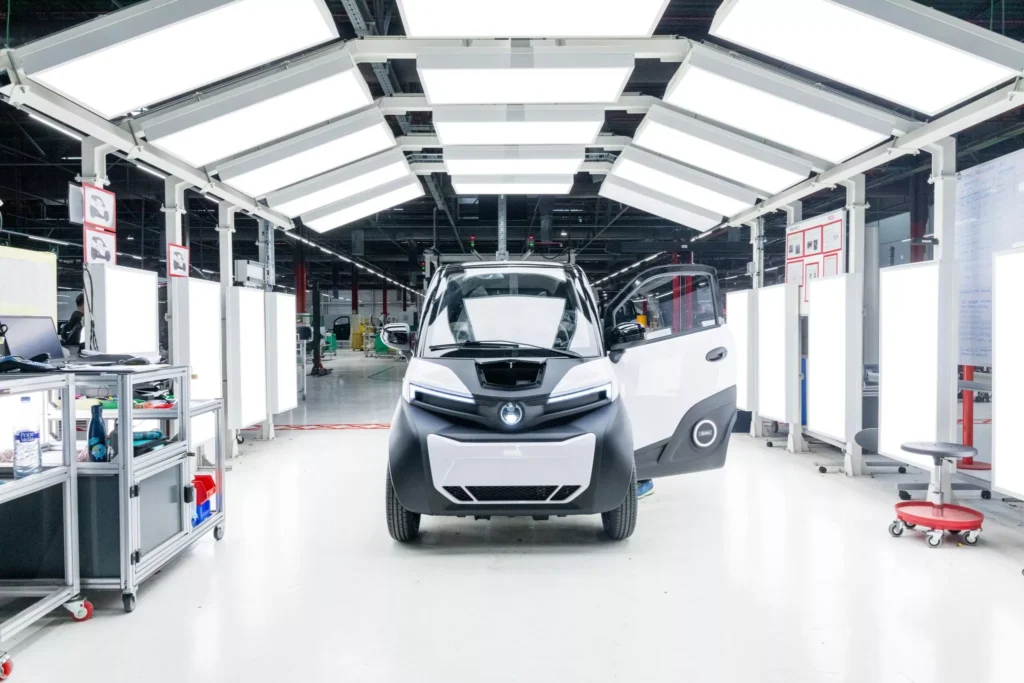
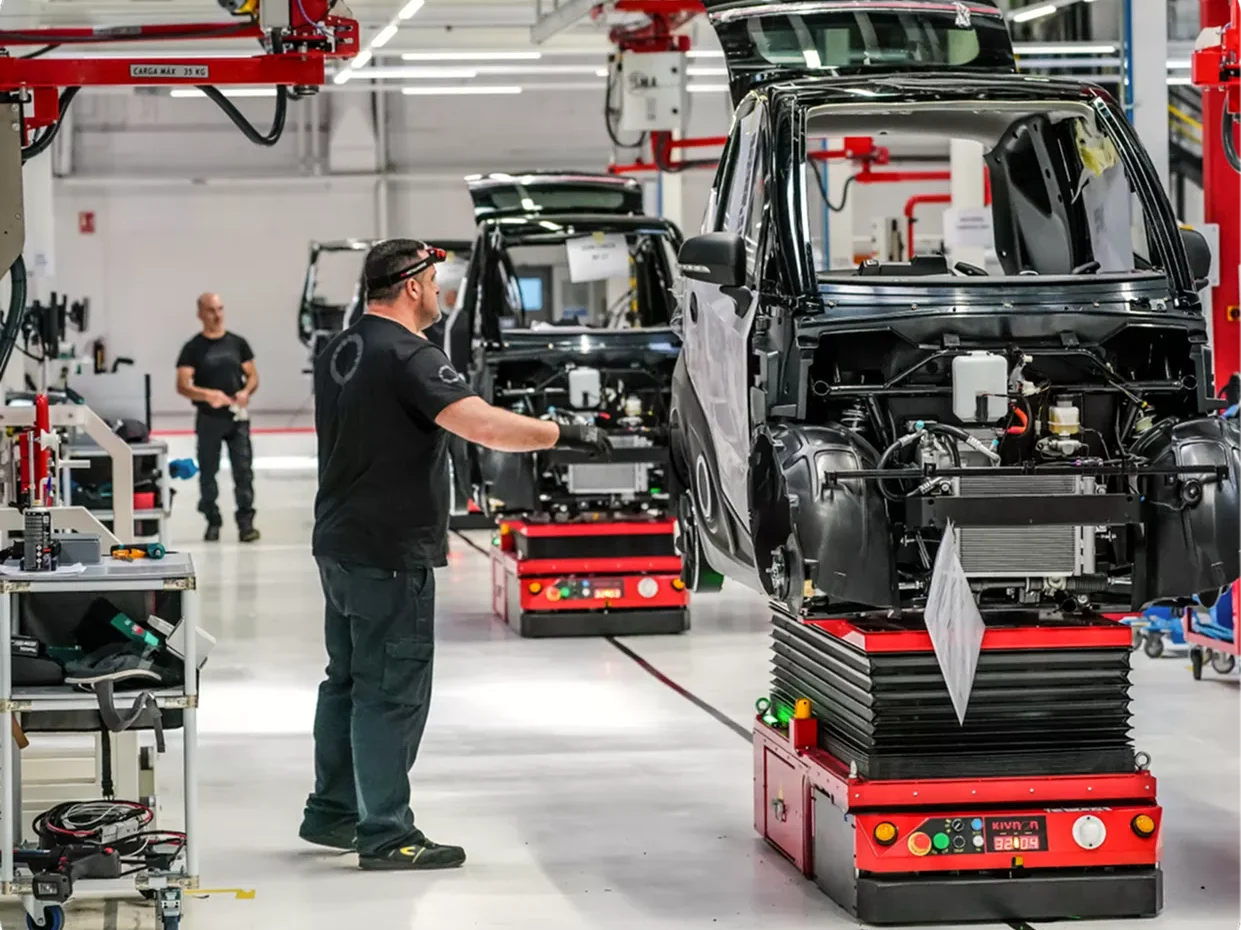
The S04’s manufacturing base gives Silence a stronger industrial footing than many companies in this category. ACCIONA built a 60,000 m² EV factory in Barcelona for Silence, and the first series-production S04 units were already coming off that line in 2023. The same research also ties the site to the former Nissan industrial footprint in Barcelona, which makes the production story feel more tangible than a typical startup-scale assembly operation.
This is crucial because it gives Silence tighter control over assembly, battery preparation, quality, and iteration speed. It also makes the S04 easier to read as a European industrial project rather than a lightly adapted import or a low-volume concept trying to grow up later.
Just as importantly, the Barcelona setup fits the wider logic of the company. Silence is not only trying to build a small car. Besides that, what they’re trying is to build a repeatable urban platform where vehicles, batteries, and service infrastructure reinforce each other. The S04 only works at its best if that system grows together, and the factory is one of the clearest signs that Silence is trying to scale the whole model.
Silence is not scaling the S04 alone, and that matters. The company’s partnership structure is fairly clear once you split the roles properly.
ACCIONA brings the capital, infrastructure, and production base.
Nissan brings the distribution reach and after-sales access that help the S04 travel beyond Spain.
That division makes the strategy much easier to understand than treating every partnership as if it served the same purpose.
ACCIONA is the deeper layer of the platform. It gave Silence industrial backing, funded the build-out of the Barcelona production base, and helped turn battery swapping into something larger than a single product feature. The wider network of swap stations, the subscription model, and the effort to position Silence as an urban mobility system all sit much closer to ACCIONA’s role than to Nissan’s. That is why the S04 looks more credible than a typical micro-EV startup project. It is being pushed by a parent company that is helping build the manufacturing and infrastructure around it, not just financing the vehicle itself.
Nissan’s role is different, but still important. It gives Silence a faster route into European markets through an established retail and service footprint, starting with France and Italy and then expanding further. That does not solve the infrastructure problem on its own, but it does make the rollout more believable. A small urban EV can be listed in a new market fairly quickly. Building enough local support around it is harder. Nissan helps close part of that gap by giving the S04 broader commercial reach than Silence would likely have on its own.
Put together, those two layers explain why the S04 is more than a niche product launch. ACCIONA helps make the model work. Nissan helps make it travel.
Silence has a more complete ecosystem than most micro-EV startups, but that does not remove the harder part of the job. The S04 still has to prove that a smart urban concept can become a repeatable business across multiple markets, not just a strong story in one home base.
A few risks stand out:
That last point matters most. Silence does not just need to scale production of the S04. It needs to scale the vehicle, the battery model, and the swap infrastructure together. If one grows faster than the others, the concept starts to lose its sharpest edge.
The Silence S04 matters because it tests a more ambitious idea than the vehicle alone suggests. This is not just a tiny EV built for short urban trips. It is an attempt to make a micro-EV materially more useful by pairing it with removable batteries, subscription pricing, and a swap network designed around uptime.
That is what makes the S04 much more interesting than a typical city microcar. The compact footprint, enclosed cabin, and low-speed urban focus all make sense on their own, but the real proposition sits in the system around them. Silence is betting that a small EV becomes easier to justify when charging is more flexible, entry cost is lower, and downtime is treated as a design problem rather than an inconvenience.
That bet already looks credible in Spain, where the swap network gives the S04 a stronger practical case. Outside that environment, the challenge becomes much harder. The car can travel faster than the infrastructure around it.
That is the real test ahead. Silence is trying to prove that a battery-network model can scale with the vehicle itself. If the infrastructure keeps pace, the S04 starts to look like a real blueprint for city mobility.