




From EVs and batteries to autonomous vehicles and urban transport, we cover what actually matters. Delivered to your inbox weekly.
Car insurance has always been a guessing game—broad risk categories, generic pricing, and slow claims. AI is rewriting the rules.
Real-time driving data, image recognition, and predictive analytics now shape policies, detect fraud, and automate claims.
Sounds great, but is it? Will AI-powered insurance finally reward safe drivers, or just boost insurer profits?
Let’s break down what’s changing, what it means for you, and how DriveX is leading the charge in AI-driven vehicle inspections.
Car insurance pricing has traditionally been based on broad factors — age, location, vehicle type. AI is making it more individualized and behavior-based.
AI-driven telematics programs track real-world driving habits—speed, braking, and time of day—to calculate customized premiums.
Progressive’s Snapshot program personalizes rates, rewarding safe drivers with an average savings of $231 per year. UBI policies account for 20% of all U.S. auto insurance plans, with adoption expected to rise significantly.
The automotive usage-based insurance market is growing rapidly, with a projected size of $57.91 billion in 2025, up from $48.9 billion in 2024.
UBI policies now account for 17% of all U.S. auto insurance plans.
AI-powered smartphone apps can detect risky behavior—like phone usage while driving—and adjust rates accordingly.
VisionTrack observed an 80% reduction in risky behavior, a 40% decrease in at-fault collisions, and a 24% reduction in claims frequency among fleets implementing their AI technologies.
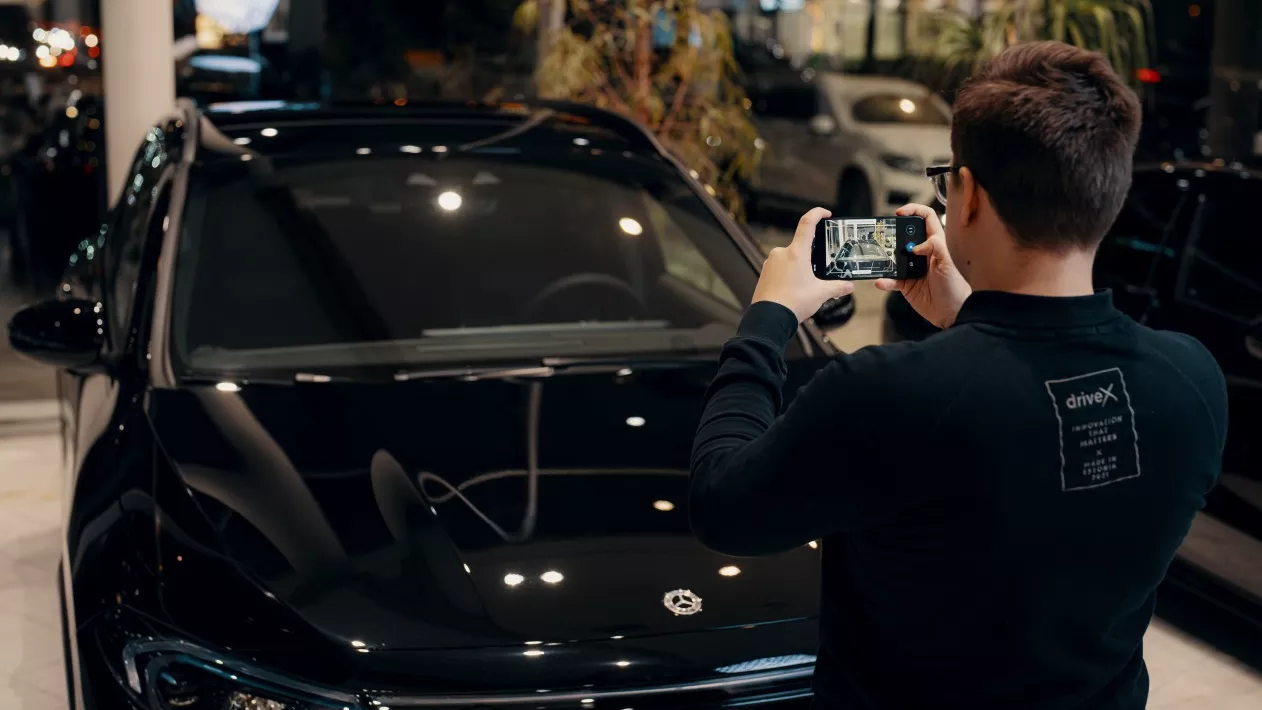
Getting your car inspected for insurance used to mean scheduling appointments, waiting for an adjuster, and dealing with paperwork. Not anymore. DriveX is making vehicle inspections as easy as snapping a photo.
With DriveX, policyholders just use their smartphones to take a few pictures of their vehicle. AI-driven image recognition does the rest—analyzing the images to detect pre-existing damage, wear, and overall condition.
Insurers can then quickly verify vehicle condition, reduce fraud, and speed up claims processing without the hassle of manual inspections.
Already operating in 12+ markets, DriveX is streamlining how insurers assess vehicle risk before issuing policies. The platform also specializes in windshield damage assessments, helping determine whether a repair or full replacement is needed—saving both insurers and drivers time and money.
Insurance fraud costs billions annually, but AI is making it easier to detect fraudulent claims before payouts happen.
AI can identify fraudulent patterns, such as identical accident photos submitted across multiple claims.
AI can also cross-check geolocation data with accident reports to verify if an incident actually occurred — using tools like what3words to pinpoint the exact location down to a 3-meter square, helping detect discrepancies between reported and actual scenes.
Filing a claim used to take weeks. AI is cutting that down to minutes.
AI processes vehicle damage photos and estimates repair costs instantly.
AI automates routine claims tasks—coverage verification, payouts, and status updates.
Beam AI’s case study on a Dutch insurance provider shows how AI made a real impact on their claims process:
A win-win for both insurers and their customers!
AI is improving convenience, but does it sacrifice human support for efficiency?
AI chatbots handle customer interactions 24/7, answering policy questions and processing claims.
Chatbots guide customers through filing claims step-by-step, verify eligibility by cross-referencing policy details, and collect necessary documents.
The insurance chatbot market is booming—set to grow from $467.4M in 2022 to $4.5B by 2032, with a 25.6% annual growth rate!
By automating repetitive tasks such as answering FAQs or processing simple claims, chatbots reduce operational costs and free up human agents for complex cases.
Some insurers have reported up to 40% lower operational costs due to AI-driven automation
AI is rapidly transforming car insurance, making it faster, smarter, and more personalized. Safe drivers are seeing rewards, insurers are reducing fraud, and claims are being processed in record time.
But as AI takes the wheel, questions around fairness, transparency, and data privacy remain.
Are these AI-powered changes ultimately benefiting drivers, or simply helping insurers operate more efficiently? Maybe it can be both.