

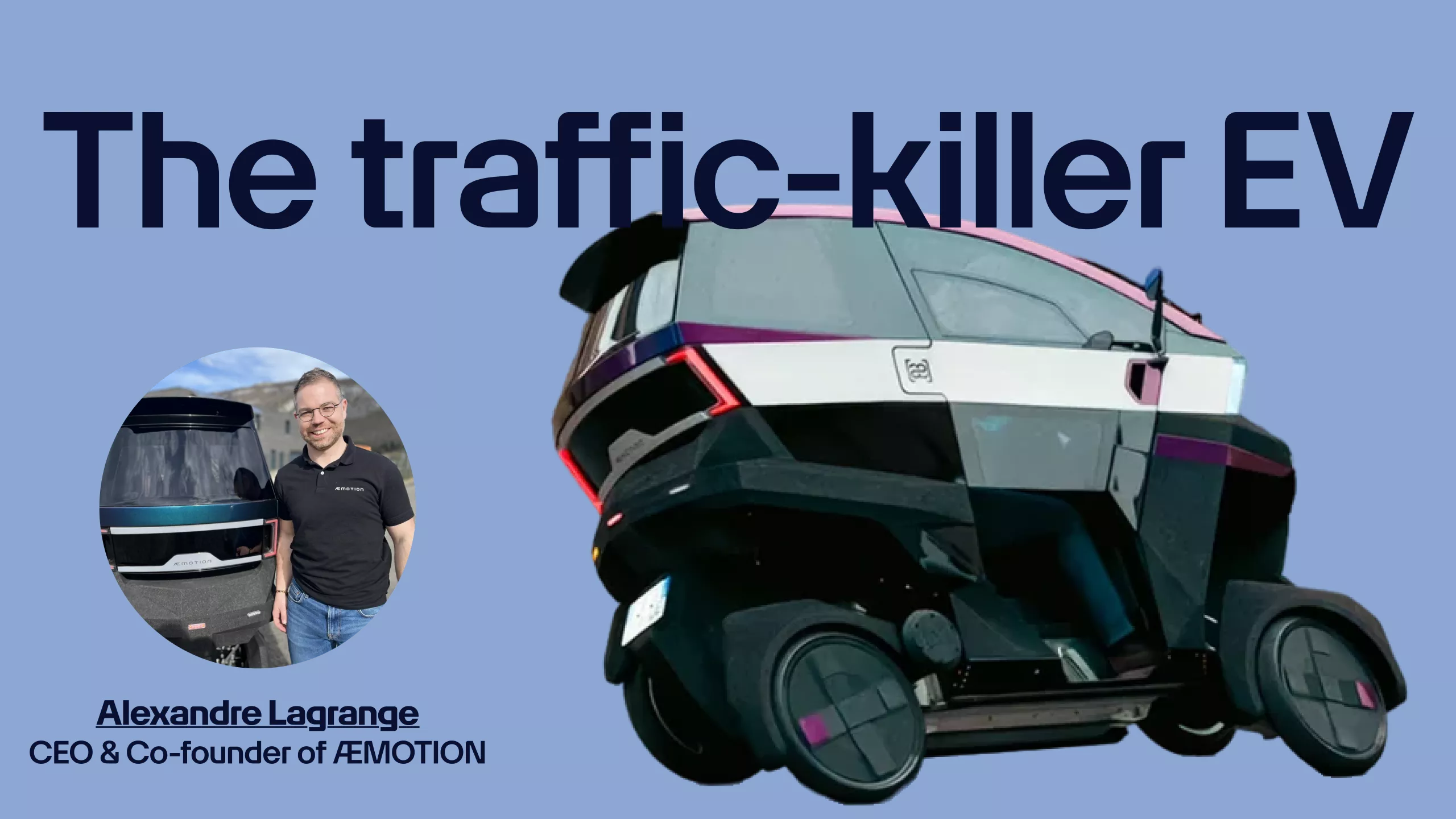

Charging Stack Podcast: ÆMOTION and The 79 cm EV Built to Slip Through Traffic
Share your love
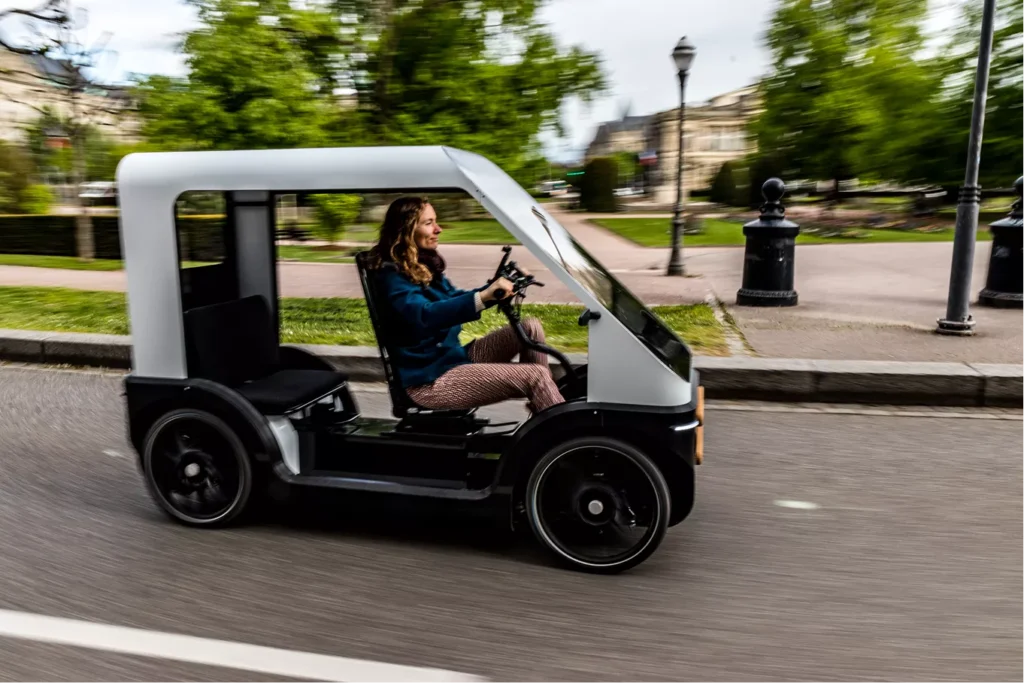
ÆMOTION is a French startup building a super-narrow, tilting electric two-seater designed for real city congestion. At just 79 cm wide, it aims to bring motorbike-level agility (including lane filtering where regulations allow) with car-like protection, including a rigid safety cell, seatbelts, and front/rear crash boxes.
In this episode, we sit down with CEO Alexandre Lagrange to unpack how the vehicle works, who it’s for, and what it takes to bring a new vehicle category to market in Europe.
Everything about ÆMOTION in one place
This episode is for you if:
- You commute in a dense city and you’re done losing hours in congestion
- You work in urban mobility, micromobility, or L-category vehicle development
- You care about road safety, especially for two-wheeler commuters
- You operate a fleet where time saved matters (service, moto-taxi, urgent delivery)
- You’re curious how “made in France” manufacturing changes the startup playbook
In this episode, you’ll learn:
⚡ Why Alexandre started ÆMOTION after winter accidents as a fast bike commuter in Paris
⚡ What 79 cm width unlocks in daily traffic, parking, and lane filtering (depending on local rules)
⚡ How tilting works in practice, including stability, braking, crosswinds, and rough roads
⚡ The two battery strategies: swappable short-range vs fixed longer-range (70 km / 200 km)
⚡ How ÆMOTION thinks about safety, from crash boxes to a rigid cell, even beyond minimum L-category requirements
⚡ Why training is part of the product, even for drivers with a standard B license
⚡ The go-to-market plan: early pilots, leasing-first pricing, and the path to certification and production
Topics covered include
- The “agility vs protection” tradeoff in today’s options, and why Alexandre thinks the market still forces compromises
- Where ÆMOTION fits compared to scooters, three-wheelers, microcars, and full-size EVs
- What makes the driving experience different: handlebar steering, tilting feel, and low-speed features like tilt locking
- The door design: why the two-step “elytra-style” opening matters in tight city parking
- Weather and comfort: aerodynamics around the open lower section, heated contact points, and windshield defrost
- Safety approach in plain terms: what they designed for, how they think about crash scenarios, and why they benchmark against cars
- Who wants it first: city commuters, professional riders, and high-value service operators (not free-floating sharing)
- Manufacturing and sourcing: what “80% of value created in France” means, and what still comes from outside Europe
- Ownership model: leasing-first, target monthly cost, and how they frame total cost of ownership vs a small city car
- What a city gains if vehicles like this scale: less space taken, less noise, fewer emissions, and fewer “one person in a big car” trips
- Timeline and rollout: prototypes vs industrialization, pioneer series timing, and what production scaling actually involves
Subscribe to Charging Stack for more podcast episodes, deep dives, and case studies with the people keeping the future of mobility running. ⚡