

From EVs and batteries to autonomous vehicles and urban transport, we cover what actually matters. Delivered to your inbox weekly.

A cabless electric truck is now moving Lidl goods on a German public road. EZO secured €150 million to build charging infrastructure. Helsinki turned fleet electrification into procurement rules. And Isuzu is testing whether battery swapping can cut downtime for delivery trucks.
Different stories, but they point in the same direction. Mobility is getting more operational.
The questions are shifting from whether the technology works to whether it can be financed, charged, permitted, integrated into fleets and kept running every day. Even further down the stack, suppliers are investing in low-speed vehicle drivetrains, battery development and closed-loop materials.
The vehicle is still the visible part. This week, the systems around it were more interesting.
Let’s get into it.
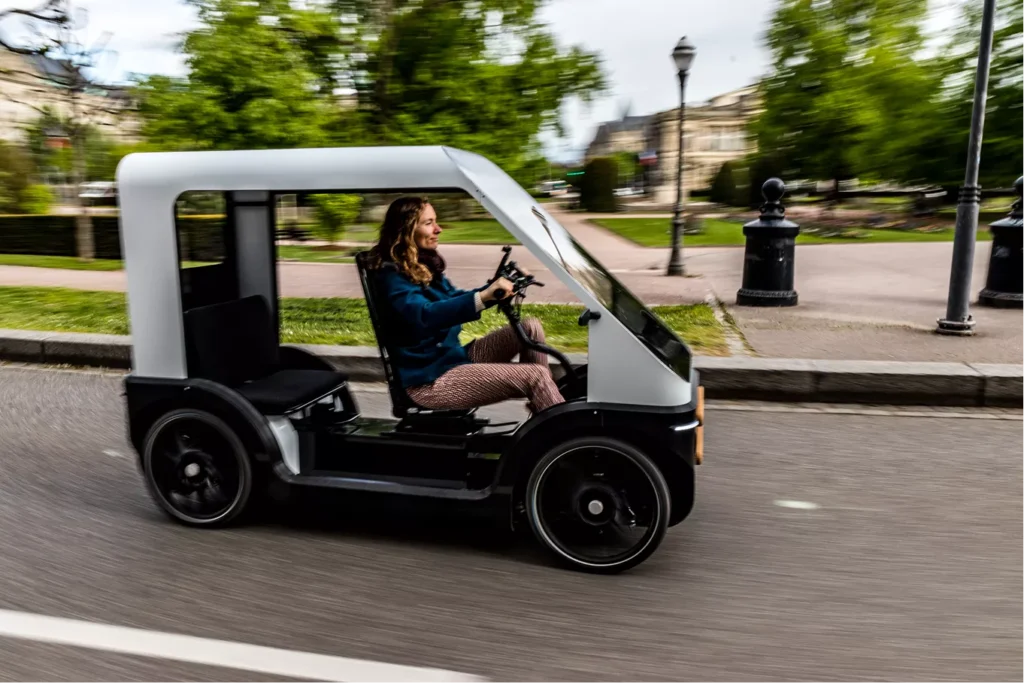
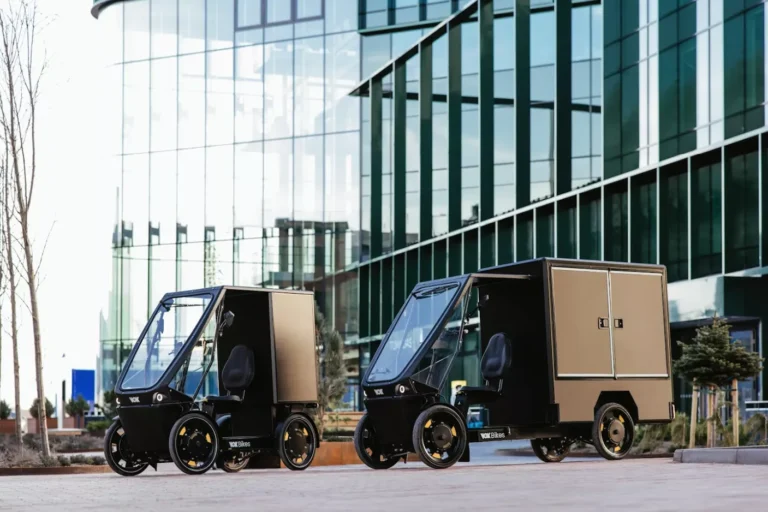
ONO is building an e-cargo vehicle around a simple idea: city logistics does not always need a van. The three-wheeled ONO Cargo is legally classified as a pedelec, so it can use cycling infrastructure and be operated without a driving licence, while still giving commercial fleets a weather-protected vehicle with more than 2 m³ of cargo space.
The useful part is how seriously it treats the logistics job. Its swappable container modules can be changed between runs, the cargo module carries up to 200 kg, and swappable batteries keep downtime low. The vehicle is already being used across parcel delivery, facility management and other commercial operations, with customers including DPD, Hermes and UPS.
What makes ONO interesting is that it sits somewhere between a cargo bike and a commercial vehicle without trying to become either one. For dense urban routes, that means fleets get something smaller than a van but still designed around drivers, cargo and repeat daily use. That middle ground is exactly where thin mobility starts making a lot of sense.
Lucid and Bolt announced a partnership to develop autonomous mobility services for Europe, with Bolt aiming to deploy at least 25,000 autonomous vehicles based on Lucid’s upcoming midsize platform. The planned SAE Level 4 platform is expected to use NVIDIA Hyperion, while Bolt will bring the fleet infrastructure, operating systems and city partnerships needed to run the service. The 25,000 figure will get most of the attention, but the more interesting part is how early Bolt is entering the vehicle programme. Instead of receiving a finished autonomous car and figuring out operations later, the companies plan to work together from product development through commercial operation. LINK
Irish charging operator EZO reached financial close on a €150 million investment-grade, non-recourse senior debt facility to finance more than 3,000 charge points across Ireland and the UK, representing over 100 MW of capacity. EZO says charger revenues will be ring-fenced to repay the debt over seven years. The financing structure is arguably more interesting than the charger count. If long-term concessions and charging revenues can support infrastructure-style debt, operators gain another way to fund expansion without relying only on equity and grants. LINK
ALVEST has acquired EasyMile and brought it together with TractEasy and TLD’s existing driverless activities under a new company called TLD Robotics. The combined operation focuses on autonomous ground transport at airports and industrial sites, bringing vehicles, software, deployment and support into one business. The companies say the technology already operates at more than 35 sites across 10+ countries and has completed over 50,000 autonomous missions. The consolidation suggests industrial autonomy is moving beyond isolated pilots toward vendors capable of owning the full deployment and ongoing operation. LINK
Isuzu has started testing battery swapping for electric trucks in Thailand with V. Cargo and HomePro. The pilot runs from September 2026 to March 2027 and puts modified Isuzu ELF EV trucks into a real HomePro logistics operation, with Isuzu saying a swap takes around seven minutes depending on the number of packs. Commercial fleets make an interesting case for swapping because routes are predictable, vehicles return to controlled locations and downtime has a clear cost. The real test will be station economics, battery inventory and vehicle utilisation. LINK
SEG Automotive expanded its Light Electric Mobility range with drive systems specifically for golf carts and low-speed vehicles. The new portfolio includes motors, controllers and integrated solutions from 6 kW to 16 kW, targeting passenger transport, last-mile logistics and industrial uses. What makes this interesting is that an established automotive supplier is applying its engineering and electrification expertise to much smaller vehicle platforms. Low-speed and thin mobility are starting to attract a more serious supply chain. LINK
Helsinki has tightened its environmental criteria for vehicle and transport procurement for 2026–2030. The city will now only purchase fully electric passenger cars, while vans and minibuses are also moving to fully electric procurement, and contracted van-delivery fleets must use at least 50% electric vehicles. That turns electrification from an ambition into a supplier requirement. Companies competing for city contracts now have a direct reason to electrify, while leasing firms, charging providers and fleet operators get a clearer demand signal. LINK
VEV is joining Volvo Trucks UK’s panel of charging partners to help customers plan the infrastructure around electric trucks, covering feasibility studies, site assessments, charger installation, energy management and optimisation. Its platform also connects vehicles, chargers and energy use so operators can see fleet and power demand together. The partnership shows how difficult it is to separate the electric truck from the depot around it. Power availability, charging schedules and energy costs all affect whether the vehicle works for the business. LINK
Panasonic Energy opened Energy Innovation Square, a new battery R&D hub in Kadoma, Osaka, where around 500 people will work across cell planning, technology development and analysis. Combined with its nearby Suminoe facility, roughly 800 people will work across materials, cell design and manufacturing technology. Panasonic wants to double development efficiency by FY2031 compared with FY2024. It is less flashy than a new chemistry announcement, but shortening the path from research to a manufacturable cell can be just as important. LINK
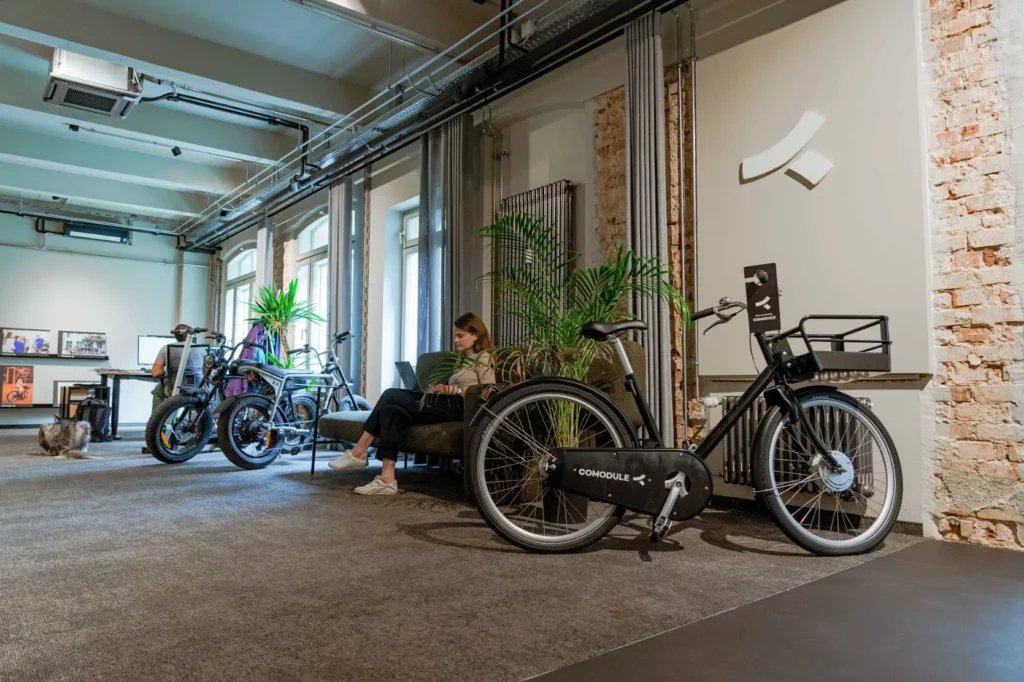
An e-bike used to be mostly about the motor, battery and frame. Comodule is betting that the next competitive layer sits in software. Its connectivity stack gives bike brands things like GPS tracking, digital locking, remote diagnostics, over-the-air updates and their own branded rider apps. Comodule says it already connects more than 800,000 vehicles.
The bigger question in this piece is who gets to own the rider relationship as e-bikes become connected products. The motor supplier, the bike brand, or the company building the software underneath both?
This week made one thing pretty clear. The interesting work is increasingly happening around the vehicle.
None of these shifts are as easy to photograph as a new vehicle launch. But they are the things that decide whether those vehicles can actually scale.
The companies worth watching now are the ones making mobility easier to finance, operate, charge, maintain and repeat.
📬 Hit reply: Which part of the operating layer do you think will matter most over the next few years?