

From EVs and batteries to autonomous vehicles and urban transport, we cover what actually matters. Delivered to your inbox weekly.
You’ve probably seen the headlines—Nissan just fired up its first solid-state battery production line in Japan. (We covered that here: Nissan Turns On Solid-State Battery Line in Japan). But what exactly are solid-state batteries, and why does everyone keep saying they’re a “game-changer”?
Let’s break it down.
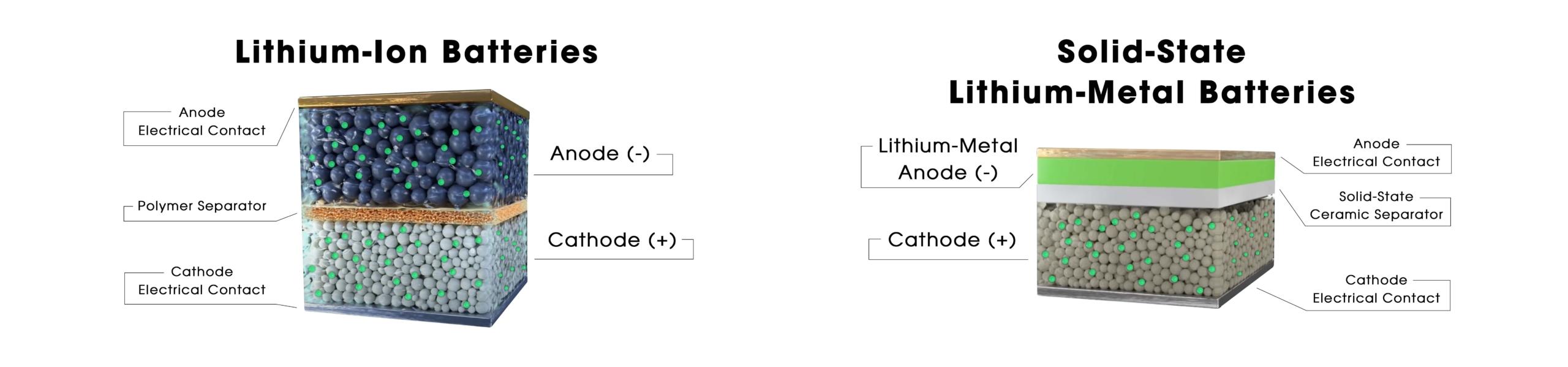
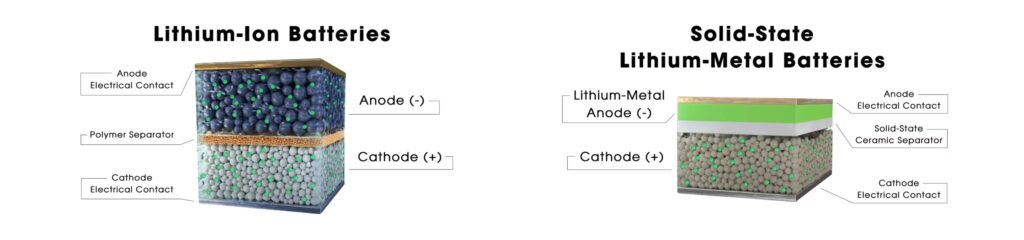
Most EVs today use lithium-ion batteries, which rely on a liquid electrolyte—a gooey chemical that helps move lithium ions between the battery’s two ends (called electrodes).
Solid-state batteries swap that liquid for a solid electrolyte. It can be made of ceramics, glass, or solid polymers. Everything else stays mostly the same—there’s still a positive and a negative side, and lithium ions still do the heavy lifting.
But removing the liquid makes a huge difference:
Because solid materials are… picky.
It’s like going from a garden hose (liquid electrolyte) to threading a needle (solid)—great in theory, tricky in practice.
Nissan, Toyota, QuantumScape, and others are trying to solve that. Nissan’s new pilot line in Japan is a big step toward mass production. But we’re still a few years away from these batteries showing up in your driveway.
Nissan is among the first to get a full pilot line up and running. They’re building test cells now, with plans to scale production in 2028. They say these batteries could:
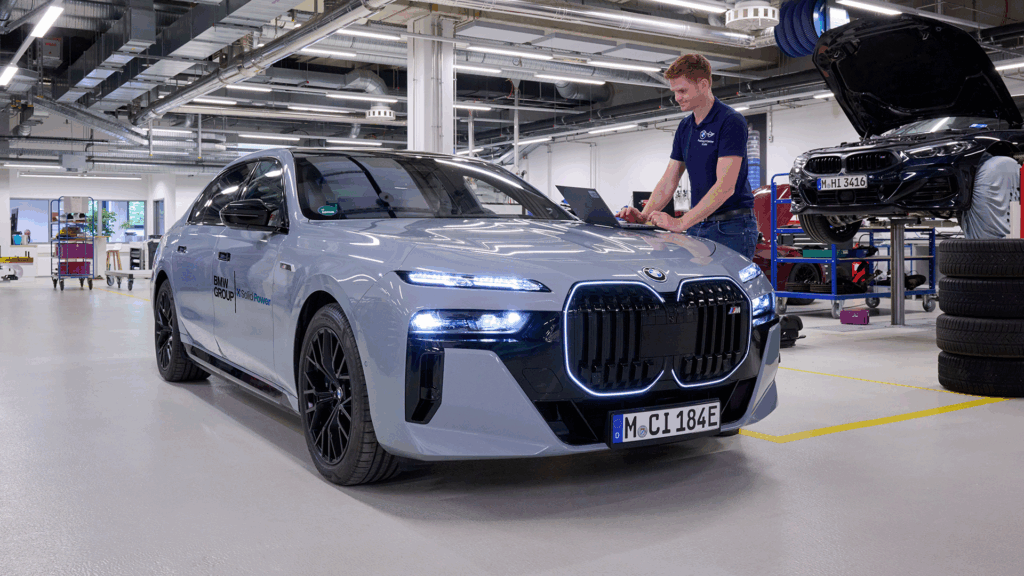
BMW is also getting in on the solid-state race. The company recently confirmed it has started testing prototype i7 models powered by solid-state cells.
If solid-state batteries hit mass production, they could make EVs: